
Centre Highlights Benefits of Ethanol Amid Debate Over E20 Fuel, Says Programme Has Boosted Farmers, Sugar Economy and Energy Security
New Delhi (Economy India): Amid growing concerns over the impact of E20 (20% ethanol-blended petrol) on vehicle performance and engine durability, the Government of India has strongly defended its ethanol blending programme, stating that the initiative has delivered significant economic, environmental and energy security benefits over the past decade.
Addressing a conclave organised by the Grain Ethanol Manufacturers Association (GEMA), Food Ministry Joint Secretary Ashwani Srivastava said the Ethanol Blended Petrol (EBP) Programme has become a cornerstone of India’s agricultural and energy strategy by creating new markets for farmers, reducing dependence on imported crude oil and generating substantial foreign exchange savings.
According to the government, the programme has helped India save more than ₹1.90 lakh crore in foreign exchange between 2014-15 and 2026 through the replacement of over 310 lakh tonnes of crude oil with domestically produced ethanol.
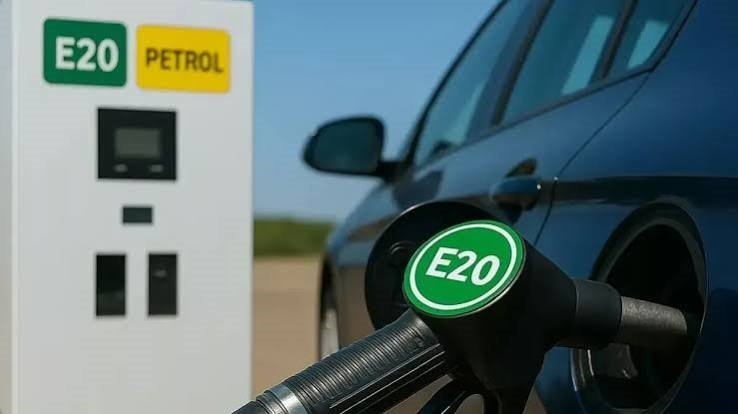
₹1.90 Lakh Crore Saved Through Lower Crude Oil Imports
India imports nearly 85% of its crude oil requirements, making the country vulnerable to global oil price volatility and supply disruptions.

The government said the ethanol blending initiative has significantly reduced this dependence by replacing imported crude oil with ethanol produced from domestic agricultural feedstocks.
Officials said that more than 310 lakh tonnes of crude oil have been substituted through ethanol blending during the period from 2014-15 to 2026, resulting in cumulative foreign exchange savings exceeding ₹1.90 lakh crore.
The programme is considered one of India’s key initiatives for improving energy security while reducing the country’s import bill.
Ethanol Strengthening India’s Agricultural Economy
Ashwani Srivastava said ethanol has evolved beyond being merely an alternative fuel and has become an important driver of rural economic growth.
The programme has created additional demand for agricultural produce such as:
- Sugarcane
- Maize
- Damaged food grains
- Surplus rice
- Other approved feedstocks
By providing alternative markets for surplus crops, ethanol production has improved income opportunities for farmers while helping stabilize agricultural prices.
Major Boost to the Sugar Industry
The government also highlighted the positive impact on India’s sugar sector.
Diversion of sugar and sugarcane towards ethanol production has helped reduce excess sugar inventories, improve liquidity for sugar mills and enable faster payments to farmers.
Industry experts believe the ethanol programme has strengthened the financial health of sugar mills while reducing cyclical challenges associated with surplus sugar production.
Significant Environmental Benefits
Apart from economic gains, the ethanol blending programme has contributed to reducing greenhouse gas emissions.
According to the government:
- Net carbon dioxide (CO₂) emissions have declined by approximately 930 lakh tonnes.
- Lower fossil fuel consumption has supported India’s clean energy transition.
- Increased use of biofuels aligns with India’s climate commitments and net-zero ambitions.
Ethanol burns cleaner than conventional petrol and contributes to lowering vehicular emissions when blended appropriately.
Government Responds to E20 Fuel Concerns
The government’s remarks come amid an ongoing debate regarding the use of E20 petrol, particularly concerns raised by some vehicle owners and experts about:
- Reduced fuel efficiency
- Possible engine compatibility issues
- Long-term maintenance costs
- Performance in older vehicles
Automobile manufacturers have been gradually introducing E20-compatible vehicles, while authorities have maintained that newer engines are designed to operate efficiently with higher ethanol blends.
The government reiterated that the transition to cleaner fuels remains essential for reducing oil imports and improving environmental sustainability.
Why Ethanol Matters for India’s Energy Security
India is among the world’s largest consumers of petroleum products.
Expanding domestic ethanol production helps diversify fuel sources and reduces dependence on imported crude oil.
The programme supports multiple national objectives:
- Strengthening energy security
- Reducing import dependence
- Supporting rural incomes
- Promoting renewable fuels
- Lowering carbon emissions
- Encouraging investment in biofuel infrastructure
Officials said ethanol has become central to India’s long-term energy transition strategy.
Industry Outlook
The ethanol sector has witnessed rapid expansion in recent years, supported by government incentives, higher blending targets and investments in distilleries.
Industry participants expect continued growth as India advances towards higher blending levels and expands feedstock availability beyond sugar-based ethanol to include grain-based production.
The government’s policy framework is expected to encourage further investments in biofuel production, storage infrastructure and supply chains.
Challenges Ahead
Despite the programme’s achievements, experts note several challenges:
- Ensuring adequate feedstock availability.
- Balancing food and fuel requirements.
- Expanding ethanol production capacity.
- Developing nationwide fuel distribution infrastructure.
- Increasing consumer awareness regarding E20-compatible vehicles.
Addressing these issues will be important for sustaining long-term growth in the ethanol ecosystem.
Looking Ahead
The government’s latest defence of the Ethanol Blended Petrol Programme underscores its commitment to expanding the use of biofuels as part of India’s broader energy transition.
With over ₹1.90 lakh crore saved in foreign exchange, reduced crude oil imports, improved farmer incomes and significant carbon emission reductions, the programme has emerged as one of India’s flagship renewable energy initiatives.
As India moves towards greater adoption of cleaner fuels, the success of ethanol blending will depend on continued investments, technological advancements and coordination between the agriculture, energy and automobile sectors.