
Precious Metals Witness Sharp Correction as Profit Booking and Global Uncertainty Weigh on Prices
New Delhi (Economy India): Gold and silver prices witnessed a significant decline on June 11, extending the correction seen in recent weeks as investors increasingly shifted towards cash amid global uncertainty and profit-booking at elevated levels.
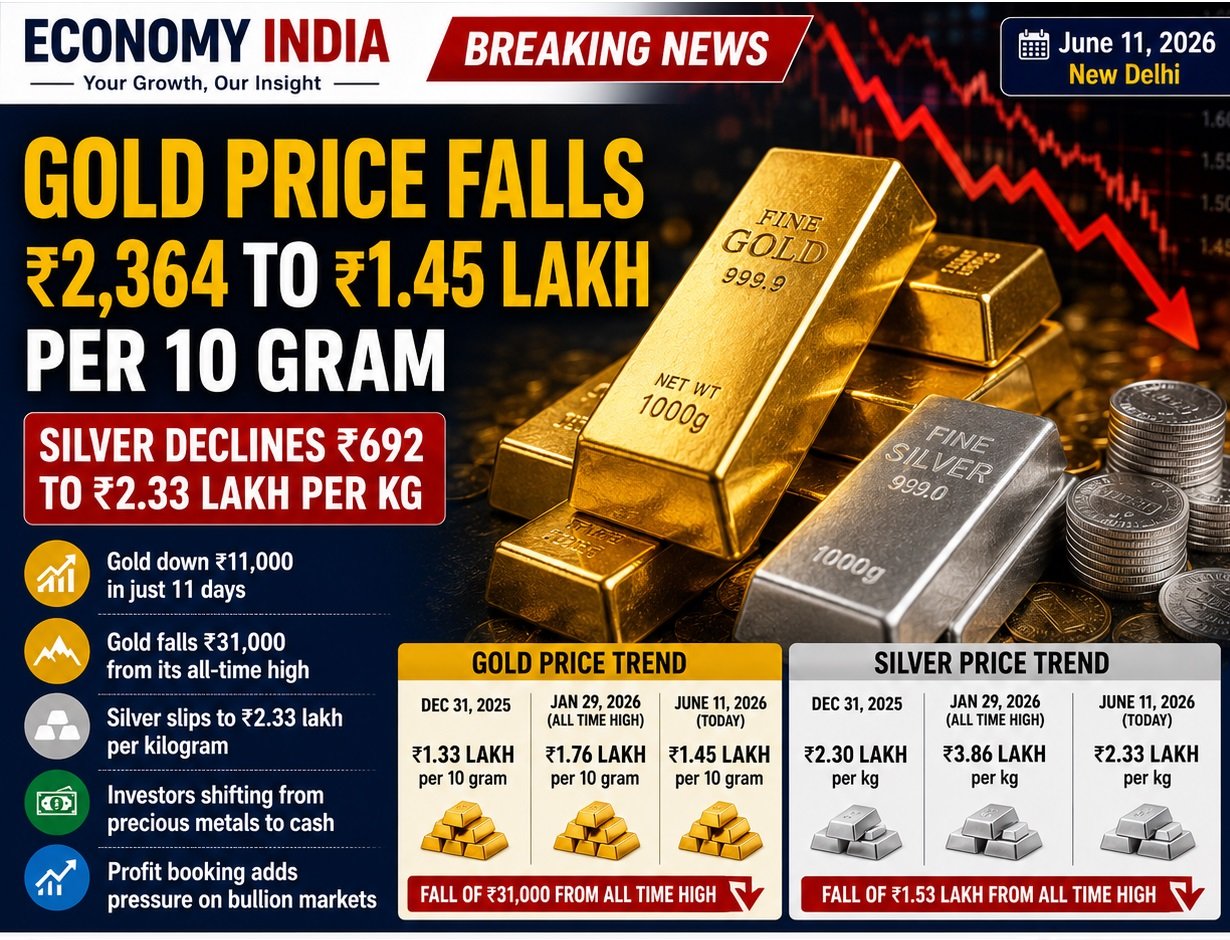
According to data released by the India Bullion and Jewellers Association (IBJA), the price of 24-carat gold fell by ₹2,364, taking the rate of 10 grams of gold to ₹1.45 lakh. The decline marks one of the sharpest single-day corrections in recent months.
Silver prices also remained under pressure, with 1 kilogram of silver falling by ₹692 to ₹2.33 lakh.
Gold Down ₹11,000 in Just 11 Days
The latest decline has significantly reduced gold’s gains from its recent peak.

On May 31, the price of 10 grams of gold stood at approximately ₹1.56 lakh. Within just 11 days, the yellow metal has lost nearly ₹11,000, reflecting changing investor sentiment and increasing volatility in global commodity markets.
Market analysts say the correction is being driven by a combination of geopolitical uncertainty, profit booking, and shifting investment strategies.
Gold Slips ₹31,000 from Record High
The precious metal has experienced extraordinary volatility throughout 2026.
Gold prices started the year at around ₹1.33 lakh per 10 grams on December 31, 2025, before rallying sharply to an all-time high of ₹1.76 lakh on January 29, 2026.
Since touching that historic peak, gold prices have corrected by approximately ₹31,000 per 10 grams, highlighting the sharp reversal in market momentum.
Despite the recent fall, gold continues to trade substantially above levels seen a year ago.

Silver Also Corrects Sharply
Silver has witnessed an even steeper decline from its record highs.
The metal was priced at approximately ₹2.30 lakh per kilogram at the end of 2025 and surged to an all-time high of ₹3.86 lakh per kilogram on January 29, 2026.
Since then, silver prices have fallen dramatically.
Over the last 133 days, silver has corrected by nearly ₹1.53 lakh per kilogram, making it one of the most volatile commodities in the precious metals segment this year.
Why Are Gold and Silver Falling?
Traditionally, gold and silver tend to rise during periods of geopolitical conflict and economic uncertainty because they are considered safe-haven assets.
However, the current market environment is presenting a different picture.
1. Investors Prefer Cash Over Metals
The ongoing tensions and military conflicts in the Middle East have increased uncertainty in global financial markets.
Instead of increasing their holdings in precious metals, many investors are choosing to liquidate gold and silver investments and move into cash positions.
Analysts believe investors are prioritizing liquidity to remain flexible amid rapidly changing geopolitical developments.
2. Heavy Profit Booking
Gold and silver witnessed a spectacular rally earlier this year, reaching record highs in January.
After such a strong surge, institutional investors and large traders have begun booking profits by selling their holdings at elevated prices.
The increased supply in the market has put downward pressure on prices.
3. Reduced Safe-Haven Demand
Some investors are also moving funds into other asset classes, including government bonds, cash instruments, and selected currencies perceived as safer during periods of uncertainty.
This shift has reduced immediate demand for bullion despite ongoing geopolitical risks.
What Market Experts Say
Commodity market experts believe gold and silver could remain volatile in the short term as investors closely monitor:
🌍 Geopolitical developments in the Middle East
💵 Global interest rate expectations
📊 Inflation trends in major economies
🏦 Central bank policies
📈 Demand from retail and institutional investors
Analysts suggest that while short-term corrections may continue, long-term fundamentals for precious metals remain supported by inflation concerns and global economic uncertainty.
Should Investors Be Worried?
Financial advisors note that corrections are a natural part of commodity cycles, particularly after strong rallies.
Investors are advised to focus on long-term objectives rather than reacting to short-term market fluctuations.
Gold continues to play an important role as a portfolio diversifier and inflation hedge despite recent volatility.
The sharp decline in gold and silver prices reflects a significant shift in investor sentiment as market participants prioritize liquidity and lock in profits after months of extraordinary gains. While precious metals remain important safe-haven assets, current market dynamics suggest that volatility is likely to persist in the near term. Investors will be closely watching geopolitical developments, inflation trends, and central bank policies for clues about the next direction of bullion prices.
(Economy India)