
Forest Department Secures Area and Calls Specialist Team as Concern Grows Over Condition of Big Cat
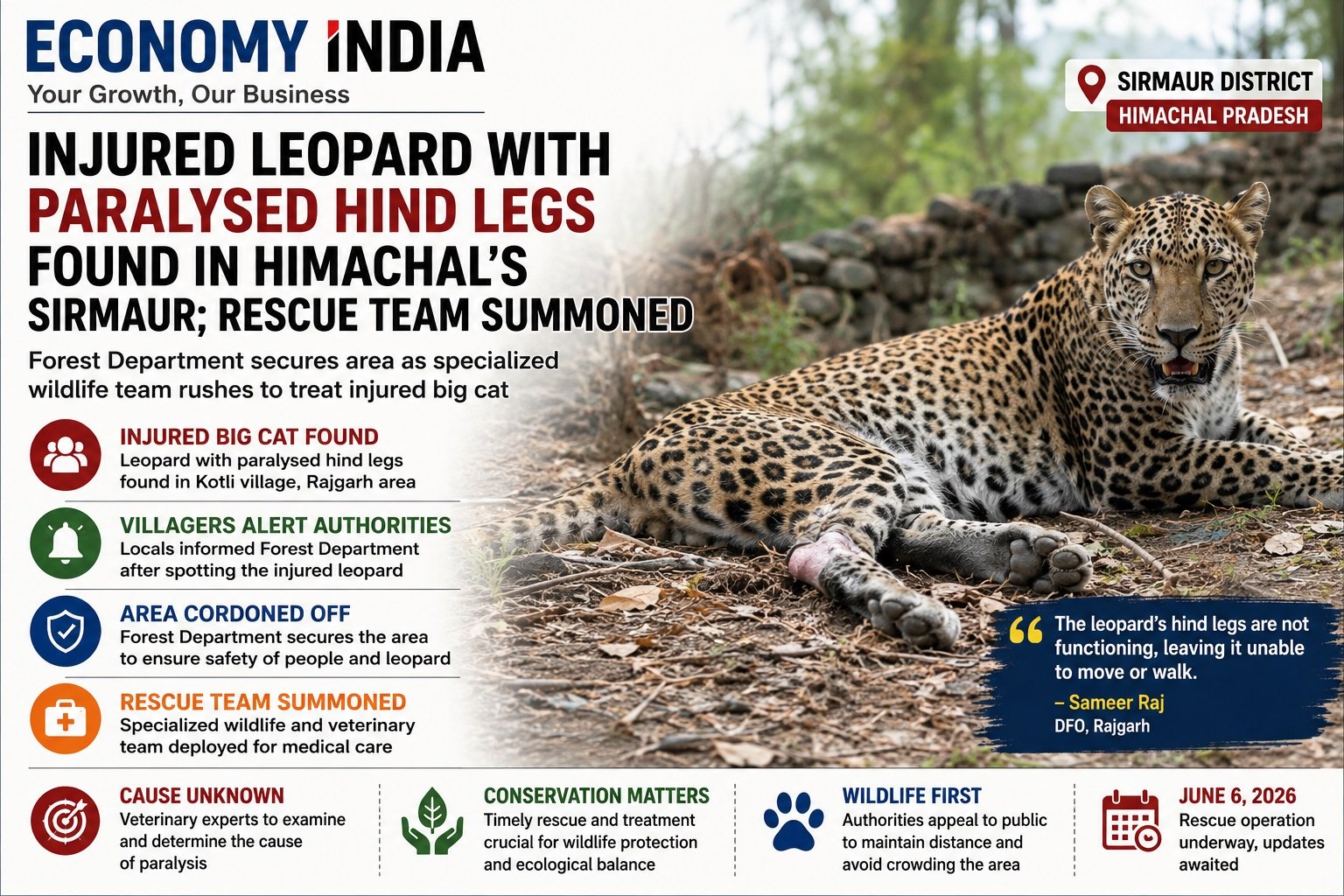
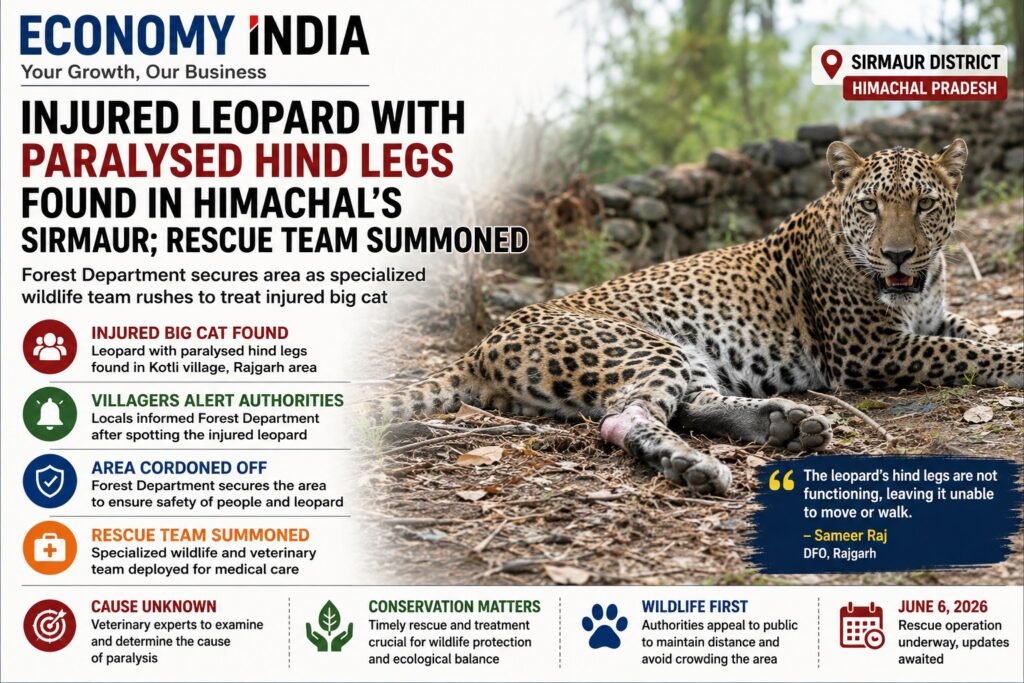
Nahan (Himachal Pradesh) (Economy India): A leopard found with reportedly paralysed hind legs in Himachal Pradesh’s Sirmaur district has triggered a major wildlife rescue operation, with forest officials rushing to secure the area and summon a specialized veterinary rescue team to assess the animal’s condition.
The injured big cat was discovered in the Rajgarh region of Sirmaur district, raising concerns among local residents and wildlife authorities alike. The incident highlights the challenges faced by wildlife in increasingly human-dominated landscapes and underscores the importance of rapid intervention in animal rescue cases.
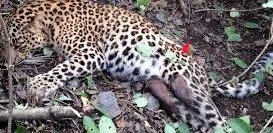
According to officials, the leopard was found lying helplessly in Kotli village under Rajgarh Nagar Panchayat limits, unable to move due to the apparent loss of function in its hind legs.

Villagers Alert Authorities After Spotting Injured Animal
The incident came to light on Friday morning when residents of Ward No. 7 in Kotli village noticed a leopard lying motionless near the settlement.

Initially, villagers believed the animal might be resting. However, after observing it for some time, they realized the leopard appeared injured and incapable of movement.
Concerned about both the animal’s welfare and public safety, local residents immediately informed the Forest Department.
Forest officials responded swiftly and reached the location to assess the situation.
Leopard Unable to Walk Due to Hind Leg Paralysis
District Forest Officer (DFO) Rajgarh, Sameer Raj, confirmed that the leopard’s hind legs were not functioning properly.
“The leopard is unable to walk or move because its rear limbs appear to be paralysed. Our teams have secured the area and are monitoring the animal until wildlife experts arrive,” officials said.
The exact cause of the condition remains unknown and will only be determined after a detailed veterinary examination.
Wildlife experts suspect that the paralysis could be linked to several possible causes, including:
- Injuries sustained during a fall from a steep terrain.
- Road or vehicle accidents.
- Internal spinal injuries.
- Conflict with another wild animal.
- Neurological disorders.
- Age-related health complications.
- Disease or infection affecting mobility.
Veterinarians are expected to conduct diagnostic assessments before drawing any conclusions.
Forest Department Launches Rescue Operation
Recognizing the seriousness of the situation, the Forest Department immediately cordoned off the area to prevent unnecessary disturbance to the animal.
Officials stated that injured wild animals often become stressed and unpredictable, making it essential to maintain a safe distance while rescue efforts are underway.
Forest personnel have been deployed around the site to:
- Restrict public access.
- Monitor the leopard’s condition.
- Prevent panic among local residents.
- Ensure the animal is protected from harassment or disturbance.
- Facilitate smooth rescue operations.
Authorities have appealed to villagers not to crowd around the site or attempt to approach the leopard.
Specialized Wildlife Team Summoned
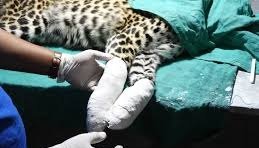
A specialized wildlife rescue and veterinary team has been called to the location to undertake the next phase of the operation.
The team is expected to:
- Conduct a detailed health assessment.
- Determine the cause of paralysis.
- Administer emergency medical treatment if necessary.
- Decide whether the leopard can be treated on-site.
- Arrange transportation to a wildlife rehabilitation centre if required.
Depending on the severity of the injuries, the animal may require long-term medical care and rehabilitation.
Officials said the primary objective is to stabilize the leopard and provide it with the best possible chance of recovery.
Rising Human-Wildlife Encounters in Himachal Pradesh
The incident also draws attention to the growing number of human-wildlife interactions across Himachal Pradesh.
The state’s forests are home to a significant leopard population, and sightings near villages and urban settlements have become increasingly common in recent years.
Experts attribute the trend to several factors, including:
- Shrinking natural habitats.
- Expansion of human settlements.
- Infrastructure development.
- Changing prey availability.
- Environmental pressures and climate-related changes.
While leopards are highly adaptable animals, increased proximity to human populations often creates challenges for both wildlife and communities.
Importance of Wildlife Conservation
Leopards play a critical role in maintaining ecological balance by regulating populations of herbivores and smaller mammals.
Wildlife conservationists emphasize that rescuing injured animals is not only important from an animal welfare perspective but also essential for preserving biodiversity and healthy ecosystems.
Timely intervention by trained wildlife professionals can often mean the difference between survival and death for injured animals.
The Forest Department’s quick response has been praised by conservationists, who stress that coordinated rescue efforts are crucial in such situations.
(Economy India)