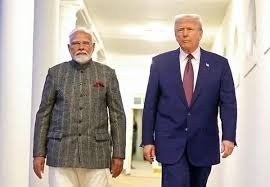

New Delhi (Economy India): In a significant diplomatic development amid rising tensions in West Asia, Prime Minister Narendra Modi on Tuesday held a crucial telephonic conversation with U.S. President Donald Trump, focusing on the ongoing regional conflict and the strategic importance of maintaining uninterrupted global energy supply routes.
The discussion comes at a time when geopolitical uncertainties have intensified following the outbreak of the West Asia conflict on February 28, raising serious concerns over global oil flows, shipping security, and economic stability.
India Calls for Peace and De-escalation
During the conversation, Prime Minister Modi reiterated India’s firm position advocating for swift de-escalation and restoration of peace in the region. He emphasized that stability in West Asia is essential not only for regional harmony but also for global economic well-being.
“India supports de-escalation and restoration of peace at the earliest,” the Prime Minister said, underlining the urgency of diplomatic solutions over military escalation.
The call marks the first direct engagement between the two leaders since the conflict began, signaling the seriousness of the situation and the need for coordinated global responses.
Strait of Hormuz: A Critical Global Lifeline
A key focus of the Modi–Trump conversation was the continued accessibility of the Strait of Hormuz—one of the world’s most crucial maritime corridors.
The Prime Minister stressed that the Strait must remain “open, secure, and accessible”, noting its vital role in sustaining global energy markets and trade flows.
Why the Strait Matters:
- Handles nearly 20% of global oil and LNG supply
- Connects major oil-producing Gulf nations to international markets
- Critical for energy-importing countries like India
Any disruption in this narrow passage between the Persian Gulf and the Gulf of Oman has the potential to trigger a sharp spike in oil prices and disrupt global supply chains.
Rising Global Concerns Over Energy Security
The ongoing crisis has already begun to impact global markets, with oil and gas prices witnessing upward pressure amid fears of supply disruption.
India, which relies heavily on energy imports from West Asia, is particularly vulnerable to such volatility.
Potential Economic Impact:
- Increase in fuel prices domestically
- Inflationary pressures across sectors
- Rising cost of transportation and logistics
- Impact on industrial production
Experts warn that prolonged instability in the region could have cascading effects on global economies, particularly emerging markets.
US Approach: Diplomacy with Strategic Pressure
President Trump, according to recent statements, has adopted a calibrated approach by combining diplomatic engagement with strategic pressure. The United States has reportedly extended a deadline for Iran to ease tensions around the Strait, indicating a preference for negotiated outcomes while keeping military options open.
The Modi–Trump conversation is seen as part of broader international efforts to avoid escalation and ensure stability in one of the world’s most sensitive geopolitical regions.
India’s Balanced Diplomatic Strategy
India has been actively engaging with multiple stakeholders in the region, reflecting its commitment to a balanced and non-aligned foreign policy approach.
In recent days, Prime Minister Modi has held discussions with key leaders across West Asia, including those from Gulf nations and Israel, while maintaining communication channels with Iran.
India’s approach is guided by:
- Strategic autonomy
- Focus on dialogue and diplomacy
- Protection of national economic interests
Shipping and Trade: A Growing Concern
The security of maritime routes has emerged as a critical concern amid the crisis. The Strait of Hormuz serves as a vital artery for global shipping, particularly for oil and liquefied natural gas.
Any prolonged disruption could lead to:
- Increased shipping costs
- Delays in cargo movement
- Higher insurance premiums for vessels
- Global supply chain disruptions
India’s trade flows, especially in energy and essential commodities, could be significantly affected if the situation escalates further.
Strategic Implications for India
For India, the stakes extend beyond immediate energy concerns. The crisis has broader implications for economic stability, food security, and geopolitical positioning.
Key Areas of Impact:
- Energy Security: Dependence on Gulf oil imports
- Economic Stability: Inflation and fiscal pressures
- Food Security: Possible impact on fertiliser supply
- Geopolitical Role: Strengthening India’s position as a responsible global actor
No Military Involvement, Focus on Stability
Sources indicate that India is not considering any military involvement in the conflict, instead prioritizing diplomatic engagement and regional stability.
At the same time, Indian authorities are closely monitoring the situation to ensure the safety of maritime trade routes and Indian interests in the region.
Global Outlook: A Fragile Situation
The West Asia crisis has once again highlighted the fragility of global energy systems and the interconnected nature of modern economies.
With nearly one-fifth of the world’s oil supply passing through the Strait of Hormuz, the stakes are exceptionally high.
Possible Scenarios:
- De-escalation: Restoration of normal shipping and price stability
- Prolonged Tensions: Sustained high energy prices and market volatility
- Escalation: Severe disruption of global trade and economic slowdown
India’s Role as a Stabilizing Force
The telephonic conversation between Narendra Modi and Donald Trump underscores the growing importance of diplomatic coordination in addressing global crises.
India’s call for peace, coupled with its emphasis on keeping critical trade routes open, reflects a pragmatic and forward-looking approach aimed at safeguarding both national and global interests.
As the situation continues to evolve, the focus will remain on diplomatic efforts to ensure that tensions do not escalate further, preserving stability in a region that is vital to the global economy.
(Economy India)