
Blue Economy & Strategic Development
Sri Vijaya Puram | Economy India | The Andaman and Nicobar Islands are set to play a central role in India’s Blue Economy strategy, with the Union government unveiling an ambitious roadmap to transform the archipelago into a national hub for sustainable marine-based economic growth. Union Minister of State (Independent Charge) for Science & Technology and Earth Sciences, Dr Jitendra Singh, said that India’s future economic value addition will increasingly come from untapped marine resources, placing the Andaman and Nicobar Islands at the heart of this transition.
Addressing officials and stakeholders in Sri Vijaya Puram on January 17, the minister underlined that the islands’ strategic location, vast Exclusive Economic Zone (EEZ), and rich marine biodiversity give them a unique advantage in driving India’s long-term blue economy ambitions.
Blue Economy to Be a New Growth Engine for India
Dr Jitendra Singh said the concept of the Blue Economy goes far beyond fisheries, encompassing a wide range of economic activities linked to oceans, seas, and coastal areas.
“In the coming decades, India’s economic value addition will increasingly emerge from sectors that remain underexplored today. The Andaman and Nicobar Islands are ideally positioned to become the nucleus of this transformation,” he said.
India has an EEZ of over 2.37 million square kilometres, and nearly 30 percent of this lies around the Andaman and Nicobar Islands, making the region critical for marine research, ocean-based industries, and strategic maritime initiatives.
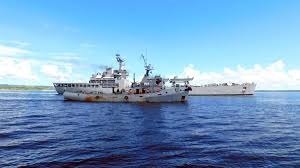
Strategic Importance of Andaman and Nicobar Islands
The minister highlighted that the Andaman and Nicobar Islands occupy a pivotal geostrategic position at the crossroads of the Indian Ocean and the Indo-Pacific, close to major global shipping lanes.
Key strategic advantages include:
- Proximity to Southeast Asia and East Asia
- Control over critical Sea Lines of Communication (SLOCs)
- Natural deep-water harbours
- Rich and diverse marine ecosystems
These factors make the islands not only economically significant but also vital for India’s maritime security, trade resilience, and regional influence.
Focus Areas Under the Blue Economy Plan
According to Dr Jitendra Singh, the government’s blue economy strategy for the islands will focus on sustainable development, scientific innovation, and community participation.
1. Sustainable Fisheries and Aquaculture
The islands offer vast potential for:
- Deep-sea fishing
- Mariculture, including seaweed, pearls, and ornamental fish
- Value-added seafood processing and exports
Emphasis will be placed on scientific stock assessment, modern fishing practices, and protecting livelihoods of local fishing communities.
2. Marine Biotechnology and Ocean Research
The Andaman and Nicobar region is a hotspot for marine biodiversity, offering opportunities in:
- Marine bioactive compounds
- Pharmaceuticals and nutraceuticals
- Climate-resilient marine species
Institutions under the Ministry of Earth Sciences and Department of Biotechnology are expected to expand research collaborations in the region.
3. Coastal and Eco-Tourism
Sustainable tourism will be a key pillar, with focus on:
- Low-impact island tourism
- Coral reef conservation-linked tourism
- Cruise tourism with strict environmental norms
The minister stressed that tourism development would be environment-sensitive, balancing economic benefits with ecological protection.
4. Renewable Ocean Energy
The islands are being explored as pilot zones for:
- Tidal energy
- Offshore wind energy
- Ocean thermal energy conversion (OTEC)
“These emerging technologies can help make the islands energy self-reliant while contributing to India’s clean energy transition,” the minister said.
Infrastructure Push with Environmental Safeguards
Dr Jitendra Singh said the Centre is committed to developing modern infrastructure in the islands without compromising ecological balance.
Planned initiatives include:
- Smart ports and coastal logistics hubs
- Digital connectivity and undersea cables
- Climate-resilient coastal infrastructure
He emphasised that scientific impact assessments and strict environmental standards will guide every major project.
Empowering Local Communities
A key feature of the blue economy roadmap is inclusive growth, ensuring that local communities benefit directly from development.
Measures include:
- Skill development in marine sciences and ocean-based livelihoods
- Support for island-based startups
- Capacity building for self-help groups and cooperatives
“Development must be people-centric. Islanders should be stakeholders, not spectators, in the blue economy journey,” Dr Singh said.
Alignment with India’s National Vision
The Andaman and Nicobar blue economy plan aligns with:
- India’s Maritime Amrit Kaal Vision 2047
- Indo-Pacific Oceans Initiative (IPOI)
- Atmanirbhar Bharat in strategic and economic sectors
Experts believe that a successful blue economy model in the islands could serve as a template for coastal states across India.
(Economy India)
Long-Term Economic and Strategic Impact
Analysts say the transformation of the Andaman and Nicobar Islands into a blue economy hub could:
- Boost India’s marine GDP contribution
- Enhance export earnings
- Strengthen maritime security
- Increase India’s influence in the Indo-Pacific region
The initiative also reinforces India’s commitment to sustainable ocean governance amid global concerns over climate change and marine degradation.
With a clear policy push and strategic intent, the Andaman and Nicobar Islands are poised to become the flagbearer of India’s blue economy future. By combining scientific innovation, sustainability, and inclusive development, the Centre aims to unlock the immense economic potential of India’s oceans while preserving fragile marine ecosystems.
As India looks seaward for its next phase of growth, the Andaman and Nicobar Islands are set to emerge not just as a remote archipelago, but as a central pillar of the nation’s economic, strategic, and environmental vision.
(Economy India)