Infrastructure & Rural Development
Raipur | Economy India | The Chhattisgarh government has reaffirmed its commitment to ensuring safe, pure, and sustainable drinking water for every rural household, with the Jal Jeevan Mission (JJM) emerging as a transformative force in the state’s rural water supply landscape. Deputy Chief Minister Arun Sao stated that Chhattisgarh is firmly on course to becoming a “Har Ghar Jal” state, following unprecedented progress over the past two years.
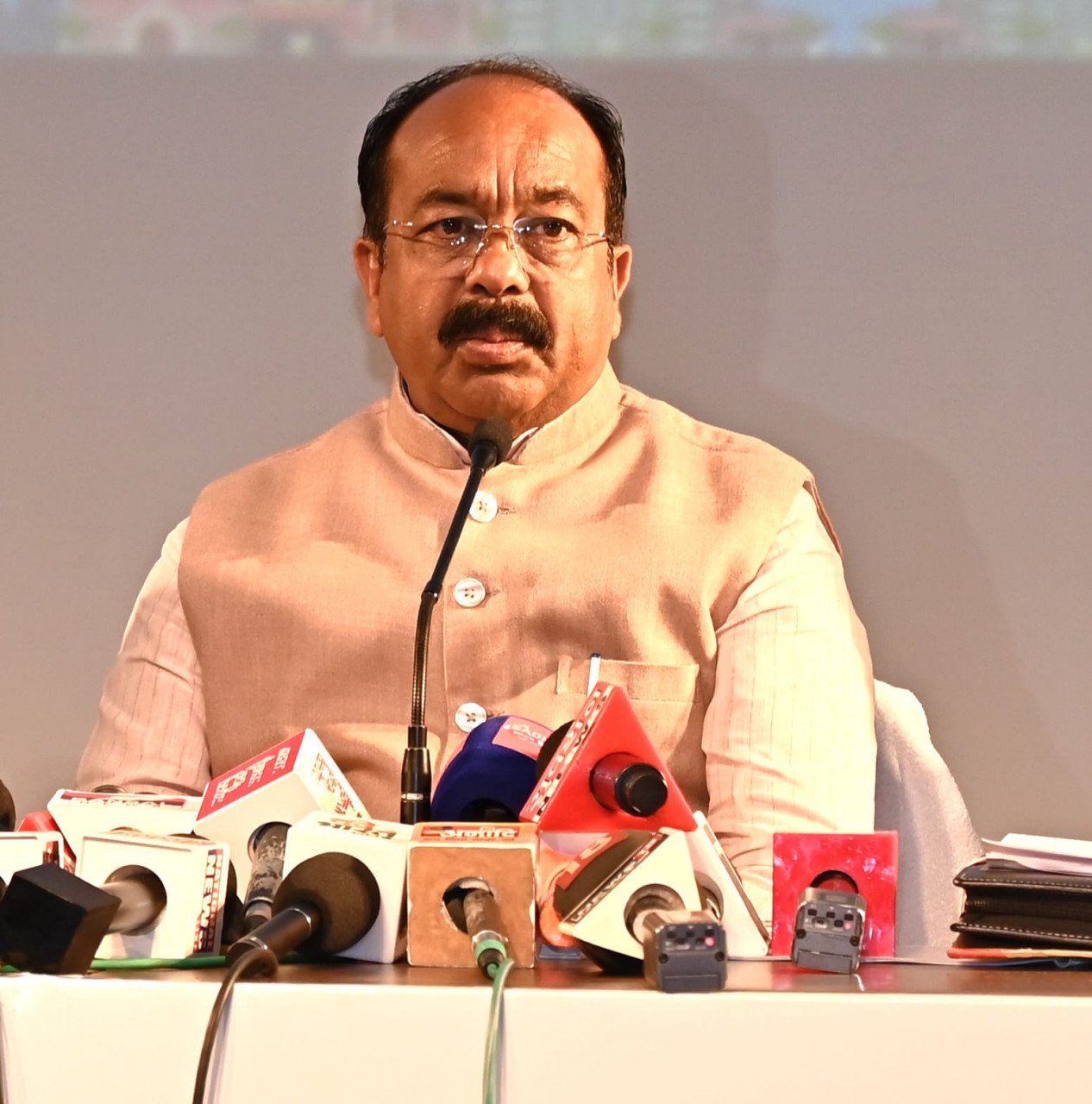
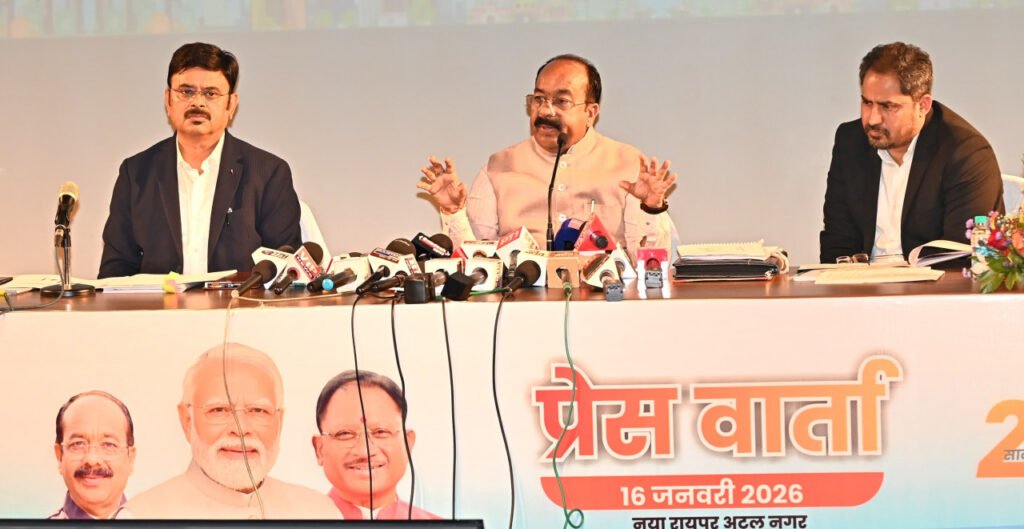
Addressing a press conference at the Samvad Auditorium, Nava Raipur Atal Nagar, on January 16, 2026, Sao highlighted the scale, speed, and transparency with which the Jal Jeevan Mission is being implemented across rural Chhattisgarh.
Historic Expansion of Rural Drinking Water Coverage
Deputy Chief Minister Arun Sao said that the Jal Jeevan Mission has brought about historic improvements in drinking water infrastructure, especially in remote and underserved rural areas.

- 40.87 lakh Functional Household Tap Connections (FHTCs) have been provided across the state so far
- Over 32 lakh rural households are now receiving drinking water directly through tap connections
- Before the launch of JJM, Chhattisgarh had only 3.19 lakh household tap connections
“The rapid expansion achieved during the past two years under the present government reflects our strong political will and administrative focus,” Sao said.
‘Har Ghar Jal’ Villages on the Rise
A key milestone under the Jal Jeevan Mission is the certification of villages with 100 percent household tap water coverage.
- 6,572 villages have achieved complete household tap connectivity
- 5,564 villages have been officially declared ‘Har Ghar Jal Grams’
- 4,544 villages have already been formally certified
Sao noted that in the last two years alone, the number of certified ‘Har Ghar Jal’ villages has increased by over 750 percent, underlining the accelerated pace of implementation.
In addition, 5,088 Gram Panchayats have already taken over the operation and maintenance of local water supply systems, strengthening decentralised governance and community ownership.
Strengthening Water Supply Infrastructure
The Deputy Chief Minister outlined the transformation of rural water infrastructure before and after the Jal Jeevan Mission:
Before JJM:
- 3.08 lakh handpumps
- 4,440 tap water schemes
- 2,132 spot water supply schemes
Current Status:
- 70 large group water supply schemes under implementation
- These schemes will benefit 3,208 villages
- More than 9.85 lakh household tap connections are linked to group schemes
“These integrated schemes are crucial for water-stressed and fluoride- or iron-affected regions,” Sao said.
Strong Focus on Water Quality and Transparency
Emphasising that quality is non-negotiable, Arun Sao said the state has established a robust water testing and grievance redressal framework.
- 77 water testing laboratories operational across Chhattisgarh
- 47 laboratories accredited by NABL
- Toll-free helpline: 1800-233-0008 for immediate redressal of drinking water complaints
He added that citizens are being actively encouraged to report water quality or supply issues, ensuring accountability at all levels.
Zero Tolerance for Substandard Work
The Deputy Chief Minister made it clear that the government is enforcing strict accountability under the Jal Jeevan Mission.
Over the past two years:
- ₹28.38 crore imposed as penalties for defective works
- 629 contracts cancelled
- 11 firms blacklisted
- Departmental and legal action initiated against erring officials and contractors
“This sends a strong message that public money and public health cannot be compromised,” Sao asserted.
Roadmap Ahead: Completing the Final Mile
Looking ahead, the government has outlined an ambitious yet time-bound action plan:
- Construction of nearly 8 lakh remaining FHTCs
- Completion of over 21,000 incomplete water supply schemes
- Transfer of more than 24,000 schemes to Gram Panchayats
- Timely completion of all ongoing group water supply projects
The Deputy Chief Minister said these steps will ensure long-term sustainability and uninterrupted supply of drinking water in rural areas.
Human Resource Strengthening in the Water Supply Sector
To support large-scale implementation, the state has also strengthened its manpower capacity:
- 403 new posts created
- 213 appointments made
- 103 employees promoted
- 877 government employees granted time-scale pay benefits
Sao said institutional strengthening is essential for sustaining infrastructure and ensuring service delivery at the grassroots level.
Jal Jeevan Mission: A Pillar of Rural Development
The Jal Jeevan Mission is widely seen as a cornerstone of rural transformation, with far-reaching socio-economic benefits:
- Improved public health outcomes
- Reduced drudgery for women and children
- Better sanitation and hygiene
- Enhanced productivity and quality of life
“With reliable drinking water at home, rural families can focus on education, livelihoods, and overall well-being,” Sao said.
Chhattisgarh’s progress under the Jal Jeevan Mission reflects a decisive shift in rural infrastructure development, combining scale with accountability. With more than 32 lakh households already covered and thousands of villages achieving full connectivity, the state is rapidly moving towards universal access to safe drinking water.
As the government pushes to complete the final phase, the Jal Jeevan Mission is set to play a defining role in Chhattisgarh’s journey towards inclusive growth, public health security, and sustainable rural development.
(Economy India)