Strategic Affairs & Global Economy
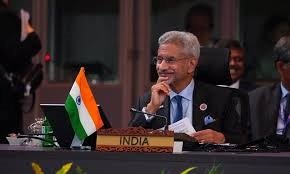
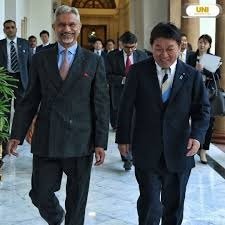
New Delhi | Economy India | India and Japan have agreed to further deepen cooperation across key strategic and economic sectors, including trade, critical minerals, defence, and high technology, with External Affairs Minister S Jaishankar asserting that the bilateral partnership holds immense potential to reduce risks facing the global economy.
Speaking in New Delhi on 16 January, Jaishankar underlined that the India–Japan relationship has evolved into one of the most stable and forward-looking partnerships in the Indo-Pacific, anchored in shared democratic values, economic complementarities, and a common vision for a resilient global order.
Strategic Partnership in an Uncertain Global Environment
At a time when the global economy is grappling with supply chain disruptions, geopolitical tensions, energy insecurity, and slowing growth, Jaishankar said India and Japan are uniquely positioned to contribute to global economic stability.

“The India–Japan partnership has the potential to reduce risks in the global economy by building trusted supply chains, strengthening technological cooperation, and ensuring secure access to critical resources,” the External Affairs Minister said.
He emphasised that both countries recognise the need to move away from overdependence on single geographies and to promote diversification, transparency, and reliability in global trade and investment flows.
Expanding Cooperation in Trade and Supply Chains
Trade and investment featured prominently in the discussions, with both sides agreeing to work towards expanding bilateral trade volumes and improving market access. India and Japan have already established strong economic linkages through Japanese investments in manufacturing, infrastructure, automobiles, electronics, and industrial corridors.
Jaishankar noted that enhanced trade cooperation would not only benefit both economies but also contribute to regional and global supply chain resilience, particularly in sectors affected by recent shocks.
“By strengthening our economic partnership, we can provide confidence to global markets and create alternative, dependable supply chain networks,” he said.
Focus on Critical Minerals and Strategic Resources
A key area of convergence between India and Japan is cooperation in critical minerals, which are essential for clean energy technologies, electric mobility, semiconductors, and advanced manufacturing.
With global competition intensifying over access to lithium, rare earth elements, and other strategic minerals, both countries see value in collaborating on exploration, processing, recycling, and technology sharing.
Jaishankar highlighted that such cooperation would support energy transition goals while reducing vulnerabilities arising from concentrated supply sources.
Defence and Security as Economic Enablers
Defence cooperation was also identified as a critical pillar of the partnership. India and Japan have steadily expanded defence exchanges, joint exercises, and strategic dialogues in recent years.
According to Jaishankar, a secure Indo-Pacific region is fundamental to economic growth and global trade flows.
“Security and economic stability are closely linked. A stronger India–Japan defence partnership contributes to regional stability, which in turn supports global commerce and investment,” he said.
High Technology and Innovation Collaboration
High technology cooperation, including areas such as semiconductors, digital infrastructure, artificial intelligence, clean energy technologies, and advanced manufacturing, was another major focus of the discussions.
India and Japan aim to leverage each other’s strengths—Japan’s technological expertise and manufacturing capabilities, and India’s large market, skilled workforce, and growing innovation ecosystem—to build future-ready economic frameworks.
Jaishankar said collaboration in high technology would be critical not only for bilateral growth but also for shaping global technology standards and norms.

India–Japan Partnership in the Indo-Pacific Context
The External Affairs Minister reiterated that the India–Japan partnership plays a vital role in promoting a free, open, and rules-based Indo-Pacific. Both countries are key members of regional and plurilateral groupings and share a common approach to ensuring freedom of navigation, connectivity, and sustainable development.
He added that India and Japan’s cooperation sends a strong signal of confidence and stability at a time when the international system is under strain.
Shared Vision for Global Economic Resilience
Jaishankar stressed that India and Japan are aligned in their belief that global economic challenges require collaborative and principled solutions, rather than protectionism or fragmentation.
“The strength of our partnership lies in trust, predictability, and long-term thinking. Together, India and Japan can help shape an economic order that is resilient, inclusive, and less vulnerable to shocks,” he said.
Looking Ahead
With both economies seeking to navigate a complex global environment, the India–Japan partnership is expected to gain further momentum through sustained political engagement, institutional cooperation, and private-sector participation.
As Jaishankar concluded, the bilateral relationship is no longer limited to mutual benefit alone but has acquired a global dimension, offering pathways to mitigate economic risks and strengthen stability in an increasingly uncertain world.
(Economy India)