
From a policy initiative to a nationwide movement, Startup India has transformed India into the world’s third-largest startup ecosystem, with innovation, risk-taking and youth leadership reshaping the country’s economic future.
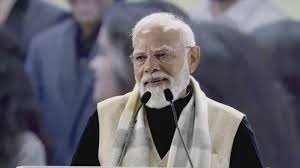
New Delhi, January (Economy India): As India marked National Startup Day at Bharat Mandapam in the national capital, Prime Minister Narendra Modi used the occasion to reflect on a decade of the Startup India initiative, describing it not merely as a government scheme but as a transformational movement that has altered India’s economic mindset, social aspirations and global standing.
Addressing entrepreneurs, innovators, policymakers and industry leaders, the Prime Minister said India’s youth are no longer content with incremental change. Instead, they are focused on solving real-world problems, building scalable solutions and creating enterprises that combine ambition with national purpose.
“Startup India is not just about businesses,” the Prime Minister said. “It is about courage, confidence and innovation shaping the future of India.”
From Policy to People’s Movement
Launched on January 16, 2016, Startup India was conceived as a national mission to nurture innovation, encourage entrepreneurship and shift India from being a nation of job seekers to one of job creators. Ten years later, its impact has far exceeded initial expectations.
In 2016, India had fewer than 500 startups and just four unicorns. Today, the country has over 2,00,000 recognised startups, operating across sectors and geographies, and nearly 125 active unicorns. India now ranks as the third-largest startup ecosystem globally, a milestone that reflects not only scale but also diversity and depth.
The Prime Minister described this journey as a story of “millions of dreams turning into reality,” noting that Startup India challenged long-standing structural and psychological barriers that once discouraged entrepreneurship.
A New Culture of Risk-Taking
One of the most significant shifts highlighted in the Prime Minister’s address was the normalisation of risk-taking. For decades, Indian society largely viewed entrepreneurship as a high-risk path, accessible mainly to children of large industrial families with access to capital and networks.
“That mindset has changed,” Mr. Modi said. “Today, risk-taking has become mainstream.”
Young Indians from Tier-II and Tier-III cities, and even from villages, are launching startups, often targeting grassroots challenges in agriculture, healthcare, education, clean energy and financial inclusion. The Prime Minister stressed that this cultural shift is as important as policy reforms, because innovation thrives only when society values experimentation and accepts failure as part of growth.
Youth at the Centre of India’s Growth Story
Calling India the world’s youngest major economy, the Prime Minister said startups are central to harnessing this demographic advantage. He noted that young founders are no longer following conventional career paths but are creating entirely new ones.
“Instead of choosing comfort, our youth are choosing challenge,” he said.
This entrepreneurial energy is also translating into employment. Startups are emerging as major job creators, offering opportunities across technology, manufacturing, services and research. In 2025 alone, nearly 44,000 new startups were registered, the highest annual addition since the programme began, underscoring the ecosystem’s accelerating momentum.

Women Entrepreneurs and Inclusive Growth
A defining feature of India’s startup revolution is its growing gender inclusivity. According to official data cited by the Prime Minister, over 45 percent of recognised startups have at least one woman director or partner.
India is also emerging as the second-largest ecosystem globally for women-led startup funding, a development that strengthens both economic participation and social equity. Mr. Modi emphasised that women-led enterprises are expanding innovation into new areas, from health-tech and ed-tech to climate solutions and rural enterprises.
“This inclusive growth makes India’s startup ecosystem stronger and more resilient,” he said.
Building the Innovation Infrastructure
The Prime Minister credited the past decade’s success to the creation of a supportive innovation ecosystem, designed to nurture ideas from school to scale-up.
Key initiatives include:
- Atal Tinkering Labs in schools to instil a spirit of innovation from an early age
- National hackathons to encourage youth to solve real governance and societal challenges
- Incubation centres across universities and research institutions to prevent ideas from dying due to lack of resources
Equally important has been the dismantling of regulatory barriers that once stifled entrepreneurship. The Prime Minister recalled how complex compliance norms, lengthy approvals and fear of inspector raj discouraged innovation.
Under the Jan Vishwas Act, more than 180 legal provisions were decriminalised, reducing the risk of litigation for startups. Self-certification under multiple laws, simplified exits and easier mergers have allowed founders to focus on innovation rather than paperwork.
Expanding Market Access and Strategic Sectors
Startup India’s impact is increasingly visible in strategic and high-technology sectors that were once dominated by large incumbents.
- In defence manufacturing, platforms like iDEX have opened procurement pathways for startups
- In space technology, nearly 200 startups are now operating in a sector once closed to private players
- In the drone industry, regulatory reforms have transformed India from a laggard into a fast-growing innovation hub
Public procurement has also emerged as a major growth lever. Through the Government e-Marketplace (GeM), around 35,000 startups and small businesses have received nearly 5 lakh orders worth approximately ₹50,000 crore, significantly improving market access and revenue stability.
Capital, Credit and Confidence
Recognising that ideas need capital to scale, the government has focused on improving access to finance across the startup lifecycle.
The Fund of Funds for Startups has facilitated investments exceeding ₹25,000 crore, while schemes such as the Startup India Seed Fund, IN-SPACe Seed Fund and NIDHI Seed Support Programme provide early-stage funding.
To address collateral constraints, a credit guarantee scheme has been introduced, ensuring that lack of assets does not become a barrier to creativity. According to the Prime Minister, these financial instruments are designed not just to fund startups, but to build confidence among first-generation entrepreneurs.
Deep Tech, AI and India’s Strategic Future
Looking ahead, the Prime Minister placed special emphasis on deep technology and emerging sectors critical to India’s economic security and strategic autonomy.
Artificial Intelligence featured prominently in his address. He noted that countries leading the AI revolution will gain significant economic and geopolitical advantages. For India, startups will be at the forefront of this transformation.
Ahead of the AI Impact Summit, scheduled to be hosted by India in February 2026, the Prime Minister highlighted initiatives under the India AI Mission, including access to over 38,000 GPUs to reduce computing costs for startups and ensure that indigenous AI solutions are developed on Indian servers by Indian talent.
Similar long-term strategies are being pursued in semiconductors, data centres, green hydrogen and advanced manufacturing, signalling a shift from services-led innovation to technology-driven industrial leadership.
Manufacturing: The Next Frontier
While acknowledging India’s success in digital services and platform-based startups, the Prime Minister made a clear call for the next phase of growth.
“Now is the time for our startups to focus more on manufacturing,” he said.
He urged entrepreneurs to build world-class products, develop unique technologies and compete globally on quality, not just cost. Strengthening manufacturing startups, he argued, will be essential for job creation, export growth and reducing import dependence.
A Decade Proven, A Decade Ahead
Concluding his address, Prime Minister Modi said the last ten years have proven what India’s youth are capable of achieving when given trust, freedom and opportunity.
“The next decade should be about global leadership,” he said. “India must lead new startup trends and emerging technologies.”
As Startup India enters its second decade, it stands as a central pillar of India’s economic strategy—one that blends innovation with inclusion, ambition with accountability, and growth with national purpose.
With policy support, expanding capital, and a generation willing to take risks, India’s startup revolution appears poised not just to continue, but to define the country’s role in the global economy of the future.
(Economy India)