New Delhi (Economy India): In a landmark moment for India’s deep-tech and artificial intelligence ecosystem, Shodh AI has announced the launch of Project Skanda, India’s first Generative AI model for material science, developed in strategic collaboration with NVIDIA. The announcement positions India firmly in the global race for Physical AI—AI systems designed to model and interact with real-world physical processes.
In a landmark moment for India’s deep-tech and artificial intelligence ecosystem, Shodh AI has announced the launch of Project Skanda, India’s first Generative AI model for material science, developed in strategic collaboration with NVIDIA. The announcement positions India firmly in the global race for Physical AI—AI systems designed to model and interact with real-world physical processes.

Shodh AI has been selected as one of the twelve foundational model companies under the Government of India’s flagship IndiaAI Mission, underscoring the strategic importance of the project for national technological capabilities.
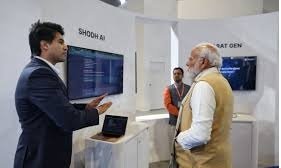
Project Skanda: A Breakthrough in AI for Science
Unveiled at the India AI Impact Summit, the Alpha Release of Project Skanda represents one of the world’s first Mesoscale Foundation Models for Energy Storage. Unlike conventional AI models that primarily focus on atomic-level chemistry, Skanda operates at the mesoscale—the invisible internal structural architecture within battery cells that governs battery life, safety, efficiency, and charging speed.
This shift in focus is significant. While atomic chemistry explains material composition, mesoscale structures determine how those materials behave in real-world manufacturing and usage conditions—an area long considered a bottleneck in battery innovation.
Accelerating Battery Material Discovery
Project Skanda has been trained specifically for battery manufacturers and energy storage companies, enabling them to dramatically accelerate their material discovery and validation processes.
At its current stage, users can upload Scanning Electron Microscope (SEM) images, allowing the model to predict battery lifecycle performance. Over time, Shodh AI aims to expand the model’s capabilities to support end-to-end material design.
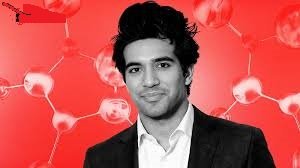
“Currently, you can upload an SEM image into the model, and it will predict the battery life cycle. Within a year, we aim to enable users to simply ask for a new battery chemistry, and Skanda will provide the methodology to make it,” said Dr. Arastu Sharma, CEO of Shodh AI.
Powered by NVIDIA’s Advanced AI Infrastructure
Project Skanda is built using NVIDIA Hopper GPUs and the PhysicsNeMo framework, a specialized AI platform designed for physics-based simulations. This combination enables Skanda to bridge the long-standing gap between scientific theory and industrial manufacturing, a challenge that has traditionally slowed down innovation in material science.
According to industry estimates, developing a new battery material typically takes nearly a decade and costs millions of dollars. Shodh AI claims Project Skanda can compress this timeline to just six months, with development costs reduced to around one million dollars.
“Our goal is to compress a ten-year material development cycle into six months, without compromising scientific rigor or manufacturing feasibility,” Dr. Sharma added.
Strategic Implications for India’s Energy Transition
The launch of Project Skanda carries major implications for India’s electric mobility, renewable energy storage, and advanced manufacturing ambitions. Faster and cheaper battery innovation could significantly strengthen domestic supply chains, reduce dependence on imports, and support India’s clean-energy transition.
By combining AI for Science, high-performance computing, and industrial relevance, Shodh AI’s initiative aligns closely with national priorities under Make in India, Startup India, and IndiaAI.
A Defining Moment for India’s AI Ecosystem
With Project Skanda, India moves beyond traditional software-centric AI applications into the realm of deep scientific discovery and physical systems modeling. The collaboration between Shodh AI and NVIDIA highlights how Indian startups are increasingly building globally competitive foundational technologies, not just applications.
As Physical AI gains momentum worldwide, Project Skanda marks a defining step in establishing India as a serious contender in the next frontier of artificial intelligence and material innovation.
(Economy India)