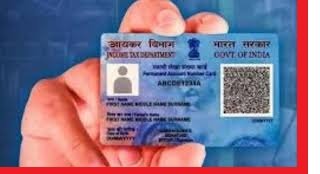
New Delhi (Economy India): The government has proposed significant changes to PAN card requirements under the draft rules of the New Income Tax Act, 2025, aiming to reduce compliance burden for small transactions and ease paperwork for individuals and businesses. The new rules are expected to come into force from April 1, 2026, subject to final approval.

Cash Transactions: PAN Needed Only Beyond ₹10 Lakh a Year
Under the proposed framework, PAN will be mandatory only if cash deposits or withdrawals reach ₹10 lakh or more in a financial year. Currently, PAN details are required for cash transactions exceeding ₹50,000 in a single day at banks or cooperative institutions.
The change is expected to benefit small traders, farmers, and individuals who rely on cash for routine transactions.

Hotel Bills, Events: PAN Limit Raised to ₹1 Lakh
The PAN requirement threshold for hotel bills, convention centres, and event management payments has been increased from ₹50,000 to ₹1 lakh. This means customers paying bills below ₹1 lakh will no longer need to furnish PAN details.
For property transactions and gifts, the proposed PAN threshold has been raised from ₹10 lakh to ₹20 lakh, providing further relief in real estate-related documentation.

Vehicle Purchases: PAN Mandatory Above ₹5 Lakh
Under the draft rules, PAN will be required for the purchase of motorcycles or any motor vehicle priced above ₹5 lakh.
Currently, PAN is compulsory for four-wheelers irrespective of cost, while no such rule exists for two-wheelers. The new proposal exempts vehicles priced up to ₹5 lakh from PAN disclosure.
Insurance Policies: PAN Required for Account-Based Relationship
PAN will become mandatory when entering into an account-based relationship with an insurance company. Earlier, PAN was required only for life insurance premiums exceeding ₹50,000 annually.
The new rule means that purchasing an insurance policy will involve creating a permanent customer profile, similar to banking relationships.
Crypto Exchanges Must Share Data
Cryptocurrency exchanges will now be required to share transaction data with the Income Tax Department. Digital assets have also been formally recognised as electronic payments under the draft law, tightening regulatory oversight of the crypto ecosystem.
When Will the New Rules Apply?
Following the Union Budget 2026 announcement by Finance Minister Nirmala Sitharaman, the Central Board of Direct Taxes (CBDT) has invited public and stakeholder feedback. The rules are expected to be finalised by early March 2026, with nationwide implementation from April 1, 2026.
The proposed changes signal a shift towards simplified compliance while maintaining stricter monitoring of high-value and digital transactions.
(Economy India)