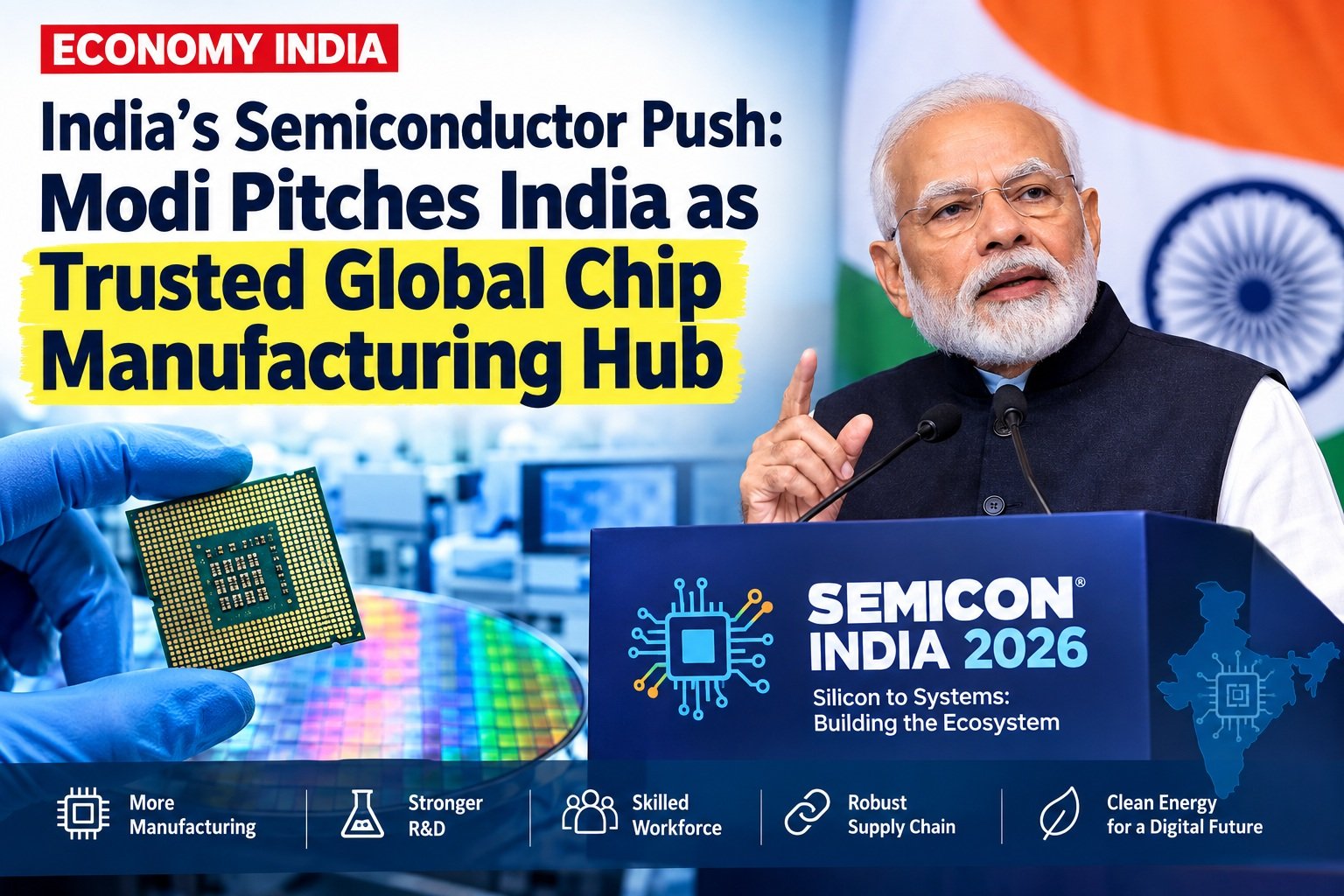
At SEMICON India 2026, PM Modi highlights India’s shift towards commercial chip production and calls for deeper capabilities in design, R&D, materials and manufacturing.
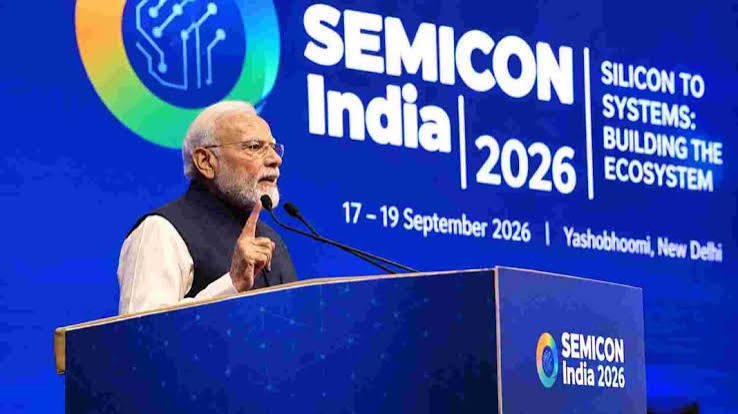
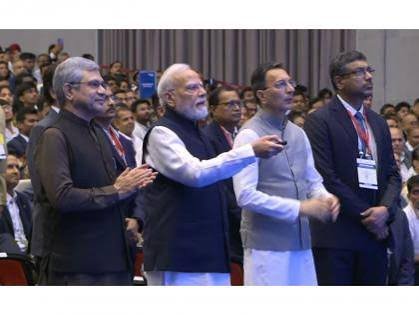
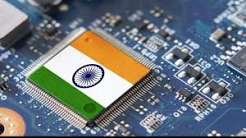
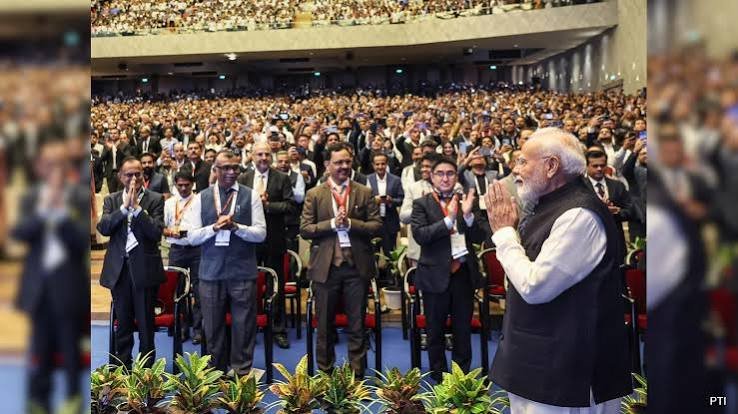
NEW DELHI (Economy India): Prime Minister Narendra Modi on Thursday pitched India as a trusted destination for global manufacturing and called for stronger industry participation in building a complete semiconductor ecosystem, as he inaugurated the fifth edition of SEMICON India 2026 in New Delhi.
Addressing semiconductor industry leaders, Modi said global companies were looking for new and trusted manufacturing destinations and asserted that India was taking steps to become a preferred destination for the semiconductor industry.
He also highlighted the emergence of commercial semiconductor production in India, saying chips manufactured in the country had begun reaching customers in India and overseas.
ADVERTISEMENT
Modi Pitches India as Trusted Manufacturing Hub, Calls for Deeper Semiconductor Ecosystem
India Moves from Semiconductor Plans to Production
Modi said India’s semiconductor programme had progressed from policy formulation and project planning towards pilot production and commercial manufacturing.
According to the government, 12 semiconductor projects have been approved under the first phase of the Semicon India programme, covering areas including fabrication, assembly, testing, packaging and other parts of the semiconductor value chain.
The Prime Minister said new commercial production lines represented an important transition for India’s semiconductor ambitions, while urging industry to build capabilities across the broader ecosystem.
Push for Fabless Companies, R&D and Semiconductor IP
Modi called for deeper domestic capabilities in semiconductor design, research and development, equipment, materials, testing and packaging.
He particularly emphasised the need to expand the number of fabless semiconductor companies, develop intellectual property in India and explore technologies such as silicon photonics for AI infrastructure.
The Prime Minister also urged semiconductor companies to establish stronger research partnerships with Indian universities and institutions.
He called on Indian researchers working overseas as well as young researchers in the country to contribute to the development of advanced technologies in India.
“I urge industry leaders to spearhead R&D in the country,” Modi said, according to the official transcript of his SEMICON India address.
Semicon 2.0 Gets Rs 1.275 Lakh Crore Outlay
The government has moved into the second phase of its semiconductor programme, with Semicon 2.0 approved with an outlay of Rs 1,27,500 crore.
The second phase expands the focus beyond semiconductor fabrication to areas including research and development, chip design, machines and materials, additional fabs, talent development and strengthening assembly, testing and packaging capabilities.
The broader objective is to develop capabilities across the semiconductor value chain rather than focusing only on chip fabrication.
Focus on Semiconductor Supply Chain
Modi urged companies involved in semiconductor equipment, chemicals, gases and materials to expand their presence in India.
A deeper domestic supply chain, he said, would help create a more comprehensive semiconductor ecosystem and provide opportunities for companies across different stages of production.
The government has also identified domestic component manufacturing and higher value addition as important areas for strengthening electronics and semiconductor supply-chain resilience.
1 Lakh Engineering Students Targeted for Chip Design
India’s engineering talent pool was another major focus of Modi’s address.
The Prime Minister said the government was targeting the training of 1 lakh engineering students in chip design and related areas, with around 70,000 students already trained, according to the government’s account of his remarks.
He described the availability of skilled engineering talent as an important factor in developing India’s semiconductor capabilities.
Semiconductor Growth Linked to AI and Energy Demand
The semiconductor push is also closely connected with India’s expanding artificial intelligence and advanced manufacturing ecosystem.
Modi highlighted the growing energy requirements of AI data centres, high-performance computing and semiconductor manufacturing, pointing to the expansion of India’s power-generation capacity, including solar and nuclear energy.
Semiconductors are increasingly important for AI, telecommunications, electric mobility, defence and advanced manufacturing, making the development of a domestic ecosystem strategically significant for technology and industrial supply chains.
SEMICON India 2026 Brings Global Industry Together
SEMICON India 2026 is being held from September 17 to 19 at Yashobhoomi in New Delhi under the theme “Silicon to Systems: Building the Ecosystem.”
The event is jointly organised by the India Semiconductor Mission and SEMI and brings together semiconductor companies, policymakers, investors, academics and startups.
The conference features discussions on semiconductor manufacturing, packaging, equipment, research and development, supply chains, international collaboration and advanced electronics.
With India seeking to expand its role across the global semiconductor value chain, the discussions at SEMICON India 2026 are focused on moving beyond individual projects towards a broader ecosystem covering design, manufacturing, materials, equipment, packaging, talent and R&D.
Economy India is one of the largest media on the Indian economy. It provides updates on economy, business and corporates and allied affairs of the Indian economy. It features news, views, interviews, articles on various subject matters related to the economy and business world.