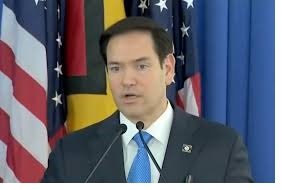
Most trade frictions resolved; high-level US delegation in New Delhi accelerates negotiations on agriculture access, tariffs, and aircraft components as both sides push to close the first stage of the long-pending deal.
NEW DELHI (Economy India): India and the United States are edging closer to a breakthrough in their long-discussed bilateral trade agreement, with most outstanding issues now resolved and a realistic signing window emerging by March 2026, Chief Economic Adviser V. Anantha Nageswaran said on Thursday.

Speaking to Bloomberg, the CEA confirmed that negotiations have entered their “final and most constructive phase,” supported by the presence of a high-powered US trade delegation currently in New Delhi. The visit marks the clearest sign yet that both governments are prepared to move beyond years of tariff disputes and frictions to establish a structured, growth-oriented trade framework.
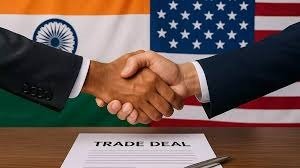
A Deal Six Years in the Making
The India–US trade relationship has expanded rapidly in recent years, with the US overtaking China as India’s largest trading partner. Yet, talks on a formal agreement had stalled due to disagreements on:
- Agricultural market access
- Digital trade rules
- Duties on industrial machinery
- Aircraft components
- Price controls on medical devices
- Data localization
- Visa mobility for skilled professionals
Tensions peaked when the US revoked India’s GSP (Generalised System of Preferences) status in 2019, prompting retaliatory tariffs from India. For nearly four years, both sides struggled to align priorities.
That deadlock is now weakening — significantly.
India Has Made Its ‘Best Ever Offers’: USTR Signals Major Progress
In a rare public acknowledgement, former US Trade Representative official Jamieson Greer said the US has received “the best offers India has ever placed on the table,” especially regarding agriculture and industrial goods.
Greer noted that the negotiations are making visible progress in three critical areas:
Market Access for US Farm Goods
Washington has long pushed for lower duties on:
- Sorghum
- Soybean
- Walnuts
- Almonds
- Processed agricultural goods
India has historically been cautious due to farmer sensitivities. But according to US negotiators, New Delhi is now more open to calibrated access for non-competing crops.
Aircraft Components – Zero-Tariff Framework
Under the 1979 Aircraft Agreement, both sides are close to finalising a reciprocal, zero-tariff structure for aircraft parts, a move that could significantly deepen cooperation in aerospace manufacturing.
Ethanol and Energy Products
US lawmakers, including Senate Committee Chairman Jerry Moran, indicated that India could emerge as a major buyer of US ethanol, supporting India’s E20 fuel transition.

High-Level US Delegation Arrives in Delhi: A Critical Phase
A powerful US delegation led by Deputy Trade Representative Rick Switzer is in New Delhi this week, engaged in what officials describe as an “intensive round of finalisation talks.”
The team’s mandate includes:
- Closing the first stage of the new bilateral trade deal
- Finalising agricultural access formulas
- Sealing the zero-tariff aircraft-part agreement
- Reviewing industrial tariff schedules
- Aligning digital trade principles
- Giving political clearance for a 2026 signing
Multiple Indian officials have privately indicated that this is the most serious and solution-oriented US engagement since 2018.
Commerce Minister Piyush Goyal: ‘Talks Are Progressing Consistently’
Commerce Minister Piyush Goyal confirmed that discussions are moving “in a positive and continuous direction”, adding that the government is “optimistic about a structured, forward-looking bilateral trade framework.”
Goyal noted that India’s offer is balanced, substantial, and addresses US concerns on agriculture and industrial access — but also emphasised that India expects reciprocity, especially on:
- Digital services
- Market access for Indian IT and pharma
- Predictable tariff structures
- Visa and mobility policies (though these are outside the direct scope of the trade pact)
What Issues Are Nearly Resolved — And What Remains?
✔ Agriculture: 75–80% Alignment Reached
India is open to controlled access for US crops where domestic producers are not directly threatened.
✔ Aircraft Components: Largely Concluded
Zero-tariff arrangements appear ready for final approval.
✔ Industrial Machinery Tariffs: Nearing Convergence
❗ Digital Trade & Data Flow Standards: Still Under Negotiation
Washington wants reduced localisation; India insists on data sovereignty.
❗ Medical Device Pricing
US companies want flexibility; India is considering a tiered pricing model.
❗ Services Mobility
India wants more predictable visa regimes — the US sees this as domestic-policy sensitive.
Trade Imbalance: The Core of US Concerns
The US argues that the bilateral trade balance is skewed, with India exporting significantly more to the US than it imports.
Key Numbers (Apr–Jul 2025):
- India’s exports to the US: up 21.64% to $33.53 billion
- India’s imports from the US: up 12.33% to $17.41 billion
- Total bilateral trade: $12.56 billion in July alone
- US remains India’s largest trading partner
Washington wants more agricultural and industrial access to close the perceived imbalance.
New Delhi argues that services trade, where India is a major consumer of US technology and consulting, is not fully reflected in goods-only trade balance calculations.
A Strategic Deal in a Strategic Era
Beyond tariffs and market access, the trade agreement carries deep geopolitical meaning.
Countering China’s Dominance
Both countries want to diversify supply chains and reduce dependency on China.
Indo-Pacific Strategy
A trade agreement would complement the QUAD’s maritime-security and technological objectives.
Global Manufacturing Realignment
India’s PLI schemes, infrastructure upgrades, and corporate tax reforms make it a prime destination for US manufacturing relocation.
Energy Security and Clean Fuel Cooperation
India’s ethanol and clean-energy targets align with US export capabilities.
This trade deal would serve as a strategic economic pillar in the evolving global order.
Target: $500 Billion in Trade by 2030
India and the US have set an ambitious target to grow bilateral trade from $191 billion to $500 billion by 2030.
To reach this milestone, the trade agreement needs to:
- Reduce sector-specific tariff barriers
- Expand co-production in electronics, defence, and semiconductors
- Ease digital and financial flows
- Strengthen agricultural cooperation
- Provide stable, predictable policy frameworks
- Facilitate mobility for high-skilled workers
Economists say that with the right frameworks, both countries can unlock $100–150 billion in new trade within the first three years of implementation.
Expert Take: Why This Moment Is Critical
Arvind Panagariya, Economist
“India needs to integrate more deeply into global value chains. A US trade agreement can accelerate manufacturing investment.”
USIBC President Atul Keshap
“The potential is enormous. American companies see India as a long-term growth market. A stable trade framework will unlock billions in new investment.”
Former Diplomat & Trade Expert Sanjay Bhattacharyya
“Geopolitically, this deal strengthens the Indo-Pacific architecture. Economically, it generates confidence for global investors.”
March 2026: The Most Realistic Signing Window Yet
Based on current progress, the likely timeline is:
Early 2026
Technical drafting, tariff schedules, digital rules framework settled.
March 2026
Bilateral signing of the first stage of the trade agreement.
Late 2026
Implementation begins, pending legislative or executive approvals.
A Historic Window of Opportunity
The India–US trade agreement, long delayed and often politically difficult, is finally approaching a decisive breakthrough. With most differences resolved, negotiators aligned, and both governments recognising the strategic importance of a predictable economic framework, the next 12–15 months represent the most promising moment in the history of India–US trade diplomacy.
A successful agreement would:
- Reshape global supply chains
- Accelerate India’s manufacturing ambitions
- Create new export markets for the US
- Strengthen Indo-Pacific security
- Boost investor confidence
- Lay the foundation for $500 billion bilateral trade by 2030
For both New Delhi and Washington, this is not merely a trade deal.
It is a strategic partnership blueprint for the next decade — economically, geopolitically, and technologically.
(Economy India)