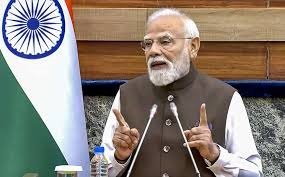
Proposed FTA expected to accelerate bilateral trade, strengthen energy and logistics cooperation, boost MSMEs, and deepen India–Oman strategic partnership, says Prime Minister Modi
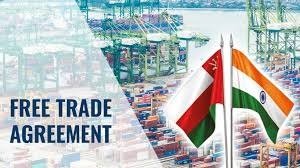
New Delhi (Economy India): The proposed India–Oman Free Trade Agreement (FTA) is poised to usher in a new era of economic dynamism and strategic depth in bilateral relations, Prime Minister Narendra Modi has said, underlining its potential to significantly expand trade, investment, energy cooperation and people-to-people ties between the two countries.
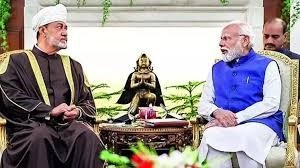
Calling Oman one of India’s most trusted partners in the Gulf region, the Prime Minister said the FTA is not merely a trade arrangement but a long-term partnership framework that reflects shared interests, mutual trust and a common vision for sustainable growth in a rapidly changing global economy.
A Relationship Rooted in History, Reinforced by Strategy
India and Oman share a relationship that dates back centuries, built on maritime trade, cultural exchanges and strong diplomatic engagement. In modern times, Oman has emerged as a key strategic partner for India in the Gulf and the Indian Ocean region.
The proposed FTA, officials say, will modernise this historic relationship by creating a rules-based economic architecture that supports trade liberalisation, investment protection, services mobility and regulatory cooperation.
Prime Minister Modi noted that the agreement will provide a strong institutional push to bilateral cooperation at a time when global supply chains are being reconfigured and countries are seeking reliable, long-term partners.
Trade Expansion: Unlocking New Market Opportunities
Bilateral trade between India and Oman has shown steady growth over the years, but policymakers believe the full potential remains untapped. The FTA is expected to address this gap by reducing tariffs, removing non-tariff barriers and improving market access for goods and services.
Key Indian sectors likely to benefit include:
- Pharmaceuticals and healthcare products
- Engineering goods and machinery
- Textiles and garments
- Food processing and agricultural exports
- IT, fintech and professional services
For Oman, improved access to the vast Indian market could boost exports of petrochemicals, minerals, fertilisers and energy-related products.
According to trade experts, the agreement could lead to a significant jump in bilateral trade volumes over the next five to seven years, while also encouraging value-added manufacturing and joint ventures.
Energy Security at the Core of Cooperation
Energy remains a cornerstone of India–Oman relations. Oman is a reliable supplier of crude oil and natural gas, and the FTA is expected to deepen collaboration in both traditional and emerging energy sectors.
Officials indicate that the agreement could:
- Strengthen long-term energy supply arrangements
- Encourage Indian investments in Oman’s energy and downstream sectors
- Promote cooperation in renewable energy, green hydrogen and clean fuels
With India accelerating its energy transition and Oman positioning itself as a regional clean energy hub, the FTA could become a catalyst for joint projects aligned with global climate goals.
Logistics, Ports and Supply Chains: A Strategic Advantage
Oman’s strategic location at the crossroads of Asia, Africa and Europe gives it immense importance in India’s trade and connectivity strategy. Enhanced cooperation in ports, shipping and logistics is expected to be a major outcome of the FTA.
Greater integration between Indian ports and Omani logistics hubs could:
- Reduce transportation costs
- Improve supply chain efficiency
- Strengthen India’s access to Gulf, African and European markets
This aligns with India’s broader push to become a global manufacturing and export hub under initiatives such as Make in India and PM Gati Shakti.
MSMEs and Start-ups to Gain Global Exposure
A notable feature of the proposed FTA is its expected focus on micro, small and medium enterprises (MSMEs). By simplifying trade procedures and improving regulatory transparency, the agreement could enable Indian MSMEs to tap into new export markets.
Industry bodies believe the FTA will:
- Lower entry barriers for small exporters
- Encourage technology partnerships
- Integrate MSMEs into regional value chains
Start-ups in fintech, health-tech and digital services are also expected to find new opportunities in Oman’s rapidly modernising economy.
Indian Diaspora: A Human Bridge Between Two Nations
Over the years, the Indian community in Oman has played a crucial role in strengthening bilateral ties. Prime Minister Modi highlighted that the FTA will have positive implications for Indian professionals and workers by supporting skill development, smoother mobility and stronger institutional cooperation.
Improved frameworks for labour and services are expected to enhance employment opportunities while ensuring greater security and welfare for the Indian diaspora.
Strategic and Geopolitical Significance
Beyond economics, the India–Oman FTA carries strategic weight. Oman’s balanced foreign policy and its role as a stabilising force in the region align closely with India’s vision for a free, open and inclusive Indian Ocean.
Analysts note that the agreement will:
- Reinforce India’s engagement with the Gulf region
- Complement India’s “Act West” policy
- Strengthen regional economic resilience amid global uncertainties
It is also seen as a stepping stone toward deeper engagement between India and the Gulf Cooperation Council (GCC) as a whole.
Expert View: A Long-Term Growth Engine
Economists and trade experts believe the FTA comes at a critical juncture when India is actively pursuing high-quality trade agreements to support export-led growth.
“The India–Oman FTA has the potential to become a long-term growth engine, not just by increasing trade volumes but by reshaping investment flows, technology collaboration and supply chain integration,” said a senior trade analyst.
The Road Ahead
While negotiations are progressing, officials on both sides remain optimistic about a timely and mutually beneficial conclusion. Once implemented, the FTA is expected to deliver measurable gains in trade, investment and employment while reinforcing the strategic partnership between the two nations.
As Prime Minister Modi underscored, the India–Oman Free Trade Agreement represents more than an economic pact—it is a strategic commitment to shared prosperity, stability and long-term cooperation. With strong political will and complementary economic strengths, the agreement is set to redefine India–Oman relations for the coming decades.
Stay tuned to Economy India for in-depth, sector-wise analysis, expert opinions and exclusive insights on the India–Oman Free Trade Agreement and its impact on India’s economy and global trade strategy.
(Economy India)