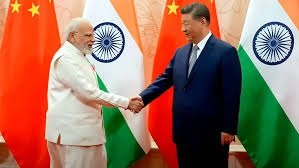

Beijing/New Delhi ( Economy India): A cautious but notable shift appears to be underway in Asia’s most consequential bilateral relationship. Chinese Foreign Minister Wang Yi recently stated that India–China ties are on the “correct path” of improvement, signaling a potential thaw after years of tension. His remarks, made during a farewell meeting with outgoing Indian Ambassador Pradeep Rawat, reflect a broader recalibration in the strategic thinking of both nations.
For two rising powers—India and China—the trajectory of their relationship has far-reaching implications not only for regional stability but also for the global balance of power. This analysis examines the drivers behind the recent diplomatic reset, the structural challenges that persist, and the strategic calculations shaping the future of this complex partnership.
From Confrontation to Cautious Engagement
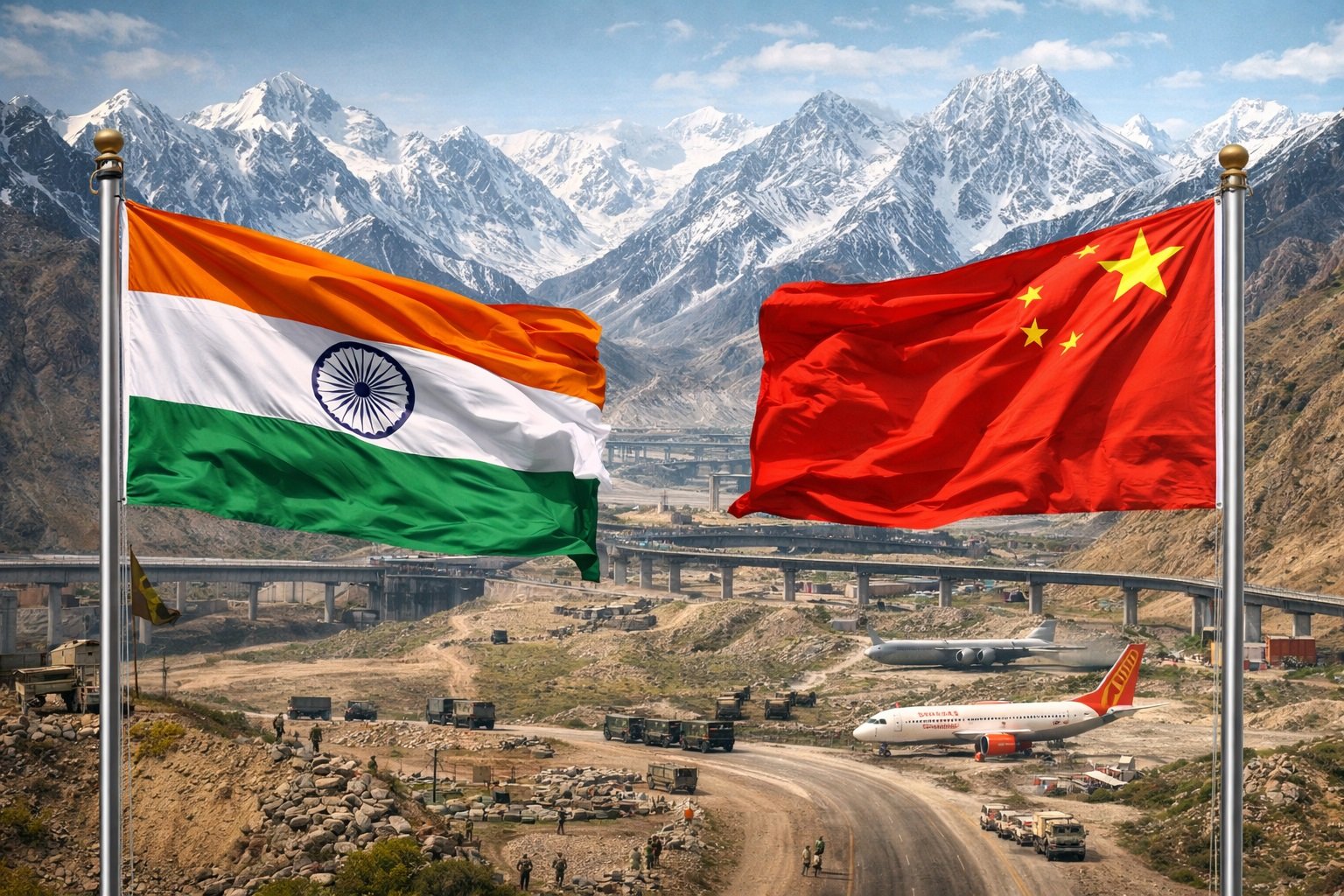
The deterioration of India–China relations following the 2020 border clash in the Galwan Valley marked a turning point in bilateral ties. The standoff, which resulted in casualties on both sides, shattered decades of carefully managed engagement and trust.
Since then, relations have been characterized by:

- Military tensions along the Line of Actual Control (LAC)
- Diplomatic disengagement
- Economic caution despite continued trade
However, recent developments suggest a gradual shift toward re-engagement.
Key Turning Points:
- Meetings between Prime Minister Narendra Modi and President Xi Jinping
- Dialogue on the sidelines of multilateral forums such as BRICS and Shanghai Cooperation Organisation
- Increased diplomatic outreach and communication
These interactions have helped stabilize relations, even if a full normalization remains distant.
Strategic Drivers Behind the Reset
The renewed diplomatic engagement is not accidental—it is driven by evolving geopolitical realities and mutual strategic interests.
1. Managing Border Stability
For both India and China, maintaining peace along the LAC is a strategic necessity. Prolonged military tension:
- Diverts resources
- Increases risk of escalation
- Undermines economic priorities
De-escalation, therefore, serves the interests of both sides.
2. Economic Imperatives
Despite political tensions, economic interdependence between India and China remains significant.
- China is one of India’s largest trading partners
- Supply chains in electronics, pharmaceuticals, and manufacturing are interconnected
A stable relationship helps ensure continuity in trade and reduces economic uncertainty.
3. Global Power Shifts
The global geopolitical landscape is undergoing rapid transformation, marked by:
- US–China strategic rivalry
- Fragmentation of global supply chains
- Rise of the Global South
In this context, both India and China are seeking to strengthen their positions as leading voices among emerging economies.
Wang Yi’s emphasis on cooperation within BRICS reflects this shared objective.
4. Multilateral Engagement and Global South Leadership
India and China play key roles in shaping the agenda of developing nations.
Areas of Convergence:
- Reform of global governance institutions
- Climate change negotiations
- Development financing
By working together in multilateral forums, both countries can amplify their global influence.
The Significance of Diplomatic Language
Wang Yi’s statement that India and China should view each other as “partners rather than competitors” is significant in diplomatic terms.
Such language signals:
- A willingness to reduce hostility
- An attempt to rebuild trust
- A shift from confrontation to coexistence
However, it also reflects strategic messaging aimed at stabilizing the relationship without conceding core interests.
Persistent Structural Challenges
Despite positive rhetoric, several deep-rooted issues continue to define India–China relations.
1. Border Disputes
The unresolved boundary issue remains the most critical challenge. The lack of a clearly demarcated border has led to:
- Frequent stand-offs
- Military build-up
- Strategic mistrust
Without a durable solution, tensions are likely to persist.
2. Strategic Competition in Asia
India and China are both expanding their influence across Asia and beyond.
Key Areas of Competition:
- Indo-Pacific region
- Infrastructure investments
- Strategic partnerships with smaller nations
India’s growing ties with countries like the US, Japan, and Australia are viewed with caution by China, while China’s regional initiatives raise concerns in New Delhi.
3. Trust Deficit
The events of 2020 created a significant trust deficit that cannot be easily overcome.
Rebuilding trust requires:
- Consistent diplomatic engagement
- Transparent communication
- Confidence-building measures
India’s Strategic Approach: Engagement with Caution
India’s response to China’s outreach reflects a balanced strategy.
Key Elements of India’s Approach:
- Maintaining strong defense posture along the LAC
- Engaging diplomatically through multilateral platforms
- Diversifying trade and supply chains
New Delhi is unlikely to compromise on security concerns, even as it explores avenues for cooperation.
China’s Perspective: Stability and Strategic Focus
For China, stabilizing relations with India serves multiple purposes:
- Avoiding a two-front strategic challenge
- Maintaining regional stability
- Strengthening its position in global forums
Wang Yi’s remarks suggest that Beijing is prioritizing stability over confrontation, at least in the near term.
The Role of Leadership Diplomacy
High-level engagement between leaders has played a crucial role in easing tensions.
Interactions between Narendra Modi and Xi Jinping have:
- Opened communication channels
- Set the tone for diplomatic engagement
- Facilitated incremental progress
Leadership diplomacy remains a key factor in managing complex bilateral relations.
Implications for the Global Order
The trajectory of India–China relations has implications beyond bilateral ties.
1. Regional Stability
A stable relationship reduces the risk of conflict in Asia.
2. Global Economic Impact
Cooperation between the two largest emerging economies can:
- Stabilize markets
- Strengthen global growth
3. Balance of Power
The nature of India–China engagement will influence:
- US–China dynamics
- Indo-Pacific security architecture
Future Outlook: Cooperation or Competition?
The future of India–China relations is likely to be defined by a mix of cooperation and competition.
Potential Scenarios:
1. Managed Competition
- Continued engagement
- Controlled tensions
- Cooperation in select areas
2. Strategic Rivalry
- Intensified competition
- Limited cooperation
- Increased geopolitical friction
3. Cooperative Framework
- Greater economic collaboration
- Resolution of key disputes
- Stronger multilateral alignment
The most likely outcome is a hybrid model, where both countries cooperate where interests align and compete where they diverge.
Economy India Insight
Wang Yi’s statement reflects a pragmatic recognition of geopolitical realities. For both India and China, confrontation carries high costs, while cooperation offers tangible benefits.
However, the path forward will depend on:
- Sustained diplomatic efforts
- Effective conflict management
- Willingness to address core concerns
The assertion that India–China relations are on the “correct path” of improvement marks an important moment in the evolving dynamics between the two nations.
While the road to full normalization remains complex and uncertain, recent developments suggest a shared interest in stability and engagement.
For India and China, the challenge lies in navigating their differences while leveraging their shared interests—a balancing act that will shape not only their bilateral relationship but also the future of the global order.
(Economy India)