
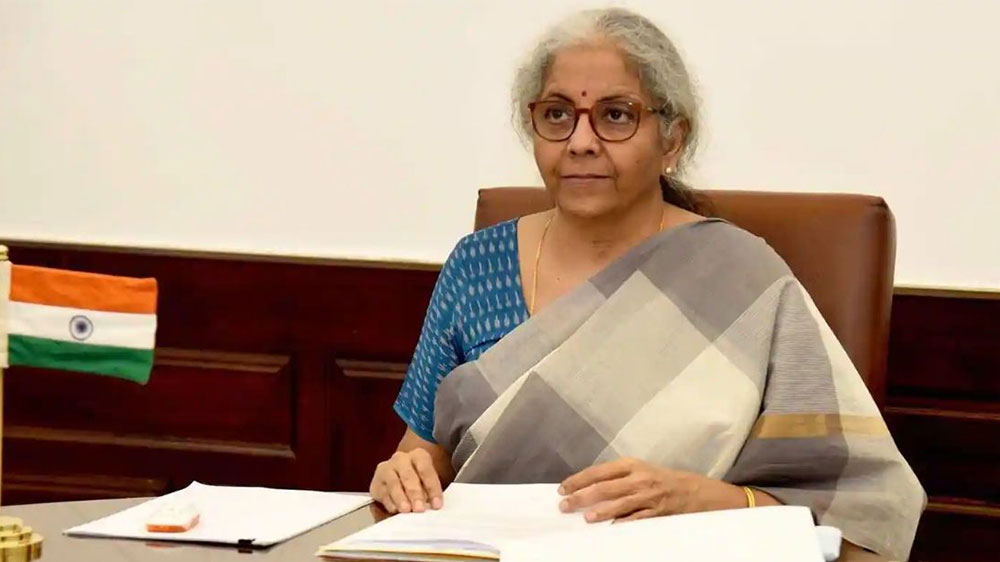
New Delhi (Economy India): As the world economy navigates a prolonged phase of geopolitical tension, trade fragmentation, and monetary uncertainty, India has positioned itself as one of the few large economies still capable of sustaining high growth. The Economic Survey 2025–26, tabled in Parliament by Finance Minister Nirmala Sitharaman, presents a detailed assessment of this trajectory—highlighting macroeconomic resilience, rising employment, controlled inflation, and expanding global trade linkages.
At the same time, the Survey delivers a note of caution: growth durability will depend on fiscal discipline, quality job creation, skills alignment, and restraint in populist spending. Often described as India’s annual economic compass, the Survey provides not just a snapshot of the past year but a forward-looking framework for policymakers, investors, and global stakeholders.
A World in Flux, An Economy Holding Course
The Survey is framed against an unusually complex global backdrop. Advanced economies are grappling with high debt, slowing productivity, and post-pandemic structural shifts. Trade wars, supply-chain realignments, and regional conflicts—from Eastern Europe to West Asia—continue to disrupt capital flows and commodity markets.
Against this backdrop, India stands out.
- GDP growth for FY27 is projected at 6.8–7.2 per cent
- FY26 growth is estimated at 7.4 per cent, higher than most peer economies
- Domestic demand remains the primary growth engine, insulating India from external shocks
The Survey notes that India’s growth trajectory is no longer purely cyclical but increasingly structural, supported by reforms undertaken over the past decade in taxation, insolvency resolution, digital public infrastructure, and capital markets.
Growth Composition: The Rise of Domestic Demand
A key theme running through the Survey is the rebalancing of growth drivers. While exports and capital inflows remain important, India’s economic momentum is increasingly anchored in internal demand.
Key Drivers:
- Private consumption, boosted by rising incomes and social transfers
- Public capital expenditure, particularly in infrastructure, transport, and energy
- Services sector expansion, including IT, finance, logistics, and tourism
The Survey highlights that unlike many export-led economies vulnerable to global downturns, India’s large domestic market provides a buffer against external volatility.

Employment: Numbers Improve, Quality Still the Challenge
One of the most closely watched sections of the Survey relates to employment. According to official estimates:
- 562 million people aged 15+ were employed in Q2 of FY26
- 8.7 lakh new jobs were added quarter-on-quarter
- Employment gains were strongest in services, manufacturing, and construction
Structural Shifts in the Labour Market
The Survey acknowledges a significant transformation underway:
- Rise of the gig economy
Platform-based work has become a critical income source, especially for youth and urban workers. - Formalisation of employment
Tax reforms, GST compliance, and digital payments are bringing more workers into the formal net. - Sectoral realignment
Labour is gradually moving from agriculture to non-farm sectors, though the transition remains uneven.
However, the Survey flags a major concern: the mismatch between workforce skills and industry needs. It recommends:
- Integrating vocational education at the school level
- Expanding industry-academia collaboration
- Creating a national integrated labour data system
Without these interventions, employment growth may struggle to keep pace with aspirations.
Inflation: Stability Anchored by Food and Policy Coordination
After years of global inflation shocks, price stability has emerged as a relative strength for India.
Key Findings:
- Inflation expected to remain within the 4% ±2% target band
- RBI revised FY26 inflation forecast down to 2%
- FY27 Q1–Q2 inflation projected at 3.9–4%
The moderation is largely attributed to:
- Record foodgrain production
- Improved supply chain management
- Coordinated fiscal-monetary policy response
The Survey emphasizes that inflation control is not merely a macroeconomic objective but a social imperative, especially for low-income households.

Agriculture: Beyond Output, Towards Income Security
Agriculture continues to support nearly half of India’s population, making its performance politically and economically critical.
Highlights:
- FY26 agricultural growth estimated at 3.1%
- Foodgrain output touched a record 332 million tonnes
- Improved productivity helped contain food inflation
But the Survey is clear: output growth alone is not enough.
The policy focus is shifting towards:
- Farmer income protection
- Crop diversification
- Storage, cold chains, and logistics
- Export market diversification
In a world of climate volatility and trade disruptions, the Survey calls for making Indian agriculture resilient, market-linked, and technology-driven.
Fiscal Discipline: A Quiet but Crucial Achievement
One of the strongest signals to global investors is India’s progress on fiscal consolidation.
- Fiscal deficit in FY25: 4.8% of GDP
- FY26 target: 4.4%
- Medium-term roadmap aims to restore policy flexibility
The Survey argues that fiscal discipline is essential not just for macro stability but for sustaining long-term growth. Lower deficits help:
- Reduce inflationary pressures
- Stabilize interest rates
- Crowd in private investment
Freebies Warning: Growth Cannot Be Bought Forever
In a rare and pointed intervention, the Survey cautions states against excessive freebie-based welfare schemes.
Key Risks Identified:
- Rising debt burdens
- Crowding out of capital expenditure
- Long-term fiscal stress
While acknowledging the role of targeted welfare, the Survey stresses that productive public spending—on health, education, and infrastructure—delivers far higher economic returns than untargeted subsidies.
External Sector: Exports Defy Global Headwinds
Despite slowing global trade and rising protectionism, India’s export performance remains robust.
- Total exports in FY25: USD 825.3 billion (record high)
- Goods exports (Apr–Dec 2025): +2.4%
- Services exports: +6.5%
Notably, this performance came even as the US imposed 50% tariffs, underscoring India’s diversification strategy.
Trade Strategy: From Dependence to Diversification
India’s trade policy is undergoing a strategic shift.
Major Developments:
- EU–India Free Trade Agreement finalised
- Trade deals with UK, New Zealand, and Oman
- Reduced reliance on a single export destination
The Survey positions India as an emerging trade bridge between advanced economies and the Global South.
Foreign Exchange Reserves: Strength as Insurance
India’s foreign exchange reserves rose from:
- USD 668 billion (FY24)
- To USD 701 billion (FY25)
Strong reserves provide:
- Currency stability
- Confidence to investors
- Buffer against external shocks
In an era of volatile capital flows, reserve adequacy is a strategic asset.
Structural Reforms: The Silent Growth Engine
The Survey credits cumulative reforms for lifting India’s medium-term growth potential close to 7%.
Key reform pillars include:
- GST and tax rationalisation
- Insolvency and bankruptcy code
- Digital public infrastructure (Aadhaar, UPI)
- Production-linked incentive schemes
These reforms, the Survey argues, are beginning to show results in productivity, compliance, and investment sentiment.
Global Perception: India as a Growth Anchor
Internationally, India is increasingly seen as:
- A stable growth anchor amid global slowdown
- A preferred investment destination
- A manufacturing and services hub outside China
The Survey notes that global capital is gravitating towards economies with scale, policy predictability, and demographic advantage—areas where India scores strongly.
Risks Ahead: The Road Is Not Risk-Free
Despite the optimism, the Survey identifies key risks:
- Global financial tightening
- Climate-related disruptions
- Skill shortages
- Rising inequality if growth is not inclusive
Managing these risks will require policy agility, institutional capacity, and political consensus.
A Confident Economy at a Critical Juncture
The Economic Survey 2025–26 presents India as an economy that has weathered global shocks and emerged with renewed confidence. Growth is broad-based, inflation is controlled, employment is improving, and global integration is deepening.
Yet, the Survey makes one message clear:
Sustained growth cannot be assumed—it must be earned through discipline, reform, and inclusion.
As India prepares for the next phase of its economic journey, the choices made today—on skills, fiscal prudence, trade, and governance—will determine whether it merely grows fast or grows sustainably.
(Economy India)