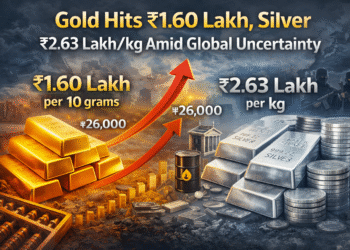

New Delhi (Economy India): Gold and silver prices are expected to remain under pressure in the coming week as strong US inflation and employment data dampen expectations of early interest rate cuts, according to commodity market analysts. While volatility in bullion markets is likely to persist, the broader trend currently favours caution rather than a sharp rebound.
Market participants are closely tracking key macroeconomic indicators from the United States, including inflation readings, gross domestic product (GDP) growth, and policy signals from the Federal Reserve, which continue to play a decisive role in shaping global commodity prices.

US Economic Strength Weighs on Bullion
Recent data showing resilience in the US economy has altered market expectations around monetary easing. Higher-than-anticipated inflation and steady job creation have strengthened the case for keeping interest rates elevated for a longer period.
Analysts note that such an environment is typically unfavourable for non-yielding assets like gold and silver. Rising bond yields and a firmer US dollar reduce the appeal of precious metals, especially for short-term investors seeking returns.

“Gold thrives when inflation cools and rate cuts come into view. Right now, the data suggests the opposite,” said a senior commodities analyst tracking global bullion markets.
Interest Rate Outlook Remains Key
For much of the past year, markets had priced in aggressive rate cuts by the US central bank. However, recent economic releases have forced a reassessment of that narrative. If inflation remains sticky and labour markets tight, policymakers may delay easing measures, prolonging pressure on precious metals.
Silver, which has a dual role as both a precious and industrial metal, faces additional headwinds. Slower global manufacturing growth and uncertainty around industrial demand have made silver more vulnerable than gold in the current cycle.
Impact on Indian Bullion Markets
International trends are expected to influence domestic bullion prices in India as well. Lower global prices could translate into softer rates in the local market, though movements in the rupee and seasonal demand may limit sharp declines.
Jewellery demand linked to weddings and festivals could provide some support, but analysts caution that near-term price movements are likely to remain range-bound with a negative bias.
“Physical demand may cushion the fall, but global cues will continue to dominate price discovery,” said a Mumbai-based bullion trader.
Safe-Haven Appeal Temporarily Diminished
Traditionally, gold benefits from economic uncertainty and geopolitical stress. However, in the current environment, strong macroeconomic data from the US has overshadowed safe-haven demand.
Silver’s performance has been even weaker, reflecting concerns over industrial consumption and slowing growth in key manufacturing economies. This has widened the performance gap between gold and silver, a trend analysts expect to persist in the short term.
What Should Investors Do?
Experts advise investors to avoid aggressive positioning in the near term and adopt a cautious, data-driven approach. Short-term traders may witness further downside or sharp intraday swings, while long-term investors could look for staggered entry points if prices correct further.
Market participants are advised to closely monitor upcoming US inflation readings, GDP data, and central bank commentary, as any shift in policy tone could quickly alter sentiment in bullion markets.
Outlook
In the near term, gold and silver prices are likely to remain under pressure amid strong US economic indicators and uncertainty around interest rate cuts. While volatility will continue, a sustained recovery in bullion may depend on clear signs of slowing inflation, softer labour markets, or renewed global risk aversion.
Until then, analysts believe precious metals will trade cautiously, reflecting a market caught between safe-haven appeal and the reality of tighter financial conditions.
— Economy India | Commodities & Markets Desk