
Says India Must Move Forward with Caution Amid Rising Protectionism; Stresses Importance of Economic Strength
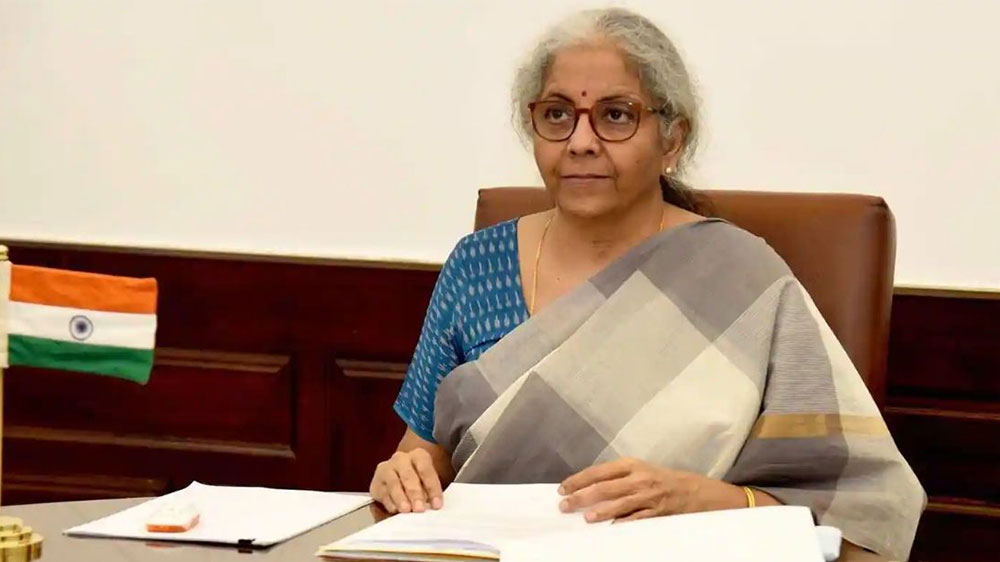
New Delhi (Economy India): Union Finance Minister Nirmala Sitharaman on Wednesday warned that global trade is increasingly being “weaponised” through tariffs and other restrictive measures, and said that India must navigate the evolving international trade environment with care and strategic foresight.
Speaking on the changing nature of global economic relations, the Finance Minister said that the use of trade barriers, tariffs, and non-tariff measures as strategic tools has been rising, posing fresh challenges for open economies like India.
Rising Protectionism a Key Global Challenge
Sitharaman noted that global trade, which was once largely driven by multilateral cooperation and efficiency, is now increasingly influenced by geopolitical considerations and strategic rivalries.
“The use of tariffs and other measures to weaponise global trade is increasing, and in such a scenario, India needs to proceed carefully,”
the Finance Minister said.
Her remarks come at a time when global supply chains are being reshaped amid trade disputes, strategic decoupling, and growing emphasis on economic security.

Economic Strength Provides Strategic Advantage
The Finance Minister emphasized that India’s overall economic resilience would play a critical role in navigating these global headwinds.
According to Sitharaman, a strong domestic economy offers multiple advantages, including:
- Greater policy flexibility
- Better negotiating leverage in trade discussions
- Enhanced ability to absorb external shocks
- Improved investor confidence
She noted that economic strength enables countries to respond more effectively to global disruptions without compromising long-term growth objectives.
India’s Trade Strategy in a Changing World
India has increasingly adopted a calibrated trade approach, balancing integration with global markets and the need to protect domestic industries.
Policy priorities include:
- Strengthening domestic manufacturing
- Building resilient supply chains
- Expanding export competitiveness
- Reducing vulnerability to external shocks
The Finance Minister’s comments underline the importance of aligning trade policy with national economic interests in a rapidly shifting global landscape.
Global Context: Trade and Geopolitics Intersect
Over the past few years, global trade has been shaped by:
- Heightened tariff wars
- Sanctions and export controls
- Strategic reshoring and friend-shoring
- Increased scrutiny of cross-border investments
These developments have led to fragmentation of global trade flows, forcing emerging economies to adapt their strategies.
India’s Cautious and Pragmatic Approach
Sitharaman’s remarks suggest that India will continue to pursue a pragmatic and interest-driven trade policy, engaging with global partners while safeguarding domestic priorities.
Officials have previously indicated that India supports rules-based global trade, but remains cautious of agreements that could expose the economy to undue risks.
Finance Minister Nirmala Sitharaman’s warning highlights the growing complexity of the global trade environment, where tariffs and economic measures are increasingly used as strategic tools. As protectionism rises, India’s emphasis on economic strength, policy caution, and strategic autonomy is expected to guide its trade and economic decisions in the coming years.
(Economy India)