
New global mechanism signals India’s rising role in conflict resolution and West Asia diplomacy
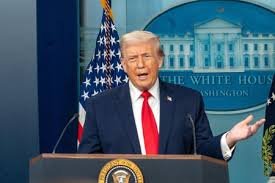
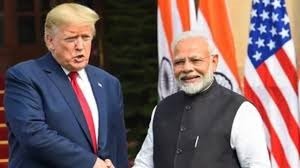
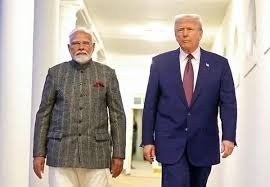
New Delhi (Economy India): In a significant geopolitical development, US President Donald Trump has formally invited India to join the proposed ‘Board of Peace’, a new international mechanism aimed at supporting the Gaza peace agreement and ensuring long-term stability in the conflict-ridden region. Official sources confirmed the development, underlining Washington’s intent to bring trusted global partners on board for post-conflict governance and reconstruction in Gaza.
The move reflects not only the evolving US approach towards multilateral conflict management in West Asia but also India’s growing stature as a credible, balanced, and responsible global actor capable of contributing meaningfully to peace-building initiatives.

What Is the ‘Board of Peace’?
According to officials familiar with the proposal, the ‘Board of Peace’ is being envisaged as a multilateral international body that would oversee the implementation of the Gaza peace agreement and coordinate global efforts aimed at stabilisation, reconstruction, and humanitarian relief.
Washington is projecting the proposed body as a post-conflict institutional framework, designed to ensure that ceasefire arrangements translate into lasting peace on the ground.
Expected mandate of the Board includes:
- Monitoring compliance with the Gaza peace agreement
- Coordinating humanitarian aid, rehabilitation, and reconstruction
- Facilitating political dialogue among stakeholders
- Preventing the resurgence of violence through diplomatic engagement
- Supporting governance and capacity-building mechanisms
The US administration believes that the involvement of select global partners will lend credibility, balance, and operational depth to the initiative.
Why India Matters in the Gaza Equation
India’s invitation to the ‘Board of Peace’ is widely seen as a strategic acknowledgment of its balanced West Asia policy. Unlike many global powers, India maintains strong relations with both Israel and Palestine, while consistently advocating dialogue-based conflict resolution.
India’s position has been anchored on:
- Recognition of Israel’s legitimate security concerns
- Long-standing support for the Palestinian cause
- Advocacy of a two-state solution achieved through negotiations
Diplomatic analysts say India’s participation could help:
- Bridge trust deficits among conflicting parties
- Introduce a development-centric and humanitarian perspective
- Represent the voice of the Global South in a high-stakes geopolitical theatre
India’s track record in UN peacekeeping operations, humanitarian assistance, and development diplomacy further strengthens its credentials for such a role.
Trump Administration’s Broader West Asia Strategy
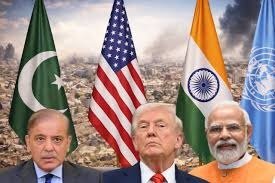
The proposal of the ‘Board of Peace’ aligns with President Trump’s broader strategy of burden-sharing and multilateral responsibility in managing global conflicts. US officials argue that sustainable peace in Gaza cannot be achieved solely through military or bilateral diplomatic efforts.
Instead, the administration is advocating:
- Shared international ownership of peace processes
- Long-term economic reconstruction alongside security guarantees
- Involvement of countries perceived as neutral and constructive
By inviting India, Washington is signalling its intent to diversify leadership in global peace initiatives beyond traditional Western allies.
Strategic Implications for India
For New Delhi, the invitation presents both an opportunity and a diplomatic challenge.
Potential advantages:
- Enhances India’s profile as a global peace facilitator
- Strengthens India–US strategic engagement
- Expands India’s influence in West Asia, a region critical for energy security and diaspora interests
- Reinforces India’s image as a voice of moderation and dialogue
Challenges to consider:
- Managing sensitivities among regional actors
- Avoiding perceptions of alignment with any one bloc
- Balancing domestic public opinion and foreign policy priorities
Experts note that India’s eventual decision will be guided by its principles of strategic autonomy, non-partisanship, and multilateralism.
India’s Official Position Awaited
The Indian government has not yet issued a formal response to the invitation. Sources indicate that the proposal is under careful evaluation at the highest diplomatic levels.
Any decision will likely take into account:
- Regional geopolitical dynamics
- India’s long-term West Asia strategy
- The scope, authority, and neutrality of the proposed Board
Observers believe that India may seek greater clarity on the structure, mandate, and decision-making powers of the ‘Board of Peace’ before committing.
Global Reactions and Broader Context
Internationally, the proposal has drawn attention as Gaza remains one of the world’s most volatile flashpoints. Repeated cycles of violence, humanitarian crises, and stalled political processes have underscored the need for a sustained international framework, rather than ad hoc interventions.
If operationalised effectively, the ‘Board of Peace’ could mark a shift toward institutionalised global conflict management, with India playing a central role.
A Defining Moment for India’s Global Diplomacy
The invitation to join the ‘Board of Peace’ is a clear indicator of India’s rising diplomatic weight on the global stage. It reflects growing international confidence in India’s ability to act as a stabilising force amid complex geopolitical crises.
Whether or not India formally joins the initiative, the development itself signals a broader trend: India is no longer a peripheral observer in global peace efforts, but an increasingly sought-after stakeholder.
As deliberations continue, India’s decision will be closely watched by global capitals, regional powers, and international institutions alike.
(Economy India)