PDP Chief Flags Risk to Kashmiri Apple Industry; Broader Debate on India’s Trade Strategy with US, EU
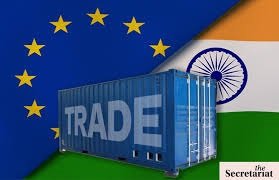
Srinagar & New Delhi (Economy India): As India prepares to engage in potential Free Trade Agreements (FTAs) with major global economic blocs such as the United States and the European Union, opposition voices are growing louder over the risk such pacts pose to domestic industries. On December 27, Mehbooba Mufti, President of the Peoples Democratic Party (PDP) and former Chief Minister of Jammu & Kashmir, called on the Union Government to reconsider the direction of India’s trade strategy, warning that FTAs could inflict long-term harm on sectors ranging from horticulture to manufacturing.
Mufti cited the recent fallout from an earlier trade decision with New Zealand — where duty reductions led to increased imports of apples — as a cautionary example. According to the PDP leader, the episode had put immense pressure on the Kashmiri apple industry, a cornerstone of the region’s economy.
“What happened with the apple industry in Kashmir after the New Zealand agreement should act as a lesson for the government. We must prioritise the livelihoods of millions of farmers before signing deals that open the floodgates to foreign imports,” Mufti said.
Her remarks have reignited a national debate on the costs and benefits of global trade liberalisation, especially in the context of India’s agricultural and small-enterprise sectors.
FTA Could Harm Domestic Markets, Warns Mehbooba Mufti
India’s Trade Policy and FTAs in Focus
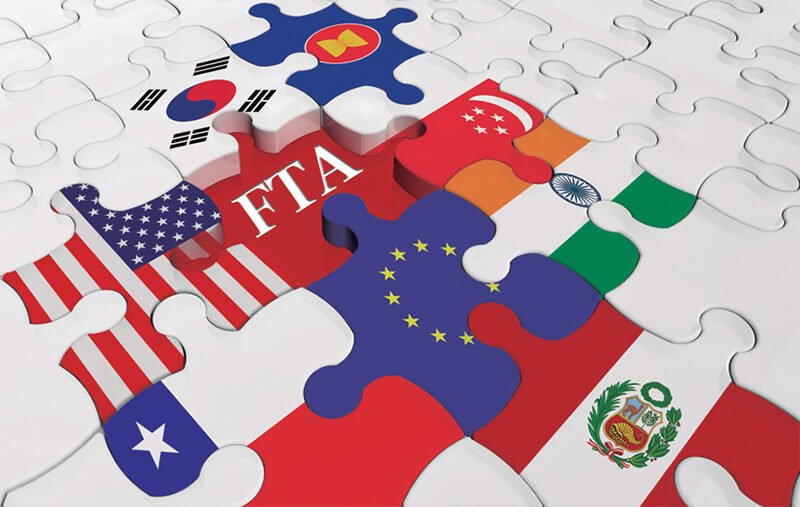
Over the past decade, the Indian government has pursued strategic trade negotiations with multiple partners to deepen economic integration, enhance export competitiveness, and attract foreign investment. FTAs typically involve reductions or eliminations of tariffs, which can increase market access for both Indian exporters and foreign producers.
ADVERTISEMENT
India already has FTAs or preferential trade agreements with ASEAN, Japan, South Korea, and several Middle Eastern and African nations. However, prospective comprehensive FTAs with the United States and the EU — India’s two largest trading partners by economic size — are viewed as high-stakes deals, with far-reaching implications for goods, services, investment flows, and regulatory cooperation.
Advocates of such FTAs argue that:
Access to larger markets will expand Indian exports
Foreign investors will gain confidence in India’s trade openness
Competitive pressures will drive efficiency and innovation domestically
Critics, however, point to asymmetric market strength, saying Indian producers — particularly in agriculture and MSMEs — could struggle to compete with highly subsidised foreign products.
The Apple Debate: Kashmir’s Horticulture Industry at Risk
One of the clearest real-world examples of this tension comes from Jammu & Kashmir’s apple economy. Kashmir accounts for more than 70% of India’s apple production, and the sector directly or indirectly supports 3 million households through farming, packing, transportation, cold storage, and allied services.
New Zealand FTA Fallout
In recent trade discussions with New Zealand, tariff barriers on apple imports were reduced under preferential terms. Soon after, the Indian market saw a spike in B-grade imported apples — often sold at prices lower than locally grown produce. Many small and medium orchard owners in Kashmir saw their revenues fall, as price competition intensified.
Local growers told Economy India that:
Imported apples often undercut domestic prices by 15–25%
Fruit grading discrepancies made price comparisons difficult
Seasonal price advantages were eroded by year-round availability of imports
“We compete not just with nature — weather, frost, pests — but now with foreign imports that enter at artificially low duty slabs. It’s like fighting two battles at once,” said an apple orchard owner in Shopian, who spoke on condition of anonymity.
FTA Could Harm Domestic Markets, Warns Mehbooba Mufti
What FTA Critics Fear Next
According to Mehbooba Mufti and many industry experts, the looming threat of FTAs with the U.S. and EU could replicate and amplify the New Zealand experience across multiple sectors. Their concerns fall into several major categories:
1. Domestic Industries vs Imported Goods
FTAs aiming to reduce or eliminate tariffs in stages could expose domestic sectors to a sudden surge of foreign products. While some industries may benefit from export opportunities, others — particularly agriculture, textiles, and local manufacturing — risk being outpriced.
For example:
Farmers may see imported grains or fruits displace local crops
Small manufacturers could lose market share to foreign brands
Agro-processors face competition that may erode profit margins
2. Livelihoods and Rural Economies
India’s agricultural workforce constitutes nearly 40% of the labour force. Significant import competition without adequate safeguards could disproportionately affect rural incomes, social stability, and regional economies.
Expert Insight: What Economists Say
Economists are divided, but many urge a balance between liberalisation and protection.
Pro-FTA Argument
Supporters of FTAs argue that:
Overall economic growth may accelerate with access to larger markets
Trade agreements can promote technology transfer
Domestic producers that innovate can compete internationally
Duty revenues can be offset by export growth
Dr. Arvind Subramanian, a noted trade economist, has previously observed:
“Trade liberalisation is not inherently damaging — it depends on sequencing, complementary reforms, and safety nets for affected sectors.”
Cautious View
Other economists emphasise the need for:
A phased tariff reduction framework
Sunset clauses to protect essential industries temporarily
Support programmes for workers and farmers in transition
Ms. Priya Nair, Senior Fellow at the Centre for Trade Studies, told Economy India:
“India must adopt a calibrated approach — liberalise where it strengthens competitiveness, and protect where market asymmetry could cause structural harm.”
Where the Numbers Stand
The broad economic indicators show:
Sector
Approx Share in National Economy
Potential Impact from Imports
Agriculture
~16% of GDP
High
Horticulture
~15% of agriculture
Very High
MSMEs
~30% of GDP
Medium–High
Manufacturing
~17% of GDP
Medium
Services
~55% of GDP
Low–Medium
Source: Government of India, Economic Survey, Industry Reports
This data underscores why horticulture — including apple production — is especially sensitive to trade liberalisation.
FTA Could Harm Domestic Markets, Warns Mehbooba Mufti
Voices From Kashmir: Farmers Speak Out
Beyond political rhetoric, growers in Jammu & Kashmir are already feeling the consequences of duty-relaxed imports.
Price Volatility
Local orchardist, Mr. Ghulam Hassan of Sopore, explains:
“Last year, we had an excellent crop, but prices crashed because of cheaper foreign apples. We could not find buyers at stable rates. Our cost of production just doesn’t decrease as fast as import prices do.”
Cold Storage Capacity and Logistics
Growers also point to inadequate cold chain facilities and logistical inefficiencies that make it harder for Indian apples to compete on shelf life and supply continuity.
Government’s Position and Response
So far, the Union Government has refrained from committing to any final FTA with the United States or EU. Trade officials stress that negotiations, if they proceed, would be mutually beneficial and calibrated, including safeguard mechanisms.
In a recent briefing, an official from the Department of Commerce said:
“Negotiations are exploratory. We will ensure that India’s strategic interests — including food security and livelihood protection — are not compromised.”
Officials also pointed to existing protection measures such as:
Minimum Import Prices (MIPs)
Anti-dumping duties
Seasonal quotas for sensitive commodities
However, critics argue that these measures have proven insufficient without regulatory teeth.
Policy Proposals to Protect Indian Markets
Policy experts have proposed a multi-layered framework to balance openness with economic security:
1. Gradual Tariff Adjustment
Instead of steep tariff cuts, phased reductions with review checkpoints can ease structural disruption.
2. Origin Labelling Rules
Clear labelling of imported goods can empower consumers to make informed decisions and preserve local brands.
3. Export Incentives for Domestic Producers
Boosting competitiveness via technology grants, export credit and infrastructure support.
4. Social Safety Nets
Support schemes for displaced workers and small producers during the transition period.
Comparative International Practices
Several countries have combined trade liberalisation with strong protective policies:
Brazil limits commodity imports during harvest peaks
South Korea offers tariff rate quotas with seasonal controls
EU retains safeguard instruments for crisis mitigation
These approaches provide case studies for India’s policymakers.
Broader Debate: Growth vs Protection
The conversation around FTAs represents a broader strategic choice for India. While integration with global markets can deliver scale and opportunity, it must be balanced against equity, employment, and rural stability.
Trade analyst Neeraj Gupta summarises:
“We cannot isolate India from the global economy, but we must protect domestic resilience. Smart liberalisation — not blanket openness — is the need of the hour.”
A Crossroads for India’s Trade Strategy
Mehbooba Mufti’s intervention reflects not just regional anxieties, but national policy tensions — between global ambition and domestic security, between market access and livelihood protection.
As negotiations progress with major trading partners, the government will face the critical task of calibrating India’s trade framework to ensure that:
Export competitiveness grows
Domestic industries aren’t displaced
Agricultural markets remain viable
Jobs and income security are preserved
For Jammu & Kashmir’s apple growers — whose orchards form an integral part of rural identity and economic life — the stakes are especially high. The outcome of India’s next generation of trade deals may well decide whether their fields remain fruitful or fall prey to global pricing pressures.
India now stands at an important policy intersection — one where economic diplomacy must align with social equity and sustainable growth.
Economy India is one of the largest media on the Indian economy. It provides updates on economy, business and corporates and allied affairs of the Indian economy. It features news, views, interviews, articles on various subject matters related to the economy and business world.