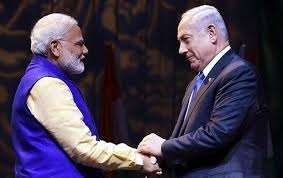

New Delhi (Economy India): The Congress on Monday mounted a sharp political attack on the Centre after Israeli Prime Minister Benjamin Netanyahu publicly announced Prime Minister Narendra Modi’s forthcoming visit to Israel, even before an official confirmation was made by the Indian government.
The opposition party questioned the government’s communication strategy, alleging that crucial foreign policy developments are increasingly being disclosed first by foreign leaders rather than through official Indian channels.
According to sources, Prime Minister Modi is scheduled to undertake a two-day visit to Israel from February 25 to 26, marking his second visit to the country and reinforcing India’s deepening engagement with the strategically important West Asian nation.
Netanyahu’s Remarks Spark Political Reaction in India
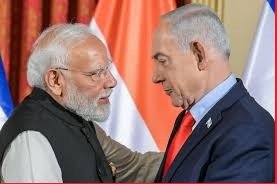
The controversy erupted after Prime Minister Netanyahu, while addressing the Conference of Presidents of Major American Jewish Organisations in the United States on Sunday, revealed Modi’s upcoming visit.
“Who’s coming here next week? Narendra Modi,” Netanyahu told the gathering, adding that an address to the Israeli Parliament was on the agenda.
The announcement quickly triggered reactions in Indian political circles, particularly from the opposition, which interpreted the development as a diplomatic communication lapse by the Modi government.
Congress Questions Government’s Information Flow
Reacting to Netanyahu’s statement, Congress General Secretary (Communications) Jairam Ramesh posted a strongly worded message on social media platform X.
Ramesh argued that India has, on multiple occasions, learned about important government actions from foreign leaders rather than domestic briefings.
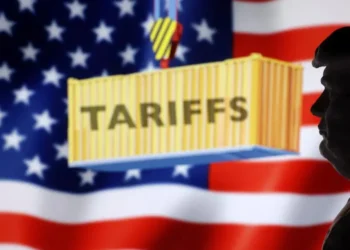
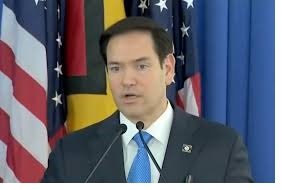
“India hears of the halt to Operation Sindoor first from the US Secretary of State. India hears of the India-US trade deal first from the US President,” he wrote.
He further added that the dates of Prime Minister Modi’s Israel visit were also revealed first by Netanyahu, criticising what he described as a pattern in diplomatic communication.
Broader Political Context and West Asia Sensitivities
In his remarks, Ramesh also linked the visit announcement to the ongoing conflict in West Asia, referring to the humanitarian crisis in Gaza and developments in the occupied West Bank. His comments reflect the Congress party’s broader position on the Israel-Palestine issue, which has historically emphasised diplomacy, restraint, and adherence to international humanitarian norms.
The ruling government, however, has not officially responded to the Congress’s criticism, maintaining its focus on strengthening bilateral ties with Israel across defence, technology, agriculture, and innovation sectors.
PM Modi’s Visit: Strategic and Diplomatic Significance
Sources familiar with the matter confirmed that Prime Minister Modi’s visit is expected to be brief but symbolically significant. A source in Jerusalem told PTI that the visit’s duration would likely be from February 25 to 26, but its diplomatic impact could be substantial.
“The visit is likely to be short, but its impact is deep given the popularity Prime Minister Modi enjoys not only in Israel but around the world,” the source said.
Address to Israeli Parliament on the Cards
One of the key highlights of the visit is expected to be Prime Minister Modi’s address to the Knesset, Israel’s Parliament. If confirmed, this would place Modi among a select group of global leaders who have addressed the Israeli legislature.
During the address, the Prime Minister is expected to touch upon:
- India-Israel bilateral cooperation
- Regional security dynamics
- Innovation, defence, and technology collaboration
- Shared democratic values and people-to-people ties
Officials indicated that discussions may also cover regional stability, supply chain resilience, and future cooperation in emerging technologies.
A Look Back: Modi’s First Israel Visit in 2017
This will be Prime Minister Modi’s second visit to Israel, following his landmark trip in July 2017, which was the first-ever visit by an Indian Prime Minister to the Jewish state.
The 2017 visit marked a turning point in India-Israel relations, elevating ties to a strategic partnership and expanding cooperation in:
- Defence and security
- Water management
- Agriculture and food security
- Cybersecurity and innovation
Since then, bilateral relations have continued to strengthen, supported by high-level engagements and expanding trade and technological collaboration.
India-Israel Relations: Beyond Politics
Despite political sparring at home, India-Israel ties have largely remained bipartisan in nature. Successive Indian governments have maintained engagement with Israel while also supporting a two-state solution to the Israel-Palestine conflict at international forums.
Analysts note that Modi’s upcoming visit reflects continuity in India’s West Asia policy, balancing strategic partnerships with diplomatic caution amid a volatile regional environment.
Domestic Political Debate vs Diplomatic Continuity
The Congress’s criticism underscores how foreign policy announcements can quickly become subjects of domestic political debate. However, government sources suggest that the visit aligns with India’s long-term strategic interests and ongoing diplomatic engagements with Israel.
Observers believe that the focus of the visit will remain on economic cooperation, defence partnerships, and innovation-led growth rather than political optics.
Prime Minister Modi’s upcoming Israel visit has reignited debate over diplomatic communication and political transparency, even as it underscores the enduring importance of India-Israel relations. While opposition parties question the manner of disclosure, the government appears set to move ahead with a visit that could further consolidate strategic ties between the two nations.
As preparations continue, attention will remain on the official agenda and outcomes of the visit, particularly in the context of regional developments and India’s broader foreign policy priorities.
(Economy India)