NEW DELHI | Economy India: BRICS countries on Saturday reaffirmed their commitment to strengthening the internationalisation of micro, small and medium enterprises (MSMEs), recognising the sector as a key driver of economic growth, trade and prosperity.
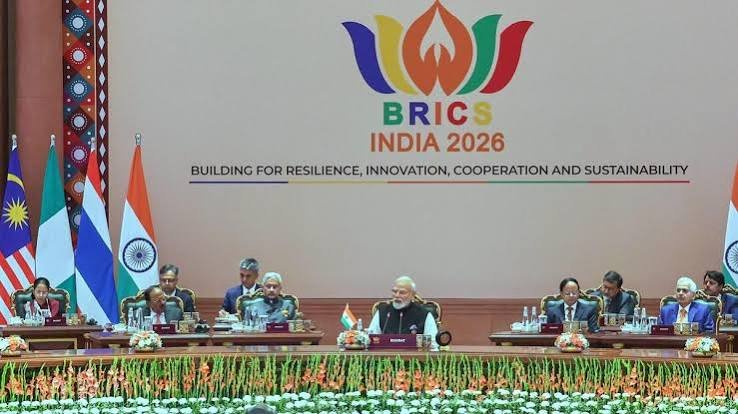
In the New Delhi Declaration 2026, adopted at the BRICS Summit chaired by India, the grouping identified access to affordable finance as one of the major challenges restricting MSMEs from participating more actively in international trade and becoming part of global value chains (GVCs).
“We reaffirm our commitment to strengthening the internationalisation of Micro, Small and Medium Enterprises (MSMEs) as a driver of economic growth and prosperity,” the declaration said.
The BRICS leaders acknowledged that affordable financing remains a primary bottleneck and structural constraint for MSMEs, limiting their ability to expand operations, enter overseas markets and integrate into global production and supply networks.
Focus on Easier Access to Finance
The declaration underlined the need to improve financing opportunities for MSMEs, particularly businesses seeking to expand beyond their domestic markets.
Improved access to affordable and timely credit can help smaller businesses increase production capacity, invest in technology, meet export orders and participate more effectively in global value chains.
The BRICS focus is significant because MSMEs account for a substantial share of businesses and employment across emerging economies. However, smaller enterprises frequently face higher financing costs, limited collateral and difficulties in accessing formal credit.
Trade Integration a Key Priority
BRICS countries also emphasised the importance of facilitating greater participation of MSMEs in international trade.
Reducing barriers to cross-border commerce and improving access to markets can allow smaller enterprises to connect with international buyers and suppliers. Greater integration into GVCs can also provide MSMEs with opportunities to upgrade technology, improve productivity and diversify their customer base.
The declaration’s emphasis on internationalisation reflects the grouping’s broader effort to strengthen economic cooperation among member countries.
Invoice Discounting Mechanism Study Welcomed
The BRICS declaration also welcomed the study of an invoice discounting mechanism, which could help address working-capital challenges faced by smaller businesses.
Invoice discounting enables businesses to obtain financing against eligible outstanding invoices instead of waiting for customers to make payments. Such mechanisms can be particularly useful for MSMEs, where delayed payments can create significant cash-flow pressures.
A more effective cross-border mechanism could potentially support MSMEs involved in international trade by improving liquidity and reducing working-capital constraints.
Supporting Global Value Chain Participation
The BRICS initiative comes at a time when emerging economies are seeking to increase the participation of their domestic enterprises in global value chains.
For MSMEs, access to finance, markets and efficient payment mechanisms can determine their ability to compete internationally. Better financing channels could enable these enterprises to fulfil larger orders, maintain inventories and meet international buyers’ payment and delivery requirements.
The New Delhi Declaration therefore places MSME internationalisation alongside broader BRICS priorities on trade, finance and economic cooperation.
The grouping’s commitment is aimed at creating an environment in which smaller businesses can gain easier access to finance and markets, strengthening their contribution to economic growth, employment and global trade.
(Economy India)