
Raigarh farmer cultivates marigolds on 7–8 acres, records sales of up to ₹5 lakh per acre and provides regular employment to 15–20 rural workers.
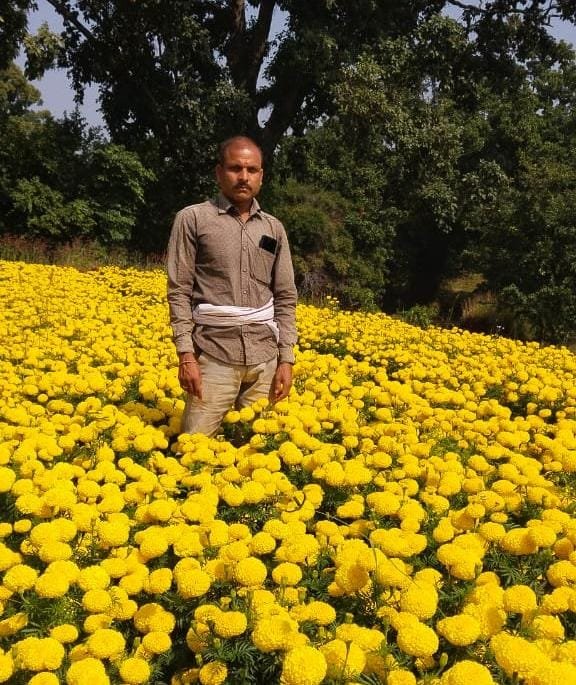
RAIPUR, (Economy India): Turning flower cultivation into a profitable agricultural enterprise, Vidyadhar Patel, a farmer from Kodkel village in the Lailunga development block of Chhattisgarh’s Raigarh district, is earning a substantial income through commercial marigold farming.
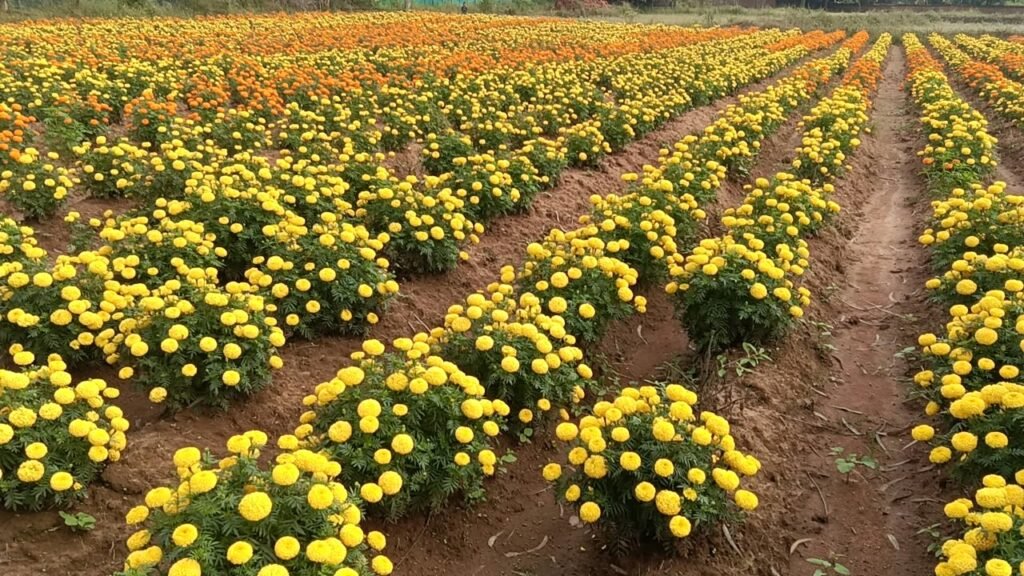
Patel has been cultivating marigold flowers since 2007–08 and currently grows the crop across 7–8 acres. His produce is supplied to several districts of Chhattisgarh as well as neighbouring Odisha, where demand for the flowers remains strong, particularly during the festive season.
During the peak season, around 12 to 15 vehicles are dispatched daily to transport flowers to different markets. His farming enterprise also provides regular employment to 15–20 local workers.

According to Patel, marigold cultivation can generate sales of approximately ₹5 lakh per acre, against an estimated cultivation cost of ₹1 lakh to ₹1.5 lakh per acre.
Agricultural Exhibitions Inspired Him to Take Up Flower Farming
Patel had been engaged in vegetable cultivation since 1994–95. During this period, he participated in agricultural exhibitions organised in Raipur and Raigarh, where he demonstrated vegetable cultivation in pots.
It was at these exhibitions that he noticed the strong demand and sales potential of marigold flowers. The experience encouraged him to explore commercial flower cultivation.
He started growing marigolds in 2007–08 and gradually expanded the area under cultivation as he gained experience and developed better production and marketing practices.
Polybag Technique Helps Reduce Crop Losses
In the initial years, Patel faced challenges in raising marigold seedlings in open fields. Poor seed germination sometimes forced him to procure fresh seeds and repeat sowing, delaying the preparation of plants.
These delays affected his ability to supply flowers during the peak Dussehra and Diwali seasons. There was also a risk of flowers remaining unsold and deteriorating, resulting in financial losses.
To address the problem, he adopted the practice of raising seedlings in polybags.
The technique gave him greater flexibility in managing the crop and timing its availability in the market. Even if flowers could not be sold during Diwali, the plants could continue to produce flowers for subsequent sales, reducing the risk of losses.
Sales of Up to ₹5 Lakh per Acre
Patel estimates that marigold cultivation can generate sales of around ₹5 lakh per acre, while the cultivation cost ranges between ₹1 lakh and ₹1.5 lakh per acre.
The period from Dussehra to Diwali is the most important marketing season because demand for marigold flowers rises significantly during festivals and religious occasions.
He plans production and marketing around this seasonal demand.
For irrigation, Patel has two private borewells. His fields have a pipeline network, along with drip and sprinkler irrigation facilities wherever required.
Supplies Extend Across Chhattisgarh and Odisha
The marigold flowers grown on Patel’s farm have markets in both Chhattisgarh and Odisha.
In Odisha, regular supplies are sent to Sundargarh, Jharsuguda, Rourkela, Sambalpur and Bargarh, among other areas.
Within Chhattisgarh, the flowers reach markets in Sarangarh, Raigarh, Sakti, Champa, Korba, Ambikapur and Jashpur.
During the peak season, approximately 12–15 vehicles transport flowers every day to meet market demand.
According to the state government’s account, flower sales are conducted on a cash basis, while payments to workers and vehicle drivers are made regularly.
Family Support and Rural Employment
Patel’s farming enterprise is supported by his family. His wife and three daughters actively participate in agricultural activities and contribute to managing the operation.
The farm also provides regular work to 15–20 labourers from the village.
To transport flowers to different markets, Patel uses his own vehicles and hires an additional 8–10 vehicles daily during the season.
The enterprise therefore creates employment not only for farm workers but also for drivers and people involved in transportation.
Key Highlights of the Farming Enterprise
| Particulars | Details |
|---|---|
| Farmer | Vidyadhar Patel |
| Village | Kodkel, Lailunga, Raigarh, Chhattisgarh |
| Started marigold cultivation | 2007–08 |
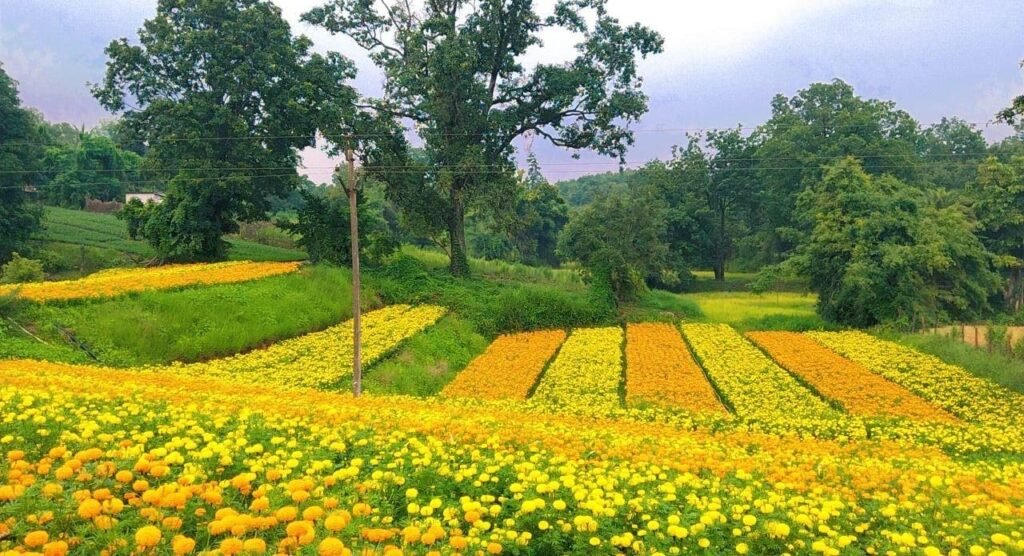
| Area under marigold | 7–8 acres |
| Estimated sales per acre | Up to ₹5 lakh |
| Estimated cultivation cost per acre | ₹1–1.5 lakh |
| Daily vehicle dispatches during peak season | 12–15 |
| Regular rural employment | 15–20 workers |
| Additional hired vehicles | 8–10 daily |
| Vegetable cultivation | 4–5 acres |
| Major markets | Chhattisgarh and Odisha |
Vegetable Cultivation Diversifies Farm Income
Alongside marigold cultivation, Patel grows seasonal vegetables across another 4–5 acres.
His vegetable crops include okra, yardlong beans, cabbage and cauliflower. After the marigold season ends, he shifts his attention towards vegetable cultivation and marketing.
He also grows traditional Chhattisgarh leafy vegetables, locally known as Chhattis Bhaji, in his kitchen garden.
By combining flower cultivation with seasonal vegetables, Patel has diversified his farm’s production and developed multiple sources of agricultural income.
His experience illustrates how farmers can explore high-demand crops, adopt suitable cultivation techniques and build market linkages beyond their immediate districts to expand agricultural opportunities and generate rural employment.
(Economy India)