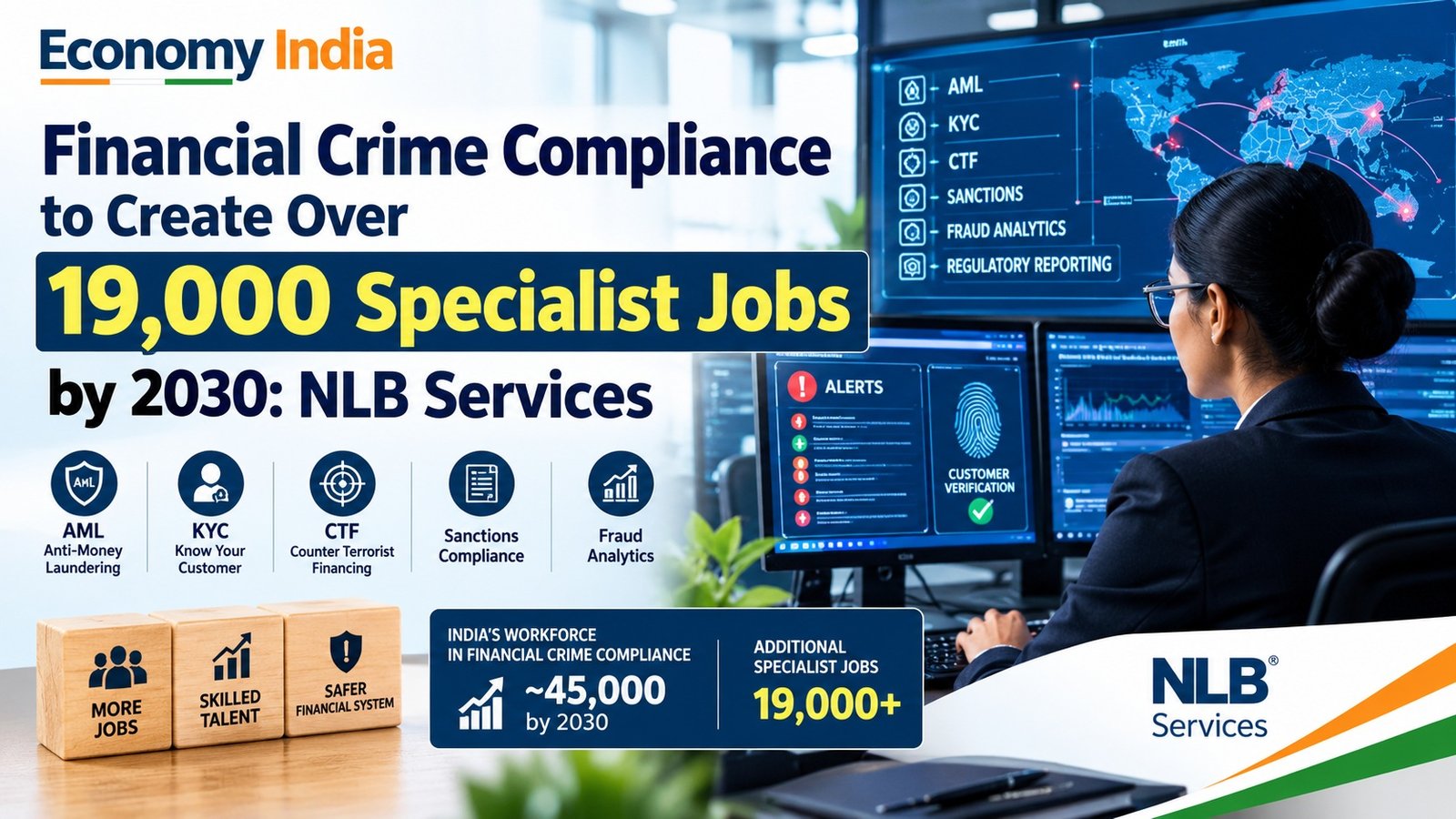
India’s financial crime compliance workforce is projected to reach 45,000 by 2030, as financial institutions strengthen anti-money laundering, fraud detection and regulatory monitoring systems.
MUMBAI, (Economy India): Financial crime compliance is emerging as one of the fastest-growing specialist functions within India’s banking, financial services and insurance (BFSI) sector, with the segment projected to generate more than 19,000 specialised jobs by 2030, according to technology and digital talent solutions provider NLB Services.
The company estimates that India’s financial crime compliance workforce will expand to approximately 45,000 professionals by 2030 as financial institutions strengthen their systems for detecting financial misconduct, verifying customer identities and meeting regulatory requirements.
However, the availability of suitably skilled professionals remains a significant challenge. According to NLB Services, only 40 per cent of professionals entering the workforce currently have expertise in areas such as anti-money laundering investigations, sanctions screening, fraud analytics, regulatory reporting and financial crime technology platforms.


Financial Institutions Increase Focus on Compliance
Financial institutions are strengthening their compliance frameworks as they seek to identify suspicious transactions, prevent financial fraud and meet regulatory obligations.
Key areas of focus include Anti-Money Laundering (AML), Know Your Customer (KYC), Counter Terrorist Financing (CTF), sanctions compliance and transaction surveillance.
These functions require professionals who can investigate unusual transactions, analyse financial data, identify potential risks and support institutions in meeting compliance requirements.
As financial services become increasingly digital, compliance teams also need to work with technology platforms and data-driven monitoring systems. This is increasing the importance of professionals who combine regulatory knowledge with analytical and technical capabilities.
India’s Financial Crime Compliance Workforce May Reach 45,000
NLB Services projects that the country’s financial crime compliance workforce will reach around 45,000 by 2030, creating more than 19,000 specialised jobs.
The projected expansion reflects the growing need for dedicated compliance teams across the BFSI ecosystem.
Financial crime compliance professionals support a range of activities, including reviewing customer transactions, investigating suspicious financial activity, screening customers and counterparties against sanctions lists, and preparing regulatory reports.
The demand for these capabilities is expected to create opportunities for candidates with relevant expertise in financial investigations, risk management, data analysis and compliance technology.
The projections were shared by Varun Sachdeva, CEO – India at NLB Services.
Talent Shortage Emerges as a Key Challenge
Despite the projected growth in employment, the availability of qualified professionals remains a concern.
NLB Services estimates that only 40 per cent of professionals entering the workforce currently possess expertise across the specialised areas required for financial crime compliance.
These include AML investigations, sanctions screening, fraud analytics, regulatory reporting and financial crime technology platforms.
The gap highlights the importance of developing job-ready skills alongside the expansion of compliance teams.
Employers may need professionals who understand regulatory requirements and can apply that knowledge to practical investigations, transaction monitoring and risk assessment. Familiarity with financial crime technology platforms is also an important component of the skills profile described by the company.
Demand for AML, KYC and Fraud Analytics Skills
The specialised nature of financial crime compliance creates opportunities across several professional disciplines.
Anti-money laundering investigations: Professionals examine suspicious transactions and patterns that may indicate potential money laundering.
Know Your Customer compliance: Specialists support customer identity verification and risk assessment processes.
Sanctions screening: Compliance teams check customers, counterparties and transactions against relevant sanctions requirements.
Fraud analytics: Analysts use financial information and data tools to identify unusual patterns and potential fraudulent activity.
Regulatory reporting: Professionals help institutions prepare and submit information required under applicable regulatory frameworks.
Financial crime technology: Specialists work with systems used for transaction surveillance, screening, monitoring and investigations.
These areas require a combination of domain knowledge, analytical ability and familiarity with the technology used by financial institutions.
Skills Development Will Be Important for Future Hiring
The projected creation of more than 19,000 specialist jobs points to the importance of aligning workforce development with industry requirements.
For jobseekers, building expertise in AML, KYC, sanctions compliance, fraud analytics and regulatory reporting could provide pathways into specialised BFSI roles.
For employers, the talent shortage may increase the importance of structured training, upskilling and recruitment strategies that identify candidates capable of working with modern compliance systems.
The extent to which the industry can address this skills gap will be an important factor in meeting its projected workforce needs.
A Growing Specialised Employment Segment
India’s financial crime compliance segment is expected to become an increasingly important part of the BFSI employment landscape as institutions strengthen risk monitoring and regulatory controls.
NLB Services’ projection of a 45,000-strong workforce by 2030, including more than 19,000 additional specialised jobs, highlights the potential scale of the opportunity.
At the same time, the reported skills gap underlines a challenge for employers and training providers: expanding the workforce will require not only more recruits, but also professionals equipped with the specialised knowledge needed to identify financial crime risks and support effective compliance systems.
(Economy India)