
World Alzheimer’s Month campaign urges families to recognise early signs, start difficult conversations and help preserve the identity of loved ones for longer
Mumbai (Economy India): The Tata Trusts have launched ‘Vajood Rahe Maujood’, a new dementia-awareness campaign during World Alzheimer’s Month 2026, seeking to change how India understands and responds to dementia.
Moving beyond the commonly understood idea of dementia as simply “memory loss”, the campaign focuses on a deeper and often less visible consequence of the condition—the gradual loss of identity.
Drawing on insights from people living with early-stage dementia, caregivers and medical experts, the campaign highlights how dementia can progressively affect the roles, relationships, routines and everyday abilities that contribute to a person’s sense of self.
Through an evocative short film, the campaign encourages families to notice subtle changes, begin conversations earlier and take meaningful steps to preserve the identity of their loved ones for as long as possible.

Moving Beyond ‘Bhulne Ki Bimari’
In India, early signs of dementia are frequently dismissed as a normal consequence of ageing. Expressions such as “Budhapa aa gaya!” or descriptions such as “Bhulne ki bimari” can reduce a complex condition to ordinary forgetfulness.
The Tata Trusts’ campaign challenges this perception by drawing attention to identity erosion as dementia progresses.
The campaign suggests that what is lost may extend beyond memory. A person’s ability to perform familiar roles, maintain relationships and carry out everyday activities can gradually change, affecting how they see themselves and how their families relate to them.
By reframing dementia through the lens of identity, Vajood Rahe Maujood seeks to encourage families to recognise changes before they become difficult to ignore.

India’s Ageing Population Makes Dementia Awareness Increasingly Important
India is experiencing a significant demographic transition. By 2050, the country is projected to have more than 347 million people aged 60 and above, a population roughly comparable to the current population of the United States.
This demographic shift makes dementia an increasingly important public-health concern.
Yet awareness remains a major challenge. Early changes may be misattributed to ageing, absent-mindedness or everyday forgetfulness, potentially delaying conversations, screening and diagnosis.
‘From Ignorance to Awareness’
Shilpi Ghosh, Head, Brand & Marketing Communications, Tata Trusts, said that lack of awareness remains among the biggest barriers to addressing dementia in India.
“Of the various barriers that Dementia faces in India, the biggest is a lack of awareness – the misestimation, the misattribution, the dismissal.”
According to Ghosh, focusing on people exhibiting mild symptoms was a conscious decision aimed at encouraging behavioural change.
The campaign’s insight around the “loss of identity” helped the team develop communication designed to be empathetic while also encouraging action.
The larger objective, she said, is to encourage caregivers and their loved ones to take steps that can contribute to a better quality of life and move the conversation around dementia “from ignorance to awareness”.
Dementia’s ‘Butterfly Effect’ Goes Beyond the Patient
The campaign’s strategic development also examined dementia as an issue extending beyond the individual living with the condition.
Kalyan Challapalli, Founder & Chief of Strategy, Wolfzhowl, the agency that developed the strategic communications for the campaign, described this interconnected impact as “The Butterfly Effect.”
“Our qualitative research showed us that dementia cannot be addressed as a health issue alone,” Challapalli said, noting that its effects extend to caregivers, families, the healthcare ecosystem and the economy.
An important insight from the research was the absence of adequate regional-language vocabulary to describe dementia and its early changes.
This lack of language, according to Challapalli, can make it easier for families to dismiss what they are observing.
The campaign therefore seeks to create a common language through which people can recognise, discuss and respond to dementia—not only in clinical settings, but also within homes and communities.
A Short Film About a Mother and Son
Turning the campaign insight into an accessible story was a key creative challenge.
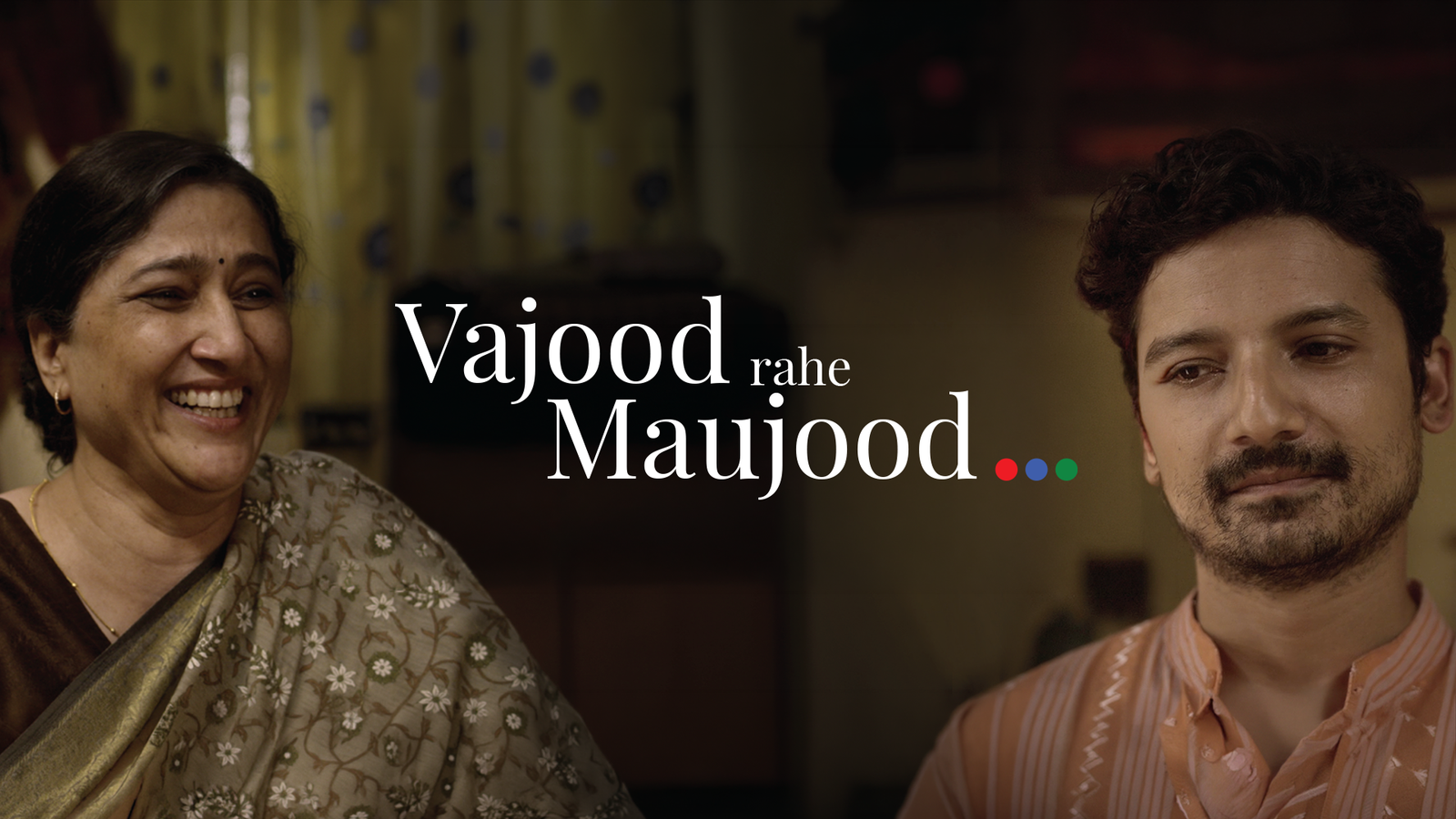
Rather than presenting dementia through a conventional public-service announcement listing symptoms, the campaign uses a short film centred on an everyday mother-son relationship.
Keigan Pinto, Creative Chief, Writer and Director, said the objective was to make the otherwise invisible experience of identity loss emotionally tangible.
The film uses a poem written by the son for his mother on her birthday as a creative device, with the poem becoming a way to communicate care as the greatest gift.
Through the relationship between the two characters, the film presents a difficult conversation with empathy rather than fear or judgement.
The campaign’s tagline, “Vajood Rahe Maujood,” captures its central message: encouraging people to act early so that the identity of someone living with dementia can be preserved for as long as possible.
Geeta Agarwal Sharma and Priyanshu Painyuli Lead the Film
The film features popular actors Geeta Agarwal Sharma, known for Laapataa Ladies and 12th Fail, and Priyanshu Painyuli, known for Mirzapur and Extraction.
Geeta Agarwal Sharma portrays a mother experiencing early signs of dementia, while Priyanshu Painyuli plays her son and primary caregiver.
The casting also supports an important social message around caregiving.
The woman protagonist reflects the disproportionate impact of dementia on women, while the caregiving relationship is deliberately inverted by placing the son in the primary caregiver role.
The campaign aims to encourage more men to participate actively in caregiving and to engage in difficult but necessary conversations about dementia within families.
Why Early Recognition Matters
The campaign highlights the importance of acting before dementia progresses significantly.
An estimated 45% of dementia cases may potentially be prevented or delayed, while changes associated with dementia can begin 10–20 years before symptoms become apparent.
This creates an important opportunity for awareness, risk reduction, screening and timely diagnosis.
For families, recognising small changes can therefore be an important first step.
Rather than automatically attributing changes in behaviour, memory or everyday functioning to ageing, families can begin conversations and seek appropriate professional guidance when concerns arise.
‘Vajood Rahe Maujood’: A Call to Notice the Little Shifts
With Vajood Rahe Maujood, the Tata Trusts are attempting to change the emotional and social vocabulary around dementia.
The campaign asks families to look beyond the obvious signs of memory loss and consider what dementia can gradually take away from a person—their familiar roles, relationships, independence and ultimately aspects of their identity.
Its central message is simple: notice the little shifts, start the conversation and act early.
By encouraging greater awareness and empathy, the campaign seeks to help individuals, caregivers and families preserve dignity and identity for as long as possible.
Campaign: Vajood Rahe Maujood
Focus: Dementia awareness and early recognition
Occasion: World Alzheimer’s Month 2026
Organisation: Tata Trusts