Oil Prices Rebound After Three-Day Decline Amid Fears of Disruptions in Key Energy-Producing Region
NEW DELHI (Economy India): Crude oil futures rebounded sharply by more than 3 per cent on Monday after renewed military tensions between the United States and Iran triggered concerns over potential disruptions to global energy supplies in West Asia.
The recovery came after three consecutive sessions of decline, with investors returning to the market amid heightened geopolitical uncertainty in one of the world’s most critical oil-producing regions.
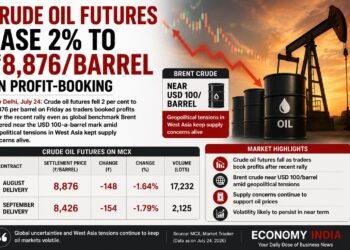
According to market data, the most-traded June crude oil contract on the Multi Commodity Exchange (MCX) surged by ₹255, or 3.08 per cent, to ₹8,536 per barrel in 10,943 lots.
The contract had settled at ₹8,281 per barrel on Friday.


Geopolitical Risks Drive Oil Market Sentiment
The sharp rebound reflects growing investor concerns that escalating tensions between Washington and Tehran could impact oil production, exports and transportation routes across the Middle East.
Iran remains one of the world’s major oil-producing nations, while the broader Gulf region accounts for a significant share of global crude exports.
Any military escalation involving the United States and Iran is closely monitored by energy markets because of its potential impact on:
- Global crude oil supplies
- Shipping routes
- Energy security
- Refinery operations
- International trade flows
Analysts said geopolitical developments have once again become a key driver of oil price movements.
Strategic Importance of the Strait of Hormuz
One of the primary concerns for global markets is the security of the Strait of Hormuz, a narrow waterway through which a substantial portion of the world’s oil exports pass.
The strategic corridor connects Gulf oil-producing nations with international markets and is considered one of the most important energy chokepoints globally.
Any disruption to shipping activities in the region could affect global crude availability and lead to higher energy prices.
Investors often react quickly to developments that may threaten the free movement of oil through the waterway.
Oil Markets Recover After Recent Weakness
The latest gains helped crude oil futures reverse a three-session losing streak.
Prior to Monday’s rebound, oil prices had faced pressure from:
- Concerns about slowing global demand
- Economic uncertainty in major markets
- Expectations of stable supply conditions
- Profit booking by traders
However, renewed geopolitical tensions shifted market focus back to supply-side risks, triggering fresh buying activity.
Impact on Global Economy
Higher crude oil prices have significant implications for economies worldwide.
For oil-importing countries such as India, sustained increases in crude prices can influence:
Inflation
Rising energy costs can increase transportation and manufacturing expenses, potentially contributing to inflationary pressures.
Import Bills
Higher oil prices raise the cost of energy imports, affecting trade balances and foreign exchange reserves.
Fuel Prices
Domestic fuel pricing may come under pressure depending on global crude movements and government policies.
Corporate Margins
Industries heavily dependent on energy inputs may experience increased operating costs.
Implications for India
India is the world’s third-largest consumer and importer of crude oil, making global price movements particularly important for the country’s economy.
A significant rise in oil prices can impact:
- Current account deficit
- Fiscal management
- Inflation trajectory
- Transportation costs
- Industrial production expenses
At the same time, stable energy supplies remain critical for supporting India’s economic growth and manufacturing ambitions.
Investor Focus on Further Developments
Market participants are expected to closely monitor future developments in US-Iran relations and broader geopolitical conditions in West Asia.
Analysts believe crude oil prices could remain volatile in the near term as traders assess:
- Potential military developments
- Diplomatic efforts
- Supply chain risks
- OPEC+ production policies
- Global demand trends
Any escalation in tensions could provide further support to prices, while diplomatic progress may help ease supply concerns.
The strong rebound in crude oil futures underscores the sensitivity of energy markets to geopolitical developments. With US-Iran tensions once again influencing investor sentiment, oil prices are likely to remain highly responsive to developments in the Middle East.
As global economies continue to navigate inflation risks and energy security concerns, the trajectory of crude oil prices will remain a key factor shaping financial markets and economic outlooks worldwide.
Key Highlights
- Crude oil futures rose 3.08%
- MCX June contract climbed to ₹8,536 per barrel
- Previous close: ₹8,281 per barrel
- Price increase: ₹255 per barrel
- Rise driven by renewed US-Iran tensions
- Concerns centered on potential supply disruptions in West Asia
(Economy India)