
RAIPUR (Economy India): India has emerged as one of the world’s leading steel-producing nations, with the secondary steel sector playing a significant role in this growth. The Direct Reduced Iron /Sponge Iron and Induction Furnace route has contributed substantially to industrial development, employment generation and infrastructure expansion across the country.
Due to the large availability of non-coking coal in India, coal-based DRI is produced on a large scale and widely used in Induction Furnaces for steelmaking. Steel produced through this route is generally categorized as secondary steel.
However, one of the major challenges of the conventional Induction Furnace route has been the difficulty in consistently producing high-quality primary grade steel. Steel made through the secondary route often faces concerns related to relatively higher levels of phosphorus and sulphur, which may limit its use in critical and high-performance applications.
As a result, major steel companies, premium users, infrastructure developers, government projects and quality-conscious customers generally prefer primary steel, where phosphorus and sulphur levels are maintained at very low levels along with better metallurgical consistency.
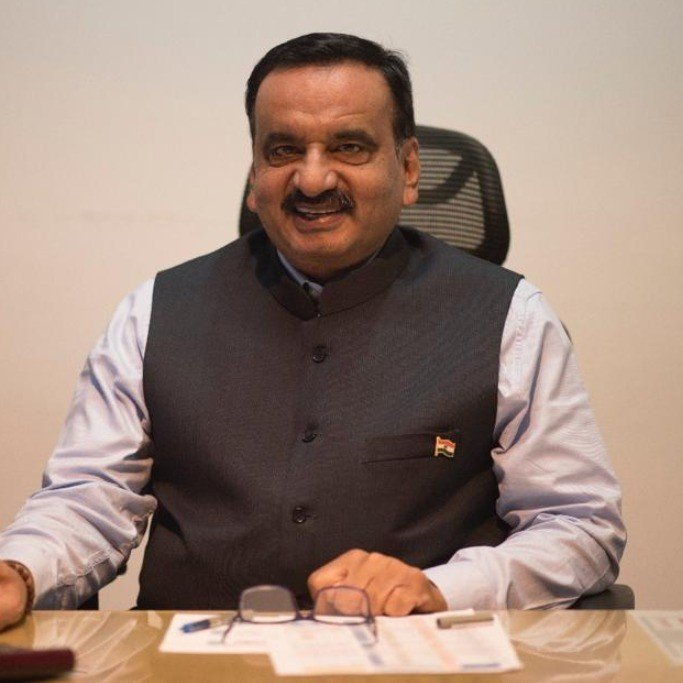
Steel industry advisor and consultant Dinesh Kumar Saraogi has been studying and researching for a long time how secondary steel can be converted into primary quality steel in a commercially viable and practical manner.
According to him, the key objectives of this work are better utilization of Sponge Iron/ Direct Reduced Iron, improvement in steel quality, reduction in production cost, higher profitability for steel plants, utilization of existing infrastructure and assets, minimal additional capital expenditure, faster payback on new investment and capability to manufacture value-added steel grades.
Recently, an encouraging new steelmaking concept has emerged in this direction. Through this approach, conventional Induction Furnace-based secondary steel can potentially be upgraded into primary quality steel at a reasonable cost.
Saraogi said that he has been deeply involved in studying and working on this concept over the past several days. Initial implementation work has already started in a few plants, and the results achieved so far have generated strong confidence regarding both technical feasibility and commercial viability.
The most important aspect of this development is that it may become a major opportunity for the secondary steel industry, especially for medium and small steel producers who already have Direct Reduced Iron and Induction Furnace-based infrastructure.
If the process continues to progress successfully, this concept may emerge as a significant technological advancement and a potential game changer for the Induction Furnace and secondary steel sector.
Globally, the steel industry is moving towards cleaner, more energy-efficient, flexible and cost-optimized steelmaking routes. In such a scenario, any technology capable of improving steel quality while economically utilizing existing secondary steel infrastructure can create substantial long-term benefits for the industry.
At present, the work is still under development, and further industrial trials, operational optimization and validation are continuing. However, the initial confidence level and industry response are highly positive.
Saraogi has shared this development so that industry colleagues, professionals and stakeholders remain aware of the emerging possibilities in the steel sector. Interested persons may connect with him directly for further discussion on the subject. Interested industry colleagues, professionals and stakeholders may contact Steel Industry Advisor and Consultant Dinesh Kumar Saraogi directly for further discussion on the subject at Mobile +919777444777 or through email at dksaraogi58@gmail.com.
(Economy India)