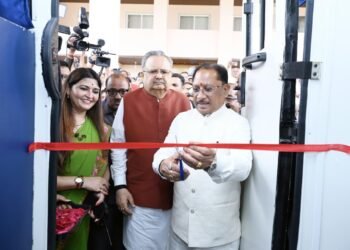

Mohali (Economy India): Punjab, one of India’s historically prosperous states, is witnessing renewed interest from investors and industrial groups. After years of slower industrial growth compared to some other Indian states, Punjab is gradually repositioning itself as an attractive destination for investment. Recent announcements at the Progressive Punjab Investors’ Summit 2026 highlight a growing confidence among businesses in the state’s economic potential.
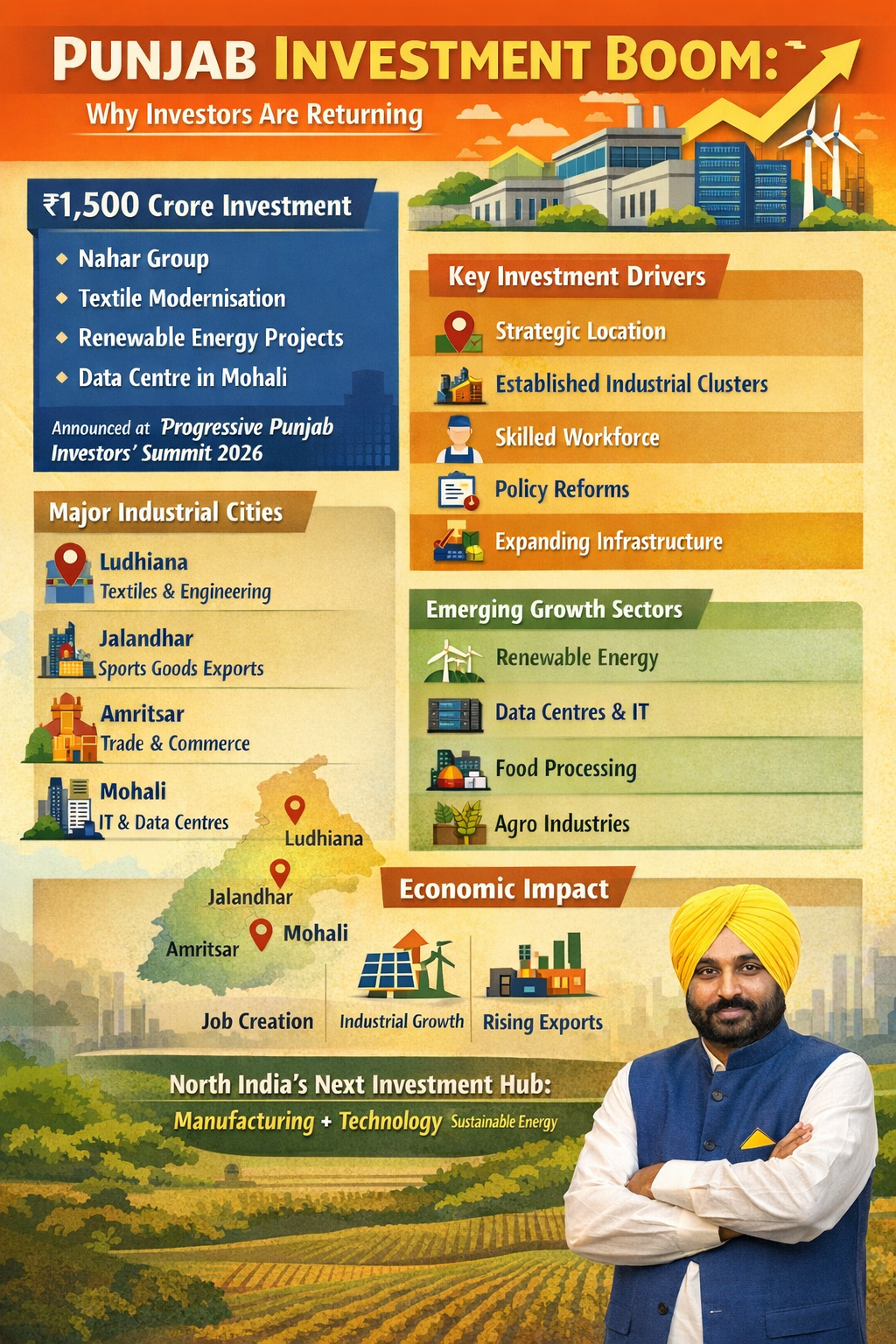
Among the key announcements, the Nahar Group committed to investing ₹1,500 crore in textile modernisation, renewable energy and a data centre project in Mohali, signalling that Punjab is again emerging as a competitive industrial hub.
But what exactly is driving this renewed investor interest? Several factors—ranging from strategic geography and policy reforms to infrastructure development and sectoral diversification—are shaping Punjab’s new investment story.

Punjab’s Strategic Location: A Gateway for Trade
Punjab’s geographic position has always been one of its greatest economic strengths. Located in northwestern India, the state shares a border with Pakistan and acts as a natural gateway to northern markets including Delhi, Chandigarh, and Ludhiana.
The state also benefits from its proximity to major consumption centers across northern India. Industries operating in Punjab can efficiently distribute products to large markets in Haryana, Himachal Pradesh, Jammu and Kashmir, Rajasthan and the national capital region.
Improved highway connectivity under projects like the National Highways Authority of India network and freight corridors has strengthened logistics efficiency. For manufacturing companies, this translates into lower transportation costs and faster supply chains.
Strong Industrial Legacy
Punjab has historically been one of India’s key industrial states, particularly in sectors such as:
- Textiles
- Bicycle manufacturing
- Agricultural equipment
- Sports goods
- Light engineering
Cities like Ludhiana, Jalandhar, and Amritsar developed strong industrial ecosystems decades ago.
For example:
- Ludhiana is widely known as the “Manchester of India” for knitwear and textiles.
- Jalandhar is globally recognised for sports goods exports.
- Punjab’s agricultural equipment manufacturing sector supports farmers across India.
This existing industrial base provides a significant advantage to new investors. Instead of building ecosystems from scratch, companies can tap into existing supplier networks, skilled workers, and industry clusters.
Policy Reforms to Attract Investment
In recent years, the Punjab government has introduced several policy reforms aimed at making the state more investor-friendly.
The Government of Punjab has focused on improving the ease of doing business through simplified approvals, digital clearances, and faster project implementation.
Key policy measures include:
- Single-window clearance systems for industrial approvals
- Simplified licensing processes
- Faster land allocation in industrial parks
- Incentives for manufacturing and export-oriented industries
Such policy initiatives reduce bureaucratic hurdles, which historically discouraged investors. Businesses now report improved transparency and faster approvals for new projects.
Infrastructure Development
Infrastructure plays a decisive role in attracting large-scale investments. Punjab has been expanding and modernizing its infrastructure to support industrial growth.
Key improvements include:
Industrial Parks and Manufacturing Zones
The state has developed dedicated industrial parks and clusters to support sector-specific investments. These zones provide:
- Plug-and-play manufacturing facilities
- Reliable electricity supply
- Logistics connectivity
- Industrial utilities
Logistics and Transportation
Highway connectivity and rail freight networks are improving rapidly. Projects linked with national logistics initiatives have enhanced supply chain efficiency.
Digital Infrastructure
New investments in data centres and IT infrastructure are gradually positioning cities like Mohali as emerging technology hubs in northern India.
Diversification Beyond Traditional Industries
Punjab’s industrial growth was historically concentrated in agriculture-linked sectors. However, the state is now expanding into newer industries including:
- Renewable energy
- Information technology
- Data centres
- Food processing
- Electric mobility components
The investment announcement by Nahar Group reflects this diversification strategy. The company plans to combine traditional textile operations with renewable energy and digital infrastructure investments.
Renewable Energy Opportunities
Energy sustainability is becoming a key factor for industrial investment. Punjab is encouraging renewable energy adoption across manufacturing sectors.
Industries are increasingly integrating:
- Solar power installations
- Biomass-based energy systems
- Energy-efficient manufacturing technologies
This transition helps companies reduce energy costs while aligning with India’s broader sustainability goals led by the Government of India.
Green energy infrastructure is also becoming a major attraction for global investors who prioritise sustainable manufacturing.
Skilled Workforce and Education
Punjab has a strong base of technical education institutions and skilled workers, particularly in manufacturing sectors.
Institutions across the state produce graduates in engineering, technology, management and industrial design. Many workers also have decades of experience in textile manufacturing, engineering, and machine operations.
This skilled workforce reduces the need for companies to import talent from other regions. It also improves productivity and operational efficiency.
Agriculture-Based Industrial Opportunities
Punjab is one of India’s most productive agricultural states. The presence of a strong agricultural ecosystem creates significant opportunities for:
- Food processing industries
- Agro-based manufacturing
- Cold chain logistics
- Packaging industries
Companies investing in food processing can directly access large volumes of agricultural raw materials including wheat, rice, fruits and vegetables.
This vertical integration between agriculture and industry strengthens supply chains and reduces production costs.
Growth of IT and Technology Sector
Cities like Mohali are emerging as technology and startup centres in northern India. IT parks and digital infrastructure development have attracted technology companies and data-driven businesses.
With the increasing demand for digital infrastructure, data centre investments are becoming a new growth segment for the state.
Data centres require reliable electricity, secure connectivity, and large land parcels—factors that Punjab is increasingly able to provide.
Government Push for Industrial Revival
The Punjab government has been actively engaging with investors through industry outreach programs and investment summits.
Events like the Progressive Punjab Investors’ Summit 2026 aim to showcase investment opportunities and connect global investors with local industries.
Such platforms help in:
- Promoting industrial policies
- Facilitating partnerships between companies
- Highlighting infrastructure projects
- Building investor confidence
The summit has already seen participation from several leading industrial groups, indicating renewed enthusiasm for investing in the state.
Employment and Economic Growth
Fresh investments are expected to generate significant economic benefits for Punjab, including:
- Creation of direct and indirect employment opportunities
- Expansion of industrial output
- Growth in exports
- Development of supporting industries and services
Large investments also encourage smaller businesses and startups to grow around industrial hubs, creating a multiplier effect in the economy.
Challenges That Still Need Attention
Despite the positive momentum, Punjab still faces certain challenges that must be addressed to sustain long-term investment growth.
Key concerns include:
- Need for faster land acquisition processes
- Competition from other industrial states such as Gujarat and Tamil Nadu
- Continued improvement in logistics infrastructure
- Managing energy costs for manufacturing units
Addressing these challenges will be crucial for maintaining investor confidence.
The Road Ahead
Punjab’s renewed push for industrial development comes at a time when India is positioning itself as a global manufacturing hub.
With strong industrial roots, improving infrastructure, supportive policies, and sector diversification, the state is gradually regaining its position as a key investment destination in northern India.
Announcements like the ₹1,500 crore investment by Nahar Group highlight the growing confidence of industry leaders in the state’s economic future.
If policy reforms continue and infrastructure expansion keeps pace with industrial demand, Punjab could witness a new wave of manufacturing, technology, and renewable energy investments in the coming years.
For investors looking for opportunities in northern India, Punjab is increasingly emerging as a state worth watching.
(Economy india)