
LNG Disruptions in Qatar Raise Global Supply Concerns; What It Means for India’s Energy Security
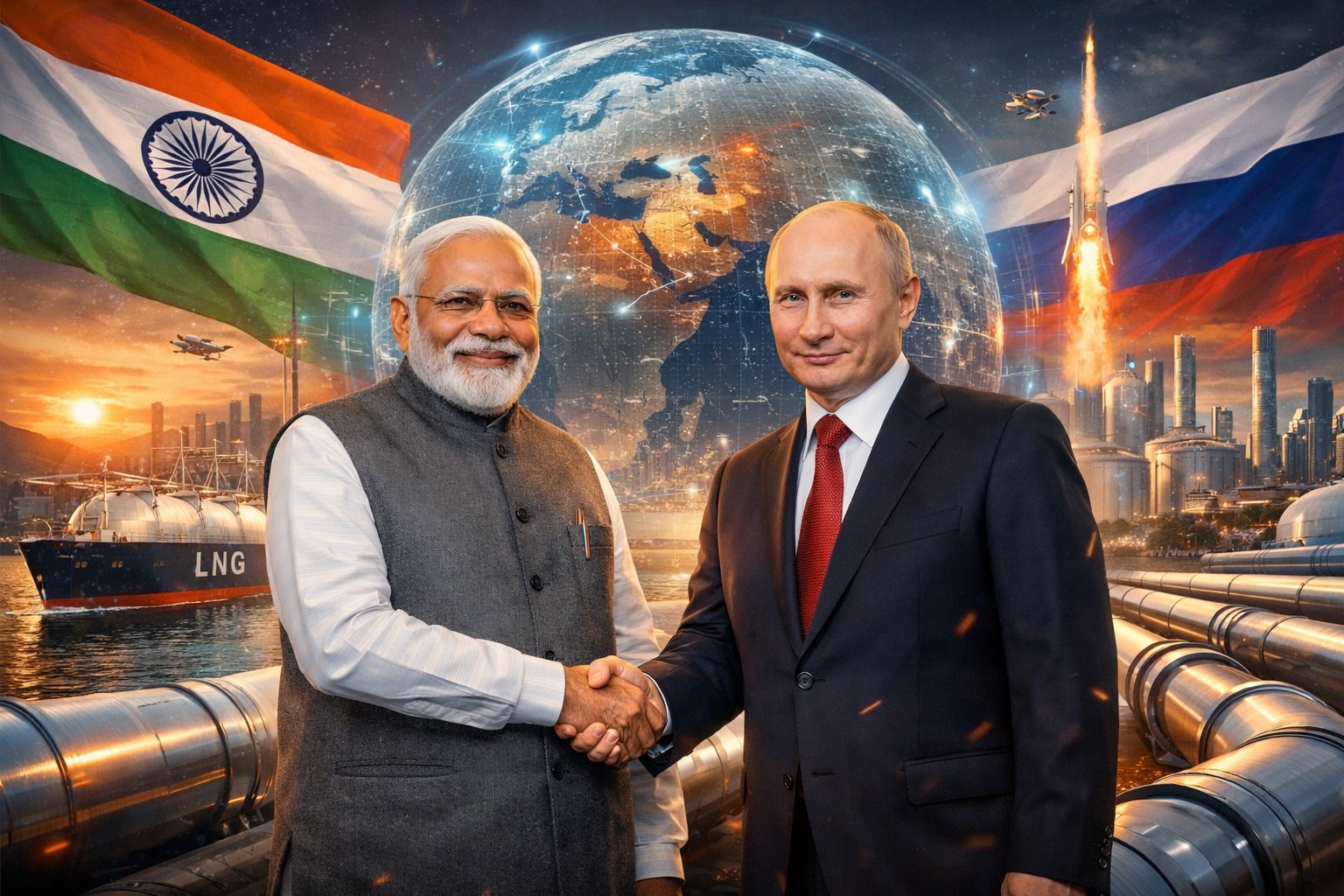
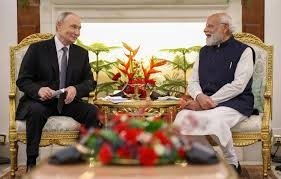
New Delhi | Economy India | As tensions escalate in West Asia following reported attacks on critical energy infrastructure in Qatar, Russia has offered a strong assurance to India, stating it is ready to fully meet India’s energy requirements if supply disruptions persist.
The assurance came from an official of the Embassy of the Russian Federation in India, amid growing concerns after QatarEnergy suspended liquefied natural gas (LNG) production on March 2. The suspension followed an Iranian drone strike targeting infrastructure at Ras Laffan Industrial City and Mesaieed Industrial City, two of Qatar’s most critical energy hubs.
The development has triggered ripple effects across global energy markets, with potential implications for oil prices, LNG contracts, maritime security, inflation, and geopolitical alignments.
West Asia: The Epicenter of Global Energy Supply
West Asia accounts for:
- Nearly 30% of global oil exports
- Over 20% of global LNG supply
- Critical maritime chokepoints such as the Strait of Hormuz
Any military escalation in the region immediately impacts global commodity markets.
Qatar is the world’s largest LNG exporter. Its Ras Laffan complex alone represents a substantial share of global LNG production capacity. Even a temporary halt creates nervousness in:
- Asian LNG buyers
- European energy markets
- Emerging economies dependent on imported fuel
The reported drone strike signals that energy infrastructure is increasingly becoming a strategic target in regional conflicts.
Why Russia’s Assurance Matters
Russia’s statement is geopolitically significant for several reasons.
Since the Ukraine conflict in 2022, Russia has reoriented much of its energy exports toward Asia. India has emerged as one of the largest buyers of Russian crude oil, benefiting from discounted rates.
By offering to meet India’s energy needs during prolonged disruptions, Russia is:
- Reinforcing its role as a dependable energy supplier
- Strengthening strategic ties with India
- Countering Western attempts to isolate its energy sector
- Positioning itself as a stabilizing actor in a volatile energy market
The assurance is both economic and political in nature.
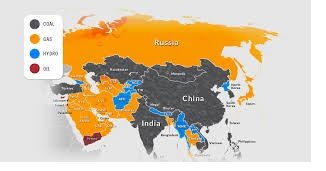
India’s Energy Dependence: Structural Vulnerability
India imports:
- Over 85% of its crude oil
- Nearly half of its natural gas
LNG plays a vital role in:
- Power generation
- Fertilizer manufacturing
- City gas distribution
- Industrial operations
Any sustained disruption in LNG supply can:
- Raise power tariffs
- Increase fertilizer subsidies
- Trigger industrial cost escalation
- Add inflationary pressure
Thus, energy security remains a core national security priority.
LNG Disruption: Immediate Market Impact
Qatar’s LNG suspension has led to:
- Spot LNG price volatility
- Concerns about Asian supply tightness
- Increased risk premiums in maritime insurance
Although India relies heavily on long-term LNG contracts, short-term supply adjustments often require participation in spot markets — where prices are more volatile.
If disruptions persist, Asian benchmark gas prices may rise significantly, affecting importing nations.
Oil Market Sensitivity: The $100 Risk
The global oil market is highly sensitive to geopolitical tensions in West Asia.
Key risk factors include:
- Possible escalation between Iran and Gulf states
- Disruption in tanker movement
- Higher shipping insurance costs
- Speculative trading activity
A prolonged conflict scenario could push crude prices above $100 per barrel. For India, this would translate into:
- Wider current account deficit
- Higher import bills
- Fiscal strain
- Pressure on the rupee
The Iran Factor: Strategic Signaling
The reported Iranian drone strike suggests an escalation pattern that stops short of full-scale war but applies calibrated pressure.
Energy infrastructure attacks serve as:
- Strategic warning signals
- Economic leverage tools
- Political messaging mechanisms
However, a full-blown regional war would damage all stakeholders, including Iran itself.
Most analysts believe regional actors may prefer controlled escalation rather than uncontrolled conflict.
Maritime Security and India’s Stakes
Nearly 60% of India’s crude imports transit through the Strait of Hormuz.
Any threat to maritime navigation could:
- Increase freight costs
- Delay shipments
- Create supply bottlenecks
India’s naval preparedness and maritime diplomacy are crucial in safeguarding energy supply lines.
Energy security today is inseparable from maritime security.
Russia’s Energy Capacity: Can It Fill the Gap?
Russia is one of the world’s largest producers of oil and natural gas.
However, replacing LNG supply involves:
- Liquefaction capacity
- Shipping logistics
- Sanctions compliance
- Financial transaction mechanisms
While Russia can increase crude exports to India relatively easily, replacing LNG volumes is more complex due to infrastructure constraints.
Nonetheless, politically, the assurance strengthens India-Russia strategic engagement.
India’s Strategic Autonomy in Action
India’s foreign policy emphasizes “Strategic Autonomy.”
New Delhi maintains relations with:
- Russia
- The United States
- Gulf nations
- European Union
- Iran
Energy diversification aligns with this doctrine.
India is unlikely to align exclusively with any bloc. Instead, it will:
- Diversify suppliers
- Strengthen reserves
- Maintain diplomatic balance
- Prioritize domestic economic stability
Impact on India’s Inflation and Fiscal Health
Energy prices directly influence:
- Transportation costs
- Food inflation
- Industrial production expenses
- Subsidy burden
If LNG and oil prices surge:
- Retail inflation could spike
- Fertilizer subsidy allocations may rise
- Fiscal consolidation targets may face pressure
The Reserve Bank of India would also monitor currency volatility and imported inflation risk.
OPEC+ Dynamics and Market Stability
Russia remains part of OPEC+ coordination.
Gulf producers and Russia share common interests in maintaining price stability at sustainable levels.
If West Asia tensions escalate:
- OPEC+ may adjust output
- Strategic reserves may be released
- Diplomatic interventions may intensify
Energy diplomacy becomes central to conflict containment.
The United States’ Strategic Lens
The United States seeks:
- Stable global oil prices
- Containment of Iranian escalation
- Limiting Russia’s geopolitical leverage
India’s balancing approach may face diplomatic scrutiny but remains aligned with its national interests.
India’s growing economic weight gives it greater flexibility in navigating great-power competition.
China’s Parallel Position
China is also a major energy importer and buyer of Russian crude.
In case of supply tightening:
- China and India may compete for spot LNG cargoes
- Asian energy premiums could rise
- Strategic reserves usage may increase
This introduces another layer of complexity in Asia’s energy landscape.
Long-Term Energy Strategy: A Turning Point?
This crisis reinforces the importance of:
- Renewable energy expansion
- Solar and wind capacity scaling
- Green hydrogen mission
- Domestic exploration
India has set ambitious renewable targets. Accelerating energy transition reduces vulnerability to geopolitical shocks.
Strategic Petroleum Reserves: Buffer Mechanism
India maintains strategic petroleum reserves but coverage remains limited in duration.
Policymakers may consider:
- Expanding SPR capacity
- Increasing LNG storage
- Diversifying supply corridors
Energy resilience is not just about sourcing — it is about storage and flexibility.
Currency and Payment Innovation
Post-2022 sanctions environment led to alternative payment arrangements between India and Russia.
These mechanisms include:
- Rupee trade
- Third-country currency settlements
- Bilateral banking adjustments
Future energy flows may further diversify away from dollar-dominated systems, though such transitions remain gradual.
Political and Diplomatic Signaling
Russia’s assurance sends several messages:
- India remains a priority strategic partner
- Moscow is capable of offsetting Western market shifts
- Energy remains a diplomatic tool
For India, the messaging remains cautious and pragmatic.
Risks to Watch
Despite potential benefits, risks include:
- Sanctions complications
- Shipping insurance constraints
- Gulf diplomatic sensitivities
- Market overreliance on one supplier
India’s best strategy remains diversification.
Multipolar Energy Order Emerging
The unfolding situation reflects a broader global trend:
Energy markets are becoming multipolar.
Power is distributed among:
- Gulf producers
- Russia
- United States
- Emerging Asian consumers
India stands at the center of this evolving matrix.
Stability Through Strategic Balancing
Russia’s readiness to meet India’s energy needs during prolonged West Asia disruptions underscores the geopolitical centrality of energy security.
For India, the objectives are clear:
- Secure affordable supplies
- Prevent inflation shocks
- Maintain diplomatic balance
- Strengthen domestic energy transition
- Expand strategic reserves
The crisis may stabilize through diplomacy — or deepen if escalation continues.
Either way, energy geopolitics will remain central to global power competition in 2026 and beyond.
India’s approach — cautious, diversified, and strategically autonomous — will determine how effectively it navigates this volatile phase.
(Economy India)