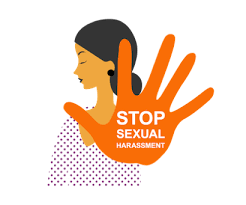
New Delhi (Economy India): The Women and Child Development (WCD) Ministry on Wednesday avoided giving a direct response in the Rajya Sabha to a question on whether sexual harassment laws apply to women members of political parties, even as it maintained that the legal definitions under existing legislation are “inclusive”.
The issue was raised by Rajya Sabha MP Swati Maliwal, who sought clarity on whether women working within political parties—despite not being formally classified as “employees”—are covered under the Sexual Harassment of Women at Workplace (Prevention, Prohibition and Redressal) Act, 2013 (POSH Act).

Concern Over Lack of Institutional Safeguards
In her written question, Maliwal pointed out that women in political parties remain vulnerable to sexual harassment due to the absence of mandatory Internal Complaints Committees (ICCs), a key safeguard required under the POSH Act for formal workplaces.
She asked whether the government recognises this gap in protection and whether it considers political parties to be outside the ambit of workplace harassment laws due to their organisational structure.

Queries on Consultations and Policy Measures
The MP also sought details on whether the government has held consultations with the Election Commission of India or political parties to explore extending POSH Act protections or creating equivalent redressal mechanisms tailored to political organisations.
Further, she questioned whether the Centre proposes to issue guidelines or legislative and administrative measures to ensure mandatory, time-bound institutional protection for women members of political parties.
Ministry’s Response Stops Short
In its reply, the WCD Ministry did not directly address whether the POSH Act explicitly applies to political parties. Instead, it stated that the definitions under the law are broad and inclusive, without clarifying how they translate into enforcement or compliance within political organisations.
The absence of a categorical response has renewed debate over the regulatory vacuum surrounding workplace protections for women in political spaces, where hierarchical power structures and informal employment relationships are common.
Broader Implications
Legal experts note that while the POSH Act defines “workplace” expansively, the lack of explicit compliance mechanisms for political parties has resulted in uneven implementation, leaving many women without access to formal grievance redressal.
The issue also raises wider questions about accountability, gender safety, and institutional reform within political parties—entities that play a central role in democratic governance but remain largely self-regulated in internal matters.
(Economy India)