
Geopolitics & Global Affairs
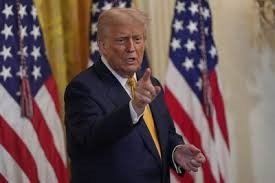
New York/Washington | Economy India | Former US President Donald Trump has once again reiterated his long-standing claim that his intervention helped prevent a major military escalation between India and Pakistan, asserting that his actions saved millions of lives during a period of heightened tension between the two nuclear-armed neighbours.
Speaking at a recent public interaction in the United States, Trump said that strong and direct diplomacy from Washington played a crucial role in de-escalating the situation between New Delhi and Islamabad, when the two sides were on the brink of a wider military confrontation.
“I stopped a war between India and Pakistan. It would have been very bad, millions of people could have died,” Trump said, repeating a statement he has made multiple times since leaving office.
India–Pakistan Tensions and Global Concerns
India and Pakistan have a long history of military and political tensions, particularly over the issue of Jammu and Kashmir, with both countries having fought multiple wars and frequent skirmishes along the Line of Control (LoC).
During periods of escalation, the international community, including the United States, often expresses concern due to:
- The nuclear capabilities of both nations
- The risk of miscalculation during military stand-offs
- The potential for regional instability affecting global security
Trump has repeatedly linked his claim to such moments of heightened tension, suggesting that American diplomatic pressure and engagement helped prevent a broader conflict.
Trump’s Version of Events
According to Trump, his administration adopted a results-driven diplomatic approach, using trade, strategic engagement, and direct communication to push both sides toward restraint.
“We used common sense and leverage. They listened,” Trump said, without providing specific details of the diplomatic mechanisms or timelines involved.
The former president has often highlighted this claim as an example of his foreign policy style, which he argues prioritised direct negotiations and avoided prolonged military conflicts.
India’s Consistent Stand on Third-Party Mediation
India has consistently rejected third-party mediation in its bilateral issues with Pakistan, maintaining that all outstanding matters must be resolved bilaterally, as per the Simla Agreement and the Lahore Declaration.
Indian officials have, in the past, downplayed or outright rejected Trump’s mediation claims, reiterating that:
- India does not seek external intervention in its relations with Pakistan
- De-escalation decisions are taken independently by New Delhi
- Diplomatic engagement, when it occurs, is conducted on India’s terms
New Delhi has repeatedly stressed that Pakistan must first address concerns related to cross-border terrorism for any meaningful dialogue to take place.
Pakistan’s Position and International Messaging
Pakistan, on the other hand, has often welcomed international involvement, including from the United States, especially during periods of heightened tension. Islamabad has previously acknowledged the role of global powers in urging restraint but has not officially corroborated Trump’s specific claims in detail.
Diplomatic observers note that while international calls for calm are common during India–Pakistan crises, attributing de-escalation to a single leader or country remains contentious.
Strategic Significance for the United States
Trump’s remarks come at a time when South Asia remains strategically important for Washington, given:
- India’s growing role in the Indo-Pacific strategy
- Pakistan’s geopolitical relevance in regional security dynamics
- US interests in counter-terrorism and regional stability
Analysts say Trump’s repeated emphasis on this claim also reflects his broader effort to highlight what he sees as foreign policy achievements during his presidency, particularly his assertion that he avoided new wars.
Experts Question the Claim’s Specificity
Foreign policy experts and former diplomats have questioned the lack of concrete evidence behind Trump’s statements.
“De-escalation between India and Pakistan has historically been influenced by a mix of bilateral military calculations, diplomatic signalling, and global pressure,” a former Indian diplomat said. “Attributing it solely to one external leader oversimplifies a complex process.”
Many analysts believe that internal strategic assessments in both countries play a decisive role in preventing conflicts from spiralling out of control.
Political Context Behind the Statement
Trump’s renewed assertion is also being viewed through the lens of domestic US politics, as he continues to project himself as a leader capable of managing global crises through assertive diplomacy.
By highlighting his role in preventing conflicts, Trump seeks to reinforce his image as:
- A deal-maker on the global stage
- A leader who avoided military entanglements
- Someone who prioritised peace through strength
Implications for India–US Relations
Despite differing narratives on mediation, India–US relations have strengthened significantly over the past decade, particularly in areas such as:
- Defence cooperation
- Strategic technology partnerships
- Indo-Pacific security
- Trade and investment
Diplomatic observers say Trump’s comments are unlikely to have any immediate impact on bilateral ties, as India’s official policy position remains unchanged.
Donald Trump’s repeated claim of having prevented an India–Pakistan military confrontation continues to generate debate among diplomats and analysts. While the former US president presents it as a major foreign policy success, India has consistently maintained that bilateral decision-making and strategic restraint, not third-party mediation, guide its actions.
The episode underscores the complexity of India–Pakistan relations, where diplomacy, military deterrence, and international messaging intersect. As geopolitical tensions continue to shape South Asia’s security landscape, claims of intervention will remain subject to scrutiny, interpretation, and diplomatic nuance.
(Economy India)