
Prime Minister highlights economic transformation roadmap; stresses high-value agriculture, logistics reforms & MSME competitiveness
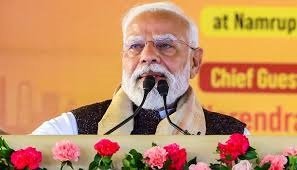
New Delhi ( Economy India): Prime Minister Narendra Modi, addressing the Fifth National Conference of Chief Secretaries, urged Indian states to accelerate reforms focused on manufacturing growth, trade facilitation, and global competitiveness, marking a renewed push toward transforming India into a leading global services powerhouse.
The Prime Minister said that India stands at a crucial economic turning point and called for synergy between states and central policies, especially in promoting ease of doing business, streamlining industrial approvals, developing export clusters, and building world-class logistics capacity.

“India has the potential to become a global hub for services, manufacturing, and high-value agriculture. To achieve this, states must work as growth partners and push reforms that enhance productivity, transparency, and competitiveness,” PM Modi emphasized.
Key Focus Areas Outlined by the Prime Minister
| Priority Sector | Key Directive | Expected Impact |
|---|---|---|
| Manufacturing | Faster clearances & industrial reforms | Boost to Make in India & FDI |
| Services Sector | IT, tourism, logistics, finance hubs | Job creation & export expansion |
| High-Value Agriculture | Horticulture, dairy, fisheries, animal husbandry | Rural income growth & farm exports |
| Ease of Doing Business | Single-window approvals, digital compliance | Reduced bureaucratic delays |
| Trade & Exports | Better ports, customs reforms, FTAs | Increased global market access |
India as a Global “Food Storage & Supply Hub”
PM Modi underlined that India can emerge as the “Food Storage Capital of the World”, provided the states prioritize integrated cold-chain networks, scientific warehousing, and processing zones.
He highlighted that global supply chains are redefining post-pandemic logistics, and India has the window to secure a position as a major food exporter if supported by targeted sectoral investments.

Growth Pillars Recommended
- Modern cold storage and warehousing facilities
- Farm-to-port export corridors
- Agri-tech adoption across states
- Value addition in milk, fishery, meat & organic products
“High-value agriculture is not just cultivation, it is commerce,” the PM remarked, calling for farm produce beyond raw selling, with value-chain creation at village level.
Ease of Doing Business: A State-Level Responsibility
The PM noted that while central policies are aligned, state-level implementation remains uneven. He urged Chief Secretaries to:
- Remove outdated trade licensing norms
- Reduce compliance layers for SMEs and startups
- Expand online approval and grievance systems
- Enable time-bound industrial land allocation
Economists believe that if implemented effectively, these reforms could increase India’s manufacturing share in GDP from the current 17% to 25% over the next decade.

Services Sector: India’s Global Advantage
India’s dominance in IT, software exports, digital payments, fintech, and knowledge-based services positions it to become a services superpower.
However, the PM emphasized the need to expand beyond IT and focus on:
- Global healthcare service hubs
- Tourism & spiritual eco-corridors
- Financial services districts
- Technical skill export markets
Analysts estimate that a service sector expansion strategy could generate 1.5–2 crore new jobs in the next five years if states align their policies.
Sector-Wise Impact Analysis
1️⃣ Manufacturing
- Industrial clusters for EVs, semiconductors, defence production
- Improved port logistics for export-driven units
2️⃣ MSME & Startups
- Reduced regulatory friction to boost domestic entrepreneurship
- Credit support & digital compliance framework
3️⃣ Agriculture & Rural Economy
- From subsistence farming to commercial farming models
- Farmer Producer Organisations (FPOs) for market linkage
4️⃣ Infrastructure & Connectivity
- Multimodal logistics: ports-highways-air-cargo integration
- Global-standard industrial parks & lab testing facilities
Expert View: What It Means for India’s Economy
Policy experts suggest that if states execute these reforms, India could experience:
- $1 trillion manufacturing output by 2030
- Double-digit export growth
- Improved global logistics ranking
- Rise in rural purchasing power
Economy India analysis indicates that sectoral coordination between states and the Centre will determine the actual outcome.
The Prime Minister’s address sets an ambitious yet achievable developmental narrative. The onus now lies on states to simplify rules, accelerate reforms, and build investor confidence. With the right strategy, India can convert its demographic advantage into a global competitive edge — positioning the country as a future manufacturing hub, service superpower, and food supply leader.
(Economy India)