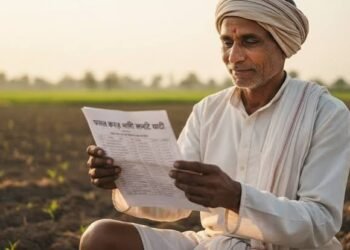

Agriculture Relief Measures Accelerated Amidst Climate-Linked Crop Damages
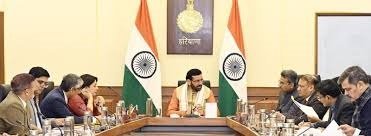
CHANDIGARH (Economy India): In a major step to support farmers affected by climate-induced crop destruction, the Haryana government on Wednesday released ₹116.15 crore as compensation to 53,821 farmers who suffered extensive losses during the heavy rains of August–September. Chief Minister Nayab Singh Saini announced the immediate disbursal of funds during an official programme in Chandigarh, reaffirming the administration’s commitment to delivering timely financial relief.
Addressing farmers and officials, Saini emphasised that the government’s priority is to ensure “no farmer suffers due to natural calamities.” The compensation—distributed under the state’s crop damage assessment mechanism—will be deposited directly into the bank accounts of the beneficiaries within the next seven days, ensuring swift support for rural households grappling with financial pressure.
Breakdown of Compensation Across Major Crops
The government has released crop-specific compensation based on verified surveys of agricultural losses. The crop-wise allocation is as follows:
- ₹35.29 crore for Millet (Bajra)
- ₹27.43 crore for Cotton
- ₹22.91 crore for Paddy (Rice)
- ₹14.10 crore for Guar
- ₹16.42 crore for other miscellaneous crops
This structured distribution reflects the crop-wise damages recorded by district teams following the heavy downpour that struck several regions of Haryana, especially southern and western districts.

According to officials from the Agriculture and Farmers’ Welfare Department, millet and cotton farmers were among the worst affected, particularly in Rewari, Mahendragarh, Bhiwani, Sirsa, and Fatehabad.
Farmers’ Losses and the Need for Quick Intervention
Unpredictable Weather Patterns Hit Rabi and Kharif Cycles
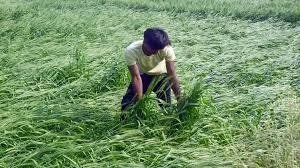
The rains that lashed Haryana during late August and September were part of an unpredictable weather pattern linked to climate variability. Large tracts of farmland experienced:
- Waterlogging
- Stunted crop growth
- Lodging of standing crops
- Lower grain formation
- Pest infestations induced by excess moisture
Millet and cotton—two major crops of Haryana’s kharif season—were particularly vulnerable. Paddy-growing belts of Karnal, Kurukshetra, and Kaithal also reported extensive lodging and yield decline.
Farmers’ associations had highlighted the need for immediate compensation to prevent a worsening of rural indebtedness. The ₹116.15 crore package is being viewed as a timely intervention that will help farmers prepare for the rabi season without facing cash shortages.
CM Saini: “Our Commitment is to Protect Every Farmer”
Direct Benefit Transfer to Ensure Transparency
In his address, Chief Minister Saini reiterated that the state government is fully aligned with the philosophy of farmer-first governance.
“Every farmer affected by natural calamities will receive full support. The compensation being released today will reach their accounts within a week. Transparency and speed are our guiding principles,” Saini stated.
The Direct Benefit Transfer (DBT) process ensures that the funds reach beneficiaries without middlemen or delays. Through this mechanism, Haryana has positioned itself as one of the leading states in India in terms of timely crop loss settlements.
Survey-Based Assessment: How Haryana Evaluated Losses
Modern Technology and Ground Reviews Used
The crop damage assessment was conducted through a combination of:
- Village-level Girdawari surveys
- Field verification by agriculture officers
- Satellite-based assessment tools
- Drone imagery in selected districts
These multi-layered assessments helped accurately determine the percentage of loss across different crop varieties and landholdings.
Government officials confirmed that farmers who reported losses of 25% to 75% and those with more than 75% damage have been compensated based on standard state norms.
Farmer Sentiment: Relief Appreciated, Long-Term Demands Continue
Farmers’ Reactions Across Districts
Farmers from Hisar, Kaithal, and Sirsa welcomed the government’s move, saying it would help recover part of the financial burden inflicted by unpredictable weather.
Ravinder Singh, a millet farmer from Mahendragarh, noted:
“The rains destroyed nearly half my crop. This compensation will help me buy seeds and prepare fields for the next season.”
However, several farmer groups have urged the state to:
- Increase compensation rates
- Expand crop insurance coverage
- Strengthen water drainage systems in vulnerable districts
- Provide timely input subsidies for the next sowing season
The government has acknowledged these concerns and stated that plans are underway to further strengthen agricultural resilience.
Haryana’s Push for Climate-Resilient Agriculture
Long-Term Strategies to Support Farmers
In recent years, Haryana has witnessed increasing instances of climate-related disturbances—untimely rains, heatwaves, and pest attacks. To mitigate long-term risks, the state is focusing on:
- Promoting climate-resilient crop varieties
- Increasing investment in micro-irrigation
- Strengthening crop insurance under PMFBY
- Encouraging diversification into pulses and oilseeds
- Enhancing soil health programmes
The government believes these measures will reduce the vulnerability of farmers to weather shocks.
How Compensation Helps Strengthen Rural Economic Stability
Boost to Rural Liquidity
The infusion of ₹116 crore into the rural economy is expected to have a broader economic impact:
- Farmers will be able to procure seeds, fertilisers, and inputs for the upcoming rabi season.
- Local markets will experience increased cash flow.
- Rural credit dependency may reduce in the short term.
Agriculture economists note that timely compensation acts as a stabiliser for rural economies, preventing distress migration and supporting farm continuity.
Next Steps: Ensuring Every Eligible Farmer Gets Support
Helpline and Support Centers Activated
The government has instructed all district administrations to ensure:
- No eligible farmer is left out
- All compensation records are error-free
- Helpdesks remain open for grievance redressal
- Awareness drives encourage farmers to report losses on time
CM Saini also directed officials to maintain high transparency and avoid delays in compensation transfers.
Haryana Sets Pace in Farmer Welfare Amid Climate Challenges
With the release of ₹116.15 crore to over 53,000 farmers, Haryana has taken a decisive step in strengthening farmer welfare and rural stability. The timely support underscores the government’s recognition of climate-driven agricultural risks and the urgent need to respond with fast, transparent, and data-backed compensation mechanisms.
As the state continues to face weather extremities, sustained investments in agricultural resilience, insurance coverage, and infrastructural improvements will be crucial. For now, the compensation brings immediate relief and restores confidence among thousands of farming families preparing for the next agricultural cycle.
(Economy India)