
Special Report
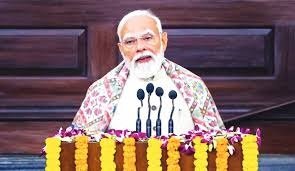
New Delhi | Economy India | Prime Minister Narendra Modi on Thursday described Startup India as a defining movement of New India, stating that what began as a government initiative a decade ago has now transformed into a nationwide revolution powered by youth aspirations, innovation, and entrepreneurial confidence. Addressing startup founders, innovators, investors, and young entrepreneurs at Bharat Mandapam in New Delhi on the occasion of National Startup Day, the Prime Minister said the journey of Startup India represents “millions of dreams turning into a powerful force of nation-building.”
As India marks ten years of the Startup India initiative, the scale and depth of the transformation underline a historic shift in the country’s economic and innovation landscape. From fewer than 500 startups in 2014 to more than 2 lakh DPIIT-recognised startups today, India has emerged as the world’s third-largest startup ecosystem, reflecting the success of sustained policy support, institutional reforms, and a cultural shift towards risk-taking and innovation.
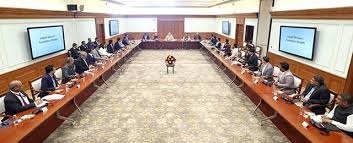
India’s Startup Rise: Numbers That Define a Decade
Highlighting the exponential growth of the ecosystem, Prime Minister Modi noted that the number of unicorns in India has surged from just four a decade ago to nearly 125 today. Indian startups are increasingly tapping capital markets through IPOs, creating large-scale employment, and attracting global investors’ attention.
The year 2025 alone witnessed the registration of nearly 44,000 startups, the highest ever in a single year, underscoring the accelerating momentum of entrepreneurial activity across the country. According to official estimates, recognised startups have generated around 21 lakh direct jobs, making entrepreneurship a central pillar of India’s employment strategy.
“India’s youth are no longer waiting for opportunities. They are creating solutions to real-world problems in agriculture, fintech, health, mobility, sustainability, and advanced technologies,” the Prime Minister said, adding that Startup India has given young innovators “an open sky to dream, build, and scale.”
From Job Seekers to Job Creators: A Structural Shift
Union Minister for Commerce and Industry Piyush Goyal, addressing the gathering, recalled that when Startup India was launched in January 2016, the Prime Minister had challenged India’s youth to move beyond the mindset of seeking jobs and instead become job creators.
“Ten years later, we can confidently say that this vision has taken deep roots across the country,” Goyal said. He pointed out that university campuses are increasingly turning into innovation hubs, with students pitching ideas, building prototypes, and launching ventures even before graduation.
Describing campuses as evolving “mini Shark Tanks,” the minister said the entrepreneurial confidence visible among students and faculty is one of the most powerful indicators of India’s changing economic culture.
Deep Tech Takes Centre Stage
A defining feature of the next phase of India’s startup journey is the government’s sharp focus on deep technology. Indian startups are now active across more than 50 sectors, including artificial intelligence, machine learning, quantum computing, agritech, space technology, drone systems, aerospace, rocket technology, health-tech, and advanced manufacturing.
To strengthen early-stage funding and risk capital availability, the government launched a ₹10,000 crore Fund of Funds for Startups (FFS) in 2016. Following the successful deployment of the first tranche, another ₹10,000 crore was approved in the latest Union Budget, with a strategic emphasis on deep-tech and high-impact sectors.
In a major boost to India’s innovation ambitions, Prime Minister Modi has also announced a ₹1 lakh crore Research, Development, and Innovation Fund, aimed at enabling world-class research in frontier technologies. According to Piyush Goyal, this fund will empower researchers, scientists, and startups to pursue long-term, high-risk innovation aligned with global standards.
Startup Revolution Beyond Metros
One of the most significant outcomes of Startup India has been the democratisation of entrepreneurship. Nearly 50 percent of India’s startups originate from Tier-2 and Tier-3 cities, signalling that innovation is no longer confined to metropolitan hubs.
The Northeast has emerged as a notable example, with startups in Sikkim and Assam working closely with farmers, tea growers, and youth to introduce modern agricultural and processing technologies. Andhra Pradesh is rapidly positioning itself as the country’s drone capital, while Karnataka and Tamil Nadu have become strongholds for deep-tech and AI-driven startups.
“This is no longer a metro-centric phenomenon. Startup India has truly become a pan-India movement,” Goyal said.
India on the Global Startup Map
India’s growing innovation capabilities are also reshaping its global economic engagements. According to the commerce minister, startup collaboration is increasingly becoming a key agenda item during free trade agreement (FTA) negotiations and bilateral discussions.
Foreign delegations have expressed strong interest in partnering with Indian startups, and nearly 100 countries are exploring structured inter-startup collaboration platforms with India. This global outreach reflects India’s rising credibility as a hub for scalable, technology-driven enterprises.
Recognising Excellence: National Startup Awards and State Rankings
As part of the National Startup Day celebrations, the Department for Promotion of Industry and Internal Trade (DPIIT) announced the results of the National Startup Awards (NSA 5.0) and the States’ Startup Ranking Framework (SRF 5.0).
The National Startup Awards recognise startups that demonstrate excellence in innovation, scalability, and social impact, while also highlighting ventures aligned with national development priorities. The fifth edition introduced new, future-oriented award categories, reflecting the growing maturity of India’s startup ecosystem, with special emphasis on deep-tech innovation and startups from smaller cities.
The States’ Startup Ranking Framework has emerged as a critical governance and policy tool, fostering healthy competition and collaboration among states and Union Territories. The latest edition evaluates performance across six reform areas and nineteen action points, covering policy support, institutional capacity, infrastructure, access to finance, market linkages, and ecosystem capacity building.
Participation from 34 states and Union Territories in SRF 5.0 reflects a shared national commitment to strengthening entrepreneurial ecosystems at the grassroots level.

A Decade of Policy, Confidence, and Execution
Reflecting on ten years of Startup India, policymakers and ecosystem stakeholders agree that the initiative’s success lies in its clarity of purpose, consistency of implementation, and sustained institutional support. Over the decade, Startup India has expanded access to capital, mentorship, markets, and regulatory ease, creating an environment where innovation-led enterprises can emerge and scale across sectors and geographies.
Prime Minister Modi declared 16 January as National Startup Day in 2022, recognising the role of startups in nation-building, socio-economic development, and self-reliance. Today, startups are not only engines of job creation and innovation but also contributors to India’s strategic and economic resilience.
Towards Viksit Bharat @2047
As India moves towards its centenary of independence, Startup India stands as a cornerstone of the Viksit Bharat @2047 vision. With a strong deep-tech focus, expanding global partnerships, and inclusive growth across regions, India’s startup ecosystem is increasingly shaping the country’s long-term economic trajectory.
Concluding his address, Prime Minister Modi expressed confidence that the seed planted a decade ago will continue to flourish under collective national effort. “Startup India is not just about businesses. It is about confidence, capability, and the courage of a new generation that believes India can lead the world in innovation,” he said.
A decade on, Startup India has evolved from an idea into a movement, and from a movement into a defining force shaping the future of India’s economy.
(Economy India)