Move Expected to Boost Home Loans, MSME Credit and Consumption Demand
New Delhi (Economy): India’s largest lender, State Bank of India (SBI), has reduced its lending rates by 25 basis points (0.25%), following the Reserve Bank of India’s (RBI) decision to cut the repo rate by an equivalent margin earlier this month. The move brings immediate relief to millions of existing and prospective borrowers and is expected to act as a catalyst for consumption-led growth at a time when global economic conditions remain uncertain.

The rate cut applies to both existing floating-rate borrowers and new loan applicants, reinforcing the RBI’s monetary transmission mechanism and underscoring the banking sector’s readiness to support economic momentum.
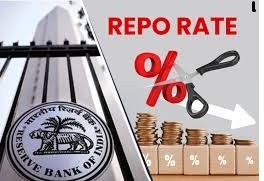
Why SBI’s Rate Cut Matters
SBI is not just India’s largest public sector bank—it is also a trendsetter. Any pricing action by SBI typically influences the broader banking system, including public sector peers, private lenders, and housing finance companies.
With over 22% share in home loans, SBI’s lending rate decisions have a direct bearing on:
- Retail credit demand
- Housing market activity
- MSME borrowing sentiment
- Overall financial conditions in the economy
Economists believe that the move signals the formal beginning of a soft-rate cycle, after nearly two years of elevated interest rates aimed at controlling inflation.
🔹 Data Box: Key Rate Changes
| Parameter | Before | After |
|---|---|---|
| RBI Repo Rate | 6.50% | 6.25% |
| SBI External Benchmark Lending Rate (EBLR)* | ~8.90% | ~8.65% |
| Reduction | — | 25 basis points |
*Indicative; actual rates vary by borrower profile and loan category.
RBI’s Monetary Pivot: Context Behind the Decision
The RBI’s recent repo rate cut marked a strategic recalibration rather than a sharp policy reversal. Inflation has moderated closer to the central bank’s 4% medium-term target, while economic growth remains resilient but uneven across sectors.
Key Factors Behind RBI’s Rate Cut:
- Cooling food inflation
- Stable core inflation
- Improved fiscal consolidation
- Global central banks signalling pause or easing
The RBI’s objective is clear: support growth without reigniting inflationary pressures.
Transmission Success: SBI Moves Quickly
One of the biggest criticisms of past monetary easing cycles was delayed transmission. This time, SBI’s swift response suggests that banks are confident about:
- Liquidity conditions
- Credit quality
- Balance sheet strength
This also indicates that the External Benchmark Lending Rate (EBLR) framework is working as intended, allowing repo rate changes to flow directly into lending rates.
Impact on Borrowers: Who Benefits Most?
🏠 Home Loan Borrowers
SBI home loan customers stand to gain the most, as housing loans are typically long-tenure and floating-rate.
Example Impact:
- ₹50 lakh home loan
- Tenure: 20 years
- EMI reduction: ₹800–₹1,200 per month (approx.)
- Total interest savings: ₹2–3 lakh over the loan life
This could revive end-user housing demand, especially in mid-income and affordable segments.
🚗 Auto & Personal Loans
Lower rates improve affordability, particularly for first-time buyers and salaried individuals.
- Boost to festive and replacement demand
- Increased willingness to finance discretionary purchases
🏭 MSME & Business Loans
For MSMEs operating on thin margins, even a 25 bps reduction can materially improve cash flows.
- Lower working capital costs
- Improved capacity utilisation
- Better debt servicing ability
🔹 Data Box: SBI Loan Portfolio Snapshot
| Segment | Approx. Share |
|---|---|
| Home Loans | 22% |
| Corporate Loans | 35% |
| MSME & Agri | 25% |
| Personal Loans | 18% |
(Indicative composition)
Expert Analysis: What Economists Are Saying
“SBI’s rate cut confirms that monetary transmission is finally effective. This will support consumption without destabilising inflation.”
— Chief Economist, Leading Private Bank
“We are entering a phase of calibrated easing. This is not aggressive stimulus, but enough to nudge demand.”
— Former RBI Monetary Policy Committee Advisor
“Public sector banks acting early will force private banks to follow.”
— Banking Sector Analyst
Will Other Banks Follow?
Historically, SBI’s moves trigger sector-wide adjustments. Market participants expect:
- Other public sector banks to cut rates within weeks
- Private banks to selectively reduce rates for high-quality borrowers
- NBFCs to adjust pricing based on funding costs
However, private lenders may remain cautious, especially in unsecured credit segments where delinquencies have edged up.
Impact on Housing & Real Estate Sector
Lower interest rates are expected to:
- Improve housing affordability
- Increase homebuyer confidence
- Support residential launches in Tier-II & Tier-III cities
Developers believe that stable rates will encourage end-users rather than speculative buyers, creating healthier market dynamics.
Bond Market & Banking Stocks Reaction
Financial markets welcomed the decision:
- Government bond yields softened, reflecting easing expectations
- Banking stocks remained stable, as margins are protected by strong credit growth
- PSU banks outperformed on expectations of higher loan demand
Net interest margins (NIMs) are expected to remain resilient due to:
- Low deposit cost pressure
- Strong CASA ratios
- Controlled asset quality risks
Liquidity Conditions: Comfortable, Not Excessive
Despite the rate cut, liquidity remains carefully managed by the RBI through:
- Open Market Operations (OMO)
- Variable Rate Repos (VRR)
- Standing Deposit Facility (SDF)
This ensures that rate cuts do not lead to excessive speculative lending or asset bubbles.
Global Context: India Stands Out
While advanced economies remain cautious due to sticky inflation, India’s macro fundamentals allow policy flexibility:
- Strong GDP growth
- Manageable current account deficit
- Stable forex reserves
- Improving fiscal metrics
This positions India as a relative outperformer among major economies.
Risks to Watch
Despite optimism, economists caution against complacency:
- Global crude oil volatility
- Geopolitical risks
- El Niño-related food inflation
- Credit stress in unsecured lending
The RBI is expected to remain data-dependent, adjusting policy based on inflation and growth trends.
What This Means for the Economy in 2026
The SBI rate cut may appear modest, but its psychological impact is significant:
- Signals policy support
- Improves borrower sentiment
- Encourages capex planning
- Reinforces growth narrative
If inflation remains under control, analysts expect one or two more calibrated rate cuts over the next year.
A Measured Boost to Growth
SBI’s 25-basis-point lending rate cut marks a critical inflection point in India’s monetary cycle. It reflects confidence in economic fundamentals while maintaining prudence against inflation risks.
For borrowers, it means lower EMIs and improved affordability. For businesses, it signals easier credit conditions. And for the economy, it reinforces the path toward sustainable, consumption-led growth.
As India navigates a complex global environment, this carefully calibrated move underscores the strength and maturity of its monetary and banking framework.
(Economy India)