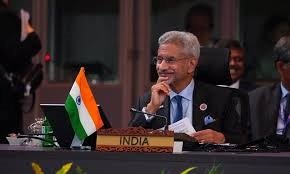
New Delhi (Economy India): External Affairs Minister S Jaishankar on Sunday held wide-ranging discussions with a three-member United States Congressional delegation, focusing on security cooperation, economic engagement, and critical technologies, at a time when India–US relations are navigating one of their most complex phases in recent years.
The meeting assumes significance against the backdrop of persistent trade friction, tariff disputes, and geopolitical divergence, even as both countries attempt to preserve the long-term strategic foundation of their partnership.


High-Level Engagement Amid Diplomatic Strain
The US delegation comprised Jimmy Patronis, Mike Rogers, and Adam Smith, all influential lawmakers with deep involvement in defence, security, and economic policy. US Ambassador to India Sergio Gor also participated in the talks, underscoring Washington’s intent to keep diplomatic channels open despite ongoing disagreements.
Describing the engagement as a “good interaction,” Jaishankar said discussions covered India–US bilateral ties, the Indo-Pacific region, and the Ukraine conflict, while emphasising the critical role of congressional engagement in sustaining the relationship.
“Congressional interactions have always been an important facet of our relationship,” Jaishankar noted in a social media post.
Ambassador Gor echoed this sentiment, calling the meeting productive, with discussions centred on stronger security cooperation, expanded trade, and collaboration in critical technologies.
Trade Tensions Cast a Long Shadow
While the optics of the meeting were positive, the dialogue took place amid unprecedented trade tensions between New Delhi and Washington.
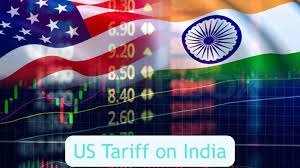
Relations took a sharp downturn after US President Donald Trump imposed a 50 per cent tariff on Indian goods, including a 25 per cent punitive levy linked to India’s past purchases of Russian crude oil. The move sent shockwaves through Indian exporters and disrupted several key trade segments, including engineering goods, pharmaceuticals, and auto components.
Although both sides have conducted multiple rounds of negotiations over the past year to finalise a bilateral trade agreement, talks have remained stalled—largely due to Washington’s demand for greater access to India’s farm and dairy sectors, a politically sensitive area for New Delhi.
Indian officials maintain that opening these sectors without adequate safeguards could hurt millions of small farmers, making concessions difficult despite pressure from US trade negotiators.
Security Cooperation Remains the Anchor
Despite economic frictions, security and defence cooperation continues to serve as the stabilising pillar of India–US relations.
Both countries view each other as key partners in maintaining stability in the Indo-Pacific, particularly in the context of China’s growing assertiveness. The presence of lawmakers such as Mike Rogers and Adam Smith, both closely associated with US defence policy, highlights Washington’s interest in sustaining defence ties.
India and the US have, over the years:
- Signed foundational defence agreements
- Expanded military exercises such as Malabar
- Increased defence procurement and technology-sharing
The discussions reportedly reinforced commitments to maritime security, counter-terrorism cooperation, and defence innovation, even as trade negotiations remain unresolved.
Critical Technologies: The New Strategic Frontier
Another major focus of the talks was critical and emerging technologies, including:
- Semiconductors
- Artificial intelligence
- Quantum computing
- Cybersecurity
- Defence manufacturing
For Washington, India represents a trusted partner in diversifying global supply chains away from geopolitical risks. For New Delhi, deeper collaboration offers access to advanced technologies essential for economic growth and strategic autonomy.
Observers note that technology cooperation may emerge as a less contentious domain, allowing both sides to demonstrate progress even while tariff disputes persist.
Geopolitical Differences Add Complexity
The relationship has also been tested by geopolitical divergences, notably:
- India’s independent stance on the Ukraine conflict
- Trump’s claim of having played a role in ending the India–Pakistan conflict last year, which New Delhi firmly rejected
- Washington’s new immigration policies, which have affected Indian professionals and students
While none of these issues individually threaten the partnership, together they have created an atmosphere of strategic unease, making sustained diplomatic engagement essential.
Congressional Diplomacy: A Strategic Signal
Analysts view the visit of US lawmakers as a deliberate signal that Washington seeks to prevent tensions from spiralling into a broader rupture.
Unlike executive actions such as tariffs, Congress traditionally plays a moderating role in US foreign policy. Continued engagement with Indian leadership suggests bipartisan recognition of India’s long-term strategic value.
For India, the outreach offers an opportunity to:
- Present its economic and geopolitical perspective directly to US lawmakers
- Push back against tariff narratives
- Build support within the US political system beyond the White House
What Lies Ahead?
While the meeting did not result in immediate policy breakthroughs, it reaffirmed a shared understanding that India–US relations are too consequential to be derailed by short-term disputes.
Key developments to watch include:
- Resumption of structured talks on the bilateral trade deal
- Possible easing or recalibration of punitive tariffs
- Deeper cooperation in defence and critical technologies
- Continued congressional engagement to stabilise ties
As one senior diplomat put it, “The relationship is under strain, but the strategic logic remains intact.”
@economyindia