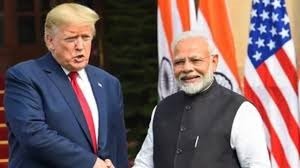

New Delhi (Economy India): India’s merchandise exports to the United States recorded a sharp 22.61 percent year-on-year growth in November, reaching $6.98 billion, according to data released by the Ministry of Commerce. The surge comes after two consecutive months of decline and is particularly noteworthy as it occurred despite steep tariff barriers of up to 50 percent on select Indian goods in the US market.
At the same time, imports from the US rose 38.29 percent to $5.25 billion, indicating intensifying bilateral trade flows even amid global uncertainty, currency volatility, and geopolitical realignments.
For policymakers, exporters, and investors, the November data offers more than a monthly rebound—it provides insight into India’s growing trade resilience, evolving sectoral strengths, and the strategic importance of the US market in India’s export architecture.
November Export Bounce: Why This Data Matters
The November rebound is significant for three reasons:

- Breaks a declining trend seen in September and October
- Defies tariff headwinds imposed by the US on several Indian product categories
- Signals demand recovery in the world’s largest consumer market
Commerce Secretary Rajesh Aggarwal stated that November exports had fully offset losses recorded in October, reinforcing confidence in India’s external sector momentum.
“The November export performance reflects resilience in India’s supply chains and competitiveness in high-value segments,” Aggarwal said.
Understanding the Tariff Paradox: Growth Despite 50% Duties
One of the most striking aspects of the November data is that export growth came despite the imposition of heavy US tariffs—up to 50 percent—on specific Indian goods.
Why tariffs did not derail exports:
- Product mix shift toward less tariff-sensitive categories
- Higher value-added exports absorbing tariff impact
- Long-term contracts insulating exporters from short-term price shocks
- Supply chain diversification away from China, benefiting India
Trade experts note that American importers are increasingly willing to absorb higher costs to ensure supply security and diversification, especially in strategic sectors.
Sectoral Drivers: What India Exported More to the US
While detailed commodity-wise data is awaited, industry estimates and previous trade patterns suggest growth was driven by:
🔹 Engineering Goods
- Auto components
- Industrial machinery
- Electrical equipment
🔹 Pharmaceuticals and Chemicals
- Generic drugs
- Active pharmaceutical ingredients (APIs)
- Specialty chemicals
🔹 Electronics and Technology Hardware
- Smartphones
- Data processing equipment
- Semiconductor-linked components
🔹 Textiles and Apparel
- Cotton garments
- Home textiles
- Man-made fiber products
🔹 Gems and Jewellery
- Cut and polished diamonds
- Studded gold jewellery
These sectors benefit from scale, skilled labor, and improving compliance standards, making them competitive even under tariff pressure.
Import Surge from the US: What India Is Buying More
India’s imports from the US rose sharply to $5.25 billion, reflecting:
- Higher energy imports (crude oil, LNG)
- Increased purchases of aircraft parts and defence equipment
- Growth in agricultural imports like almonds and apples
- Technology and capital goods
The widening two-way trade reflects deeper economic integration rather than dependence, analysts say.
Trade Balance with the US: Narrowing but Stable
Despite higher imports, India continues to maintain a trade surplus with the US, though the gap narrowed slightly in November.
- Exports: $6.98 bn
- Imports: $5.25 bn
- Trade surplus: ~$1.7 bn
For the US, India remains among the top ten trading partners, while for India, the US is the single largest export destination, accounting for roughly 18 percent of total exports.
Global Context: Why US Demand Is Holding Up
India’s export growth to the US contrasts with sluggish demand in:
- Europe
- China
- Parts of East Asia
Key reasons US demand remains strong:
- Resilient consumer spending
- Infrastructure and clean energy investments
- Inventory rebuilding by US companies
- Strategic sourcing shifts
Even as the US Federal Reserve maintains relatively tight monetary conditions, select industrial and consumer segments continue to import aggressively.
Currency Factor: Weak Rupee, Strong Exports
The Indian rupee’s depreciation against the US dollar has played a role in boosting export competitiveness.
- Rupee has weakened ~5% in 2025 so far
- Export realizations improved in dollar terms
- Helped offset higher freight and compliance costs
However, economists caution that currency-led competitiveness is not a sustainable strategy, stressing the need for productivity and innovation-driven growth.
Policy Push: FTAs, PLI, and Trade Diplomacy
India’s export performance is also underpinned by structural reforms:
🔹 Production Linked Incentive (PLI) Schemes
- Electronics
- Pharmaceuticals
- Solar modules
🔹 Ongoing India–US Trade Talks
- Market access issues
- Digital trade
- Supply chain cooperation
🔹 Export Facilitation Measures
- Faster refunds
- Logistics cost reduction
- Trade finance support
While a comprehensive India–US Free Trade Agreement remains elusive, incremental cooperation is already yielding results.
Risks on the Horizon
Despite the positive momentum, challenges remain:
- Potential escalation of US protectionism
- Election-year uncertainties in the US
- Compliance and ESG-related barriers
- Geopolitical disruptions affecting shipping routes
Trade experts warn that sustaining double-digit export growth will require continuous diversification and upgradation.
Expert View: Is This Growth Sustainable?
According to trade economist Ajay Srivastava, November’s data is encouraging but should be viewed cautiously.
“The US market remains robust, but India must move up the value chain. Tariffs can be absorbed only up to a point,” he said.
Others argue that India is entering a sweet spot—competitive costs, geopolitical alignment, and policy support.
Outlook: What to Expect in the Coming Months
Key factors to watch:
- US Federal Reserve policy signals
- Progress on India–US trade engagement
- Global commodity price trends
- Currency movements
- Export order pipelines
If current trends hold, India’s exports to the US could cross $90 billion in FY26, reinforcing America’s role as India’s most critical trade partner.
Economy India Takeaway
India’s 22.6 percent export growth to the US in November is not just a statistical rebound—it reflects a structural shift in global trade dynamics favoring India.
Despite tariffs, volatility, and uncertainty, Indian exporters are demonstrating adaptability, competitiveness, and scale. The challenge now lies in converting resilience into long-term dominance by moving up the value chain and securing durable market access.
As global supply chains realign, India–US trade may well emerge as one of the defining economic partnerships of the decade.
(Economy India)