A bilateral roadmap for reconstruction, humanitarian support, and long-term infrastructure stability in Sri Lanka
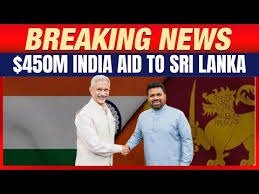
Colombo (Economy India): In a major humanitarian and strategic development move, the Government of India’s relief and reconstruction package for cyclone-hit Sri Lanka will now be implemented through a special joint committee comprising officials from both nations. The assistance follows the devastating impact of Cyclone ‘Divitva’, which resulted in widespread destruction across the island nation, claiming more than 600 lives, displacing thousands, and damaging critical public infrastructure.
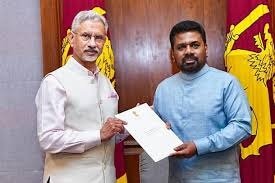
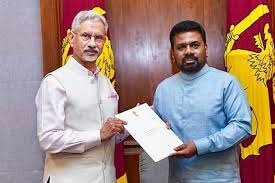
The committee, as outlined in recent media reports, will focus on coordination, fund allocation, planning and monitoring rehabilitation projects, ensuring that aid reaches affected communities at ground level. The announcement follows Indian External Affairs Minister Dr. S. Jaishankar’s official visit to Colombo as Prime Minister Narendra Modi’s special envoy, reaffirming India’s commitment to Sri Lanka’s recovery.

A Package with Strategic Depth, Not Just Relief
While termed as a “relief package,” diplomatic analysts consider the initiative a balanced blend of:
- Humanitarian support
- Disaster reconstruction
- Strategic neighborhood partnership
- Regional stability investment
The relief package is expected to include:
- Rebuilding housing and shelters for displaced families
- Medical infrastructure support for hospitals and emergency response units
- Repair of power grids, road networks, coastal ports, and fishing infrastructure
- Technical teams for water purification, flood management, and risk mitigation
- Essential food and medicine supply chain stabilization
A Colombo-based policy expert summarized the development aptly:
“This is not just post-disaster help. It is India investing in the stability, dignity and future resilience of its closest neighbor.”
Why Cyclone Divitva Became a Defining Point
Cyclone Divitva devastated multiple Sri Lankan provinces, severely affecting:
- Coastal fishing villages
- Colombo metropolitan belt
- Rural districts dependent on agriculture
- Island-wide energy and transport systems
Emergency response officials noted that at least 1.2 million people were directly affected. The economic shock to households, infrastructure and livelihood systems is still being assessed.
For Sri Lanka, still emerging from its economic crisis, debt pressure and inflation challenges, the cyclone has added a new humanitarian and financial burden. The Indian package, therefore, is being seen not just as relief — but as stability support.
India’s Neighbourhood-First Approach in Action
The initiative reinforces the core of India’s regional diplomacy — Neighborhood First Policy, built on:
- Trust-led engagement
- Rapid assistance during crises
- Strategic infrastructure cooperation
- Counterbalancing external geopolitical influence in the Indian Ocean region
Over the past decade, India’s support model has expanded from short-term humanitarian aid to long-term capacity-building, enabling Sri Lanka to improve resilience against climate disasters.
Joint Committee: Structure, Role & Operational Framework
The newly formed India–Sri Lanka Joint Committee will focus on:
| Priority Area | Responsibilities |
|---|---|
| Assessment | Damage mapping, livelihood impact surveys |
| Reconstruction Planning | Transparent allocation of projects and resources |
| Monitoring | Third-party oversight and milestone audits |
| Delivery Mechanism | Coordination with local bodies, NGOs and district administrations |
| Post-Recovery Transition | Economic revival, job creation, coastal livelihood rehabilitation |
This structure ensures the relief program is not fragmented, slow, or politically stalled — a complaint that has often emerged in international aid operations.
Why This Matters for the Indian Ocean Region
The relief package signals a larger policy significance:
- Countering regional vacuum
If India does not step forward, competing geopolitical actors might fill the strategic gap. - Humanitarian leadership positioning
India is positioning itself as the first responder in South Asian disaster diplomacy. - Economic Stabilization = Security Stabilization
A stable Sri Lanka reduces maritime security vulnerabilities and irregular migration challenges. - Trade & Investment Reassurance
Faster recovery protects bilateral trade routes, shipping lines, and business confidence.
Long-Term Benefits: Beyond Emergency Relief
The assistance may unlock long-term bilateral gains:
- Increased Indian investment in coastal infrastructure
- New energy collaboration including renewables and grid modernization
- Stronger tourism corridors (Chennai–Colombo, Kochi–Jaffna routes)
- Expansion of ferry links, logistics hubs, and port connectivity
- Food security partnerships to reduce import dependency
If executed effectively, this package could become a template for future Indo–Sri Lankan cooperation models.
Expert Opinion: A Turning Point for Bilateral Relations
Economic analysts suggest that the relief initiative may evolve into a more comprehensive partnership program over time.
“India’s assistance comes without predatory lending, without sovereignty traps, and without secret collateral clauses. That’s what makes it structurally different from other international support models.”
This comment indirectly references past debt and infrastructure deals from global lenders which resulted in long-term political and economic dependence for Sri Lanka.

A Partnership Shaped by Compassion and Strategy
The India–Sri Lanka relief package represents more than post-cyclone aid. It symbolizes:
- India’s humanitarian responsibility
- Bilateral resilience against climate disasters
- A responsible great-power role in South Asia
- A friendship shaped by history, economy, culture and shared geography
As the joint committee begins its work, its success will depend on governance transparency, local participation, and milestone-based execution. If achieved, the initiative could redefine regional cooperation standards for years to come.
(Economy India)