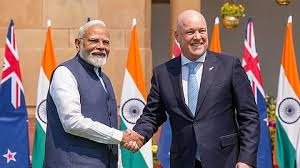

New Delhi (Economy India): The conclusion of negotiations on a Free Trade Agreement (FTA) between India and New Zealand marks a significant moment in India’s evolving trade policy architecture. Described by both governments as a “historic” deal, the agreement goes beyond tariff reductions to reflect a strategic realignment of India’s trade priorities, supply-chain diversification goals, and Indo-Pacific economic engagement.
At a time when global trade is increasingly fragmented by geopolitics, protectionism, and climate-linked regulations, the India–New Zealand FTA signals New Delhi’s intent to pursue selective, high-quality trade agreements with trusted partners while safeguarding domestic sensitivities.

Why the India–New Zealand FTA Matters
India and New Zealand may not be among each other’s largest trading partners, but the agreement carries outsized strategic and economic relevance.
New Zealand, a developed economy with strong agri-tech, dairy, education, and clean energy sectors, offers India access to a high-income, rules-based market. For New Zealand, India represents a vast consumer base, a manufacturing hub, and a long-term growth market.

The FTA fits squarely into India’s broader strategy of:
- Diversifying export destinations
- Reducing overdependence on select geographies
- Strengthening engagement in the Indo-Pacific economic corridor
- Securing market access for services and skilled professionals
Current Trade Landscape: Small Base, Big Potential
Bilateral trade between India and New Zealand has historically remained modest compared to India’s trade with larger economies.
Key Features of Current Trade
- India exports pharmaceuticals, textiles, engineering goods, IT services, chemicals, and gems & jewellery
- New Zealand exports agricultural products, dairy inputs, wool, wood products, and education services
- Trade volumes have fluctuated due to tariff barriers, regulatory differences, and limited market penetration
Analysts argue that the limited scale of current trade actually enhances the FTA’s upside, as incremental gains could be significant over the medium term.
Market Access: The Core Economic Pillar
Goods Trade
The FTA is expected to reduce or eliminate tariffs across a wide range of goods, with carefully negotiated exclusion lists and safeguard mechanisms.
For India:
- Improved access for pharmaceuticals, generic drugs, and medical devices
- Enhanced competitiveness for textiles, apparel, leather, and engineering products
- Opportunities for processed food, spices, and value-added agri-products
For New Zealand:
- Better access for agri-products, food processing inputs, and raw materials
- Strong interest in dairy-related products, though India has reportedly maintained protections for sensitive sectors
India’s cautious approach toward agriculture and dairy—given its political and livelihood implications—reflects lessons learned from past trade negotiations.
Services Trade: A Key Indian Priority
One of India’s major objectives in FTAs is securing greater access for services and professionals, and the New Zealand agreement is no exception.
Potential Gains for India
- IT and digital services
- Professional services (engineering, architecture, consulting)
- Education and skill-based mobility
- Healthcare and wellness services
Easier recognition of qualifications, streamlined visa pathways, and regulatory cooperation could benefit Indian professionals and students, while also supporting New Zealand’s labour market needs.
Investment Flows and Business Confidence
The FTA is expected to provide a predictable and transparent investment framework, encouraging two-way capital flows.
Likely Investment Areas
- Renewable energy and green hydrogen
- Education and vocational training
- Agri-technology and food processing
- Logistics, warehousing, and cold chains
- Start-ups and innovation ecosystems
For India, attracting long-term, stable investment from developed economies like New Zealand aligns with its push for quality FDI rather than short-term capital flows.
Strategic Context: Indo-Pacific and Supply Chains
Beyond economics, the India–New Zealand FTA has strategic undertones.
Both countries are active stakeholders in the Indo-Pacific region, which is increasingly central to global trade routes, supply chains, and geopolitical competition.
The agreement supports:
- Supply-chain diversification away from overconcentrated hubs
- Cooperation on sustainable trade and climate-aligned growth
- Rules-based economic engagement in the Indo-Pacific
This complements India’s existing trade frameworks with Australia, the UAE, and ASEAN economies.
Learning from Past FTAs: A More Cautious India
India’s approach to FTAs has evolved significantly over the past decade.
Earlier agreements were criticised for:
- Leading to import surges without proportional export growth
- Weak enforcement of rules of origin
- Limited gains for manufacturing
The India–New Zealand FTA appears to reflect a more calibrated strategy, with:
- Phased tariff reductions
- Strong safeguard clauses
- Emphasis on non-tariff barriers and regulatory cooperation
This signals a shift from quantity-driven FTAs to quality-driven trade partnerships.
Domestic Industry Perspective: Opportunities and Concerns
Positive Outlook
- Export-oriented MSMEs see new opportunities in niche markets
- Pharma and IT sectors expect regulatory easing
- Education and services firms anticipate stronger collaboration
Concerns
- Agricultural groups remain cautious about future dairy concessions
- Some manufacturing segments fear competitive pressure
- Implementation capacity remains a key question
Experts note that the real test of the FTA will lie in execution, monitoring, and domestic preparedness.
Geopolitical and Economic Timing
The timing of the agreement is notable.
- Global trade is slowing
- Protectionist policies are rising in developed economies
- Carbon taxes and sustainability norms are reshaping trade
Against this backdrop, the India–New Zealand FTA offers India:
- A low-risk entry into a developed market
- Experience in aligning with advanced regulatory standards
- A platform for future high-quality trade deals
Next Steps: From Agreement to Impact
While negotiations have concluded, several steps remain:
- Legal vetting of the text
- Ratification processes in both countries
- Industry outreach and awareness
- Capacity building for exporters
Trade experts caution that FTAs do not automatically deliver results. Gains depend on domestic reforms, infrastructure readiness, and proactive engagement by businesses.
What This Means for India’s Trade Strategy
The India–New Zealand FTA reinforces several emerging trends in India’s trade policy:
- Focus on trusted partners
- Emphasis on services and investment
- Protection of sensitive domestic sectors
- Strategic alignment with geopolitical objectives
Rather than a headline-grabbing mega-deal, this agreement represents incremental but durable progress.
A Quiet but Strategic Trade Win
The India–New Zealand Free Trade Agreement may not transform trade volumes overnight, but it represents a strategic recalibration of India’s engagement with developed economies.
By balancing market access with domestic safeguards, and economics with geopolitics, the agreement reflects a maturing trade policy—one that prioritises resilience, diversification, and long-term value.
For India, the FTA is less about immediate gains and more about building a future-ready trade ecosystem aligned with its ambitions as a leading global economy.
(Economy India)