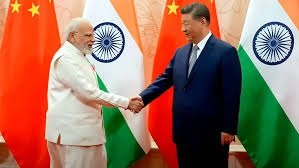
Mumbai (Economy India): India and France are set to deepen their long-standing strategic partnership with the signing of a landmark ₹3.25 lakh crore defence agreement, marking India’s largest-ever military procurement by value. The deal, expected to be formalised during Prime Minister Narendra Modi’s meeting with French President Emmanuel Macron in Mumbai, will see India acquire 114 Rafale fighter jets, significantly strengthening the Indian Air Force’s combat capability.
The high-level bilateral meeting, scheduled at Lok Bhavan in Mumbai, will cover a wide-ranging agenda including defence cooperation, maritime security, Indo-Pacific strategy, emerging technologies, artificial intelligence, and global geopolitical developments.

India’s Biggest Defence Deal Yet
At ₹3.25 lakh crore, the Rafale agreement eclipses all previous defence acquisitions undertaken by India. The deal underscores India’s growing focus on strategic deterrence, air superiority, and indigenisation of defence manufacturing.
Under the agreement:
- 114 Rafale fighter jets will be inducted into the Indian Air Force (IAF)
- 96 aircraft will be manufactured in India
- Only 18 jets will be delivered in fly-away condition from France
- Indigenous content is expected to reach 55–60% after full technology transfer
The aircraft will be supplied by French aerospace major Dassault Aviation, the original manufacturer of the Rafale platform.
Super Rafale: A Leap in Capability
A key highlight of the deal is the induction of 24 ‘Super Rafale’ jets, officially referred to as the F-5 variant. These aircraft represent the most advanced configuration of the Rafale platform and are currently under development according to European standards.
The remaining jets will largely be:
- F-4 variants, featuring upgraded avionics, sensors, and combat systems
- Deliveries of F-4 jets are expected to begin around 2028–29
- F-5 (Super Rafale) deliveries are likely post-2030
Currently, the Indian Air Force operates F-3 variant Rafales, classified as 4.5-generation fighter aircraft. The transition to F-4 and F-5 variants will provide enhanced situational awareness, electronic warfare capability, and integration with next-generation weapons.

Indigenous Production Under Make in India
A defining feature of the agreement is its alignment with the Make in India initiative. Of the 114 aircraft, 96 Rafales will be produced domestically, marking a significant step in India’s defence manufacturing ambitions.
Production will take place through a joint industrial ecosystem involving:
- Dassault Reliance Aerospace Limited (DRAL)
- Indian private sector participation, including Reliance Infrastructure
Dassault Aviation recently increased its stake in DRAL from 49% to 51%, reinforcing its long-term commitment to India-based production.
Technology Transfer and Local Ecosystem
The deal includes full airframe technology transfer, enabling India to develop advanced aerospace manufacturing expertise. Key collaborators include:
- Safran (engines)
- Thales (avionics and electronics)
All 114 aircraft will be:
- Integrated with Indian weapons, missiles, and ammunition
- Equipped with secure data-link systems compatible with Indian radar and sensor networks
This integration will allow Rafales to seamlessly operate within India’s broader defence command-and-control architecture.
Strengthening the Indian Air Force
India had earlier procured 36 Rafale jets under a 2016 agreement valued at approximately €7.8 billion (around ₹59,000 crore). These aircraft were delivered between 2019 and 2022 and are currently deployed at:
- Ambala Air Base (Haryana)
- Hasimara Air Base (West Bengal)
The Rafale fleet is equipped with advanced weaponry such as:
- Meteor air-to-air missiles
- SCALP cruise missiles
- MICA missile systems
- Advanced radar and electronic warfare suites
Defence experts note that the operational success of the first Rafale squadrons played a key role in India’s decision to pursue a much larger follow-on order.
Strategic Context: Indo-Pacific and Maritime Security
The Modi–Macron meeting will also focus on maritime cooperation and the Indo-Pacific region, where both countries share converging strategic interests. France, with territories in the Indian Ocean, is a key security partner for India in maintaining freedom of navigation and regional stability.
The expanded air power capability is expected to bolster India’s deterrence posture across both western and eastern fronts, while enhancing interoperability with friendly nations.
Macron’s Fourth Visit to India as President
President Macron’s current visit marks his fourth trip to India since assuming office. His previous visits include:
- March 2018 (first official visit)
- September 2023 (G20 Summit)
- January 2024 (Chief Guest at India’s Republic Day)
The consistency of high-level engagement highlights the depth of the India–France Strategic Partnership, which has been in place since 1998.
India–France Innovation Year 2026
Adding an economic and technological dimension to the visit, India and France are jointly observing 2026 as the “India–France Innovation Year.”
The initiative aims to:
- Accelerate collaboration in artificial intelligence
- Promote deep-tech research and startup partnerships
- Advance joint projects in defence, space, and green energy
- Encourage ethical and responsible AI development
More than 110 French companies have sent business delegations to India during Macron’s visit, engaging with Indian firms in Mumbai and Bengaluru.
Economic Footprint of French Companies in India
France is already a major investor in India:
- Over 1,100 French companies operate in the country
- These firms employ approximately 3.5 lakh people
- Sectors include defence, aerospace, energy, mobility, digital technology, and infrastructure
The Rafale deal is expected to further strengthen bilateral investment flows, supply chains, and skill development.
Strategic, Industrial, and Economic Impact
From an Economy India perspective, the ₹3.25 lakh crore Rafale deal has multi-dimensional implications:
- Strategic: Enhances air superiority and deterrence
- Industrial: Builds domestic aerospace manufacturing capacity
- Economic: Generates skilled jobs and strengthens supply chains
- Technological: Enables transfer of high-end defence technology
As India seeks to position itself as both a major defence power and a global manufacturing hub, the India–France Rafale agreement stands as a defining milestone in the country’s defence and industrial policy trajectory.
(Economy India)