
Home Minister calls for sustainable construction, affordable housing and skilled manpower, while stressing transparency in land markets and the transformative role of RERA
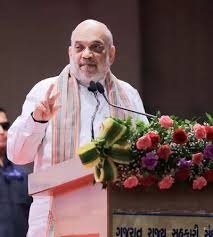
New Delhi (Economy India): Union Home Minister Amit Shah has called for a fundamental transformation of India’s real estate sector, urging developers to adopt green building norms as the “new normal,” expand affordable housing, and invest systematically in skill training for construction labourers. Addressing a national conclave of the Confederation of Real Estate Developers’ Associations of India (CREDAI) in New Delhi, Shah also underlined the need for greater transparency in land markets and cautioned against land banking and speculative holding.
His remarks come at a critical juncture for India’s real estate and urban development ecosystem, which is navigating the twin challenges of rapid urbanisation and climate sustainability, while also serving as a key driver of employment, investment, and economic growth.

Green Building Norms Must Become the Industry Standard
Emphasising India’s climate commitments and urban resilience goals, Shah said the real estate sector must integrate green spaces, energy efficiency, water conservation, and sustainable construction practices into all future projects.

“Green building norms should no longer be treated as optional or premium features. They must become the new normal in India’s housing sector,” Shah told developers.
India’s construction and real estate sector accounts for nearly 40 per cent of energy consumption and around 30 per cent of carbon emissions, making it central to the country’s net-zero ambitions. The minister’s push aligns with India’s broader policy framework, including commitments under the Paris Agreement, the National Mission on Sustainable Habitat, and smart city initiatives.
Industry experts say Shah’s statement signals a shift from voluntary adoption of sustainability norms to policy-backed expectations, especially in urban housing and large township projects.

Balancing Growth with Environmental Responsibility
Shah stressed that India’s urban growth must not come at the cost of ecological degradation. He encouraged developers to incorporate green belts, open spaces, rainwater harvesting systems, and waste management infrastructure into residential and commercial developments.
Urban planners note that cities which fail to preserve green spaces face rising risks of heat stress, flooding, and public health challenges. With India expected to add nearly 200 million urban residents by 2030, sustainable construction has become a pressing necessity rather than a long-term aspiration.
Affordable Housing: A Social Responsibility
Alongside sustainability, the Home Minister called on developers to increase their focus on low-cost and affordable housing, particularly for economically weaker sections and middle-income families.
“Building affordable homes is not just a business opportunity—it is a social responsibility,” Shah said.
Affordable housing remains a cornerstone of the government’s urban policy, with flagship schemes such as Pradhan Mantri Awas Yojana (PMAY) aiming to provide “Housing for All.” While private sector participation has increased in recent years, affordability constraints and rising land costs continue to pose challenges.
Shah’s remarks are seen as a signal for the industry to align commercial interests with national development priorities, especially as housing demand in Tier-II and Tier-III cities accelerates.
Skill Training for Labourers: Strengthening the Sector’s Backbone
A key highlight of Shah’s address was his emphasis on skill development for construction workers, who form the backbone of India’s real estate sector.
He urged developers to actively support training, certification, and upskilling programmes for labourers, arguing that skilled manpower improves productivity, quality, and workplace safety.
India’s construction sector employs over 50 million workers, many of whom are informal, migrant labourers with limited access to structured training. Industry observers say targeted skilling initiatives could significantly enhance efficiency while reducing project delays and cost overruns.
Shah’s call aligns with national skilling initiatives such as Skill India Mission and the National Skill Development Corporation (NSDC), but places greater responsibility on private developers to participate directly in workforce development.

Transparency in Land Markets: A Policy Priority
Raising concerns over land banking and speculative holding, Shah stressed the importance of transparency in land transactions and pricing.
“The land market must be transparent. Speculation and hoarding distort prices and slow down genuine development,” he said.
Land availability and pricing remain among the biggest challenges facing India’s real estate sector. Analysts note that speculative land holding often inflates project costs, making housing less affordable and increasing financial risks.
Shah’s remarks suggest the government may look to strengthen regulatory oversight, digitisation of land records, and market disclosures, particularly as states push for faster urban development and industrial expansion.
RERA: A Turning Point for the Realty Sector
Highlighting regulatory reforms, Shah said the Real Estate (Regulation and Development) Act (RERA) has significantly improved the functioning of the sector while safeguarding homebuyers’ interests.
“RERA has brought discipline and transparency, making it easier for honest developers to operate while protecting consumers,” he noted.
Since its implementation, RERA has introduced mandatory project registration, escrow accounts, and strict timelines, addressing long-standing issues of delays and information asymmetry. Industry leaders acknowledge that while compliance initially posed challenges, the law has improved credibility and investor confidence.
Shah’s endorsement of RERA underscores the government’s commitment to rule-based growth in the real estate sector.
Real Estate as an Economic Growth Engine
The real estate sector contributes nearly 7 per cent to India’s GDP and is the second-largest employer after agriculture. With rising urbanisation, infrastructure spending, and housing demand, the sector is expected to play an even larger role in India’s economic trajectory.
However, experts argue that future growth must be inclusive, sustainable, and transparent, echoing Shah’s message to industry stakeholders.
The CREDAI conclave brought together developers, policymakers, and industry experts to discuss emerging challenges, including financing constraints, regulatory alignment, and environmental compliance.
Industry Response: Support with Caution
Initial responses from industry representatives indicate broad support for Shah’s vision, particularly on sustainability and skill development. However, developers also emphasised the need for policy clarity, incentives, and faster approvals to implement green norms and affordable housing at scale.
Several industry leaders called for tax incentives, green financing mechanisms, and simplified building codes to accelerate adoption of sustainable construction practices.
Urban India at a Crossroads
Shah’s address reflects a broader policy narrative: India’s cities are at a crossroads, where choices made today will determine livability, environmental resilience, and economic competitiveness for decades.
By urging developers to integrate green design, affordable housing, skilled labour, and transparency, the government is signalling that real estate development must align with national priorities rather than short-term gains.
From Guidance to Implementation
While Shah’s remarks are advisory in nature, policy analysts say they could influence future urban planning norms, building regulations, and incentive structures, especially as states revise development plans and master policies.
For developers, the message is clear: sustainability, affordability, and accountability are no longer peripheral concerns—they are central to the sector’s future.
As India’s urban footprint expands, the success of this vision will depend on collaboration between government, industry, and workers, ensuring that growth is not only rapid, but also responsible and inclusive.
(Economy India)