
Probe focuses on alleged diversion of public funds routed through Yes Bank to Anil Ambani group firms, with ED examining the role of former CEO Rana Kapoor under the PMLA framework.
New Delhi ( Economy India): India’s financial regulatory spotlight has once again turned towards the intersection of banking governance, corporate lending practices, and alleged misuse of public funds, as the Enforcement Directorate (ED) questioned Yes Bank co-founder and former CEO Rana Kapoor in connection with a money-laundering probe involving Anil Ambani-led Reliance Group companies.

The case, which involves alleged diversion and misuse of over ₹11,000 crore of public money, is being investigated under the Prevention of Money Laundering Act (PMLA) and is among the most consequential financial probes in recent years—given its implications for mutual fund investors, banking oversight, and India’s corporate debt ecosystem.
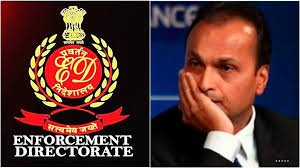
The Core of the Allegations
According to investigators, public funds routed through Yes Bank were allegedly channelled into financially stressed companies of the Anil Ambani Group, bypassing regulatory safeguards designed to protect investors’ money.
Key Institutions Involved:
- Yes Bank (2003–2019 leadership under Rana Kapoor)
- Reliance Home Finance Ltd (RHFL)
- Reliance Commercial Finance Ltd (RCFL)
- Reliance Nippon Mutual Fund (RNMF)
The ED alleges that mutual fund money—collected from retail investors—was indirectly routed to Reliance Group companies, despite SEBI regulations prohibiting direct exposure under certain conditions.
How the Money Allegedly Moved
Step-by-Step Flow (As Alleged by ED):
- Public money was mobilised through Reliance Nippon Mutual Fund.
- Due to regulatory restrictions, direct investment into certain Reliance Group entities was not permitted.
- Funds were instead routed through Yes Bank, which extended loans and credit facilities to:
- RHFL – ₹2,965 crore
- RCFL – ₹2,045 crore
- Over time, these loans turned into Non-Performing Assets (NPAs).
- By December 2019, a significant portion of the exposure had soured, triggering scrutiny.
According to ED estimates, the cumulative public fund exposure under suspicion exceeds ₹11,000 crore.
Rana Kapoor’s Role Under Scrutiny
Rana Kapoor, who served as CEO and Managing Director of Yes Bank for nearly 16 years, was questioned under Section 50 of PMLA, which empowers the ED to record statements with evidentiary value.
What ED Is Examining:
- Whether Yes Bank leadership facilitated structured routing of funds
- Whether due diligence norms were diluted
- Whether there was prior knowledge of financial stress in Reliance Group entities
- Whether regulatory arbitrage was deliberately employed
While no fresh charges have been framed yet, ED sources indicate that Kapoor’s testimony is crucial in mapping the decision-making chain inside the bank.
Regulatory Context: SEBI, RBI & Systemic Risk
Why This Case Matters Systemically
This investigation goes beyond individual accountability and raises broader questions about:
- Bank–corporate nexus
- Mutual fund governance
- Risk concentration in NBFC lending
- Regulatory arbitrage in structured finance
SEBI regulations restrict mutual funds from:
- Excessive exposure to a single corporate group
- Investing in entities with deteriorating credit profiles
The alleged use of bank intermediation to bypass these safeguards, if proven, could reshape regulatory frameworks governing related-party exposure and credit routing.
ED’s Asset Attachment Drive Against Anil Ambani Group
The probe has already resulted in one of the largest asset attachment exercises in recent years.
Assets Attached / Frozen (So Far):
- ₹10,117 crore worth of assets seized
- Over 40 properties, including:
- 132 acres of land in Navi Mumbai
- Residential property in Mumbai’s Pali Hill
- Commercial assets at Ballard Estate
- Bank balances, fixed deposits, and unlisted investments
- Assets across:
- Reliance Infrastructure
- Reliance Power
- Reliance Value Services
- Reliance Commercial Finance
Earlier, ED had also attached ₹8,997 crore worth of assets in separate bank loan fraud cases linked to Reliance Communications and other group entities.
What the Law Says: PMLA Implications
Under PMLA:
- Proceeds of crime, even if indirectly routed, can be attached
- Facilitators, not just beneficiaries, may be investigated
- Statements recorded by ED hold legal weight in court
If the ED establishes that public funds were knowingly misused, consequences could include:
- Criminal prosecution
- Extended asset seizures
- Long-term restrictions on financial market participation
Impact on Markets and Investor Sentiment
While the events date back several years, the renewed pace of investigation has:
- Reignited concerns over legacy NPAs
- Highlighted vulnerabilities in NBFC funding models
- Reinforced the importance of governance reforms post-Yes Bank crisis
Analysts note that India’s financial system has since strengthened, but legacy cases like this underscore why transparency and early regulatory intervention remain critical.
Expert Analysis
“This case is less about one transaction and more about systemic weaknesses that allowed risk to accumulate unchecked. Accountability at the governance level is essential for restoring long-term investor confidence,”
— Senior Banking Analyst, Mumbai
“If indirect routing of mutual fund money is proven, it could prompt tighter SEBI-RBI coordination and stricter disclosure norms for structured lending,”
— Former Financial Regulator
What Happens Next?
Likely Next Steps:
- Further questioning of bank officials and intermediaries
- Forensic audit of loan approval processes
- Potential filing of prosecution complaints
- Possible expansion of probe to other financial institutions
ED officials indicate that the case is entering an advanced evidentiary stage, with multiple agencies—ED, CBI, SEBI—sharing inputs.
The Bigger Picture: Lessons for India’s Financial System
This case reinforces three critical lessons:
- Public money carries fiduciary responsibility
- Regulatory loopholes invite systemic risk
- Corporate leverage without transparency can destabilise markets
As India positions itself as a global investment destination, strong enforcement and institutional accountability remain key pillars of credibility.
📌 Economy India Takeaway
The ED’s questioning of Rana Kapoor marks a significant escalation in the ₹11,000-crore public fund misuse investigation, with far-reaching implications for banking governance, regulatory oversight, and corporate finance in India.
(Economy India)