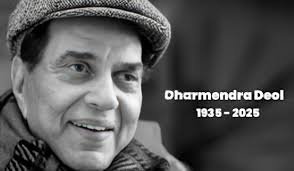

A towering figure whose career influenced generations, reshaped film market dynamics, and strengthened Bollywood’s cultural footprint in India and abroad.
By Economy India Editorial Desk
Mumbai | 24 November 2025
Introduction — A Loss Beyond Cinema
The passing of legendary actor Dharmendra at the age of 89 is not merely the departure of a beloved Bollywood figure — it marks the end of a cultural and economic era that shaped India’s cinematic identity, aspirational middle-class imagination, and the nationwide film consumption pattern that later powered Bollywood into a billion-dollar ecosystem.
For Economy India, this moment offers more than tribute — it calls for reflection on how Dharmendra became a central pillar in the economic evolution of Hindi cinema, long before data analytics, multiplexes, overseas markets and OTT changed the landscape.
1. The Man Who Defined the Mass Market
Before market segmentation, before “Tier-2 and Tier-3 audience strategies,” Dharmendra was the bridge between rural sentiment, small-town aspiration, and urban appeal.
He represented:
✅ the relatable hero
✅ the masculine but humane protagonist
✅ the emotional yet restrained leading man
✅ the aspirational Indian everyman
His films filled single screens, powered distributors, sustained cinema halls, and drove what we now refer to as mass-consumption entertainment economics.
2. A Box-Office Engine Before the Term Existed
While modern Bollywood measures success through:
- weekend collections
- advance booking analytics
- overseas KPIs
- streaming rights valuation
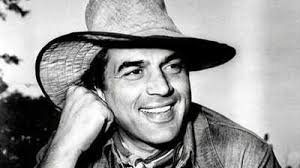
Dharmendra belonged to an era where the only metric was audience turnout — and he delivered it for decades.
His box-office influence:
⭐ Starred in 300+ films, an unrivalled commercial volume
⭐ Led multiple consecutive decades of hits
⭐ Carried action, romance, comedy and ensemble cinema
⭐ Became part of India’s first mega-commercial blockbuster cycle
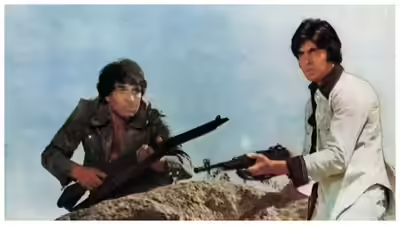
Sholay, often analysed as a cultural artifact, was also one of India’s earliest examples of:
- multi-region distribution strategy
- repeat viewing revenue
- merchandise and memory-based value creation
Dharmendra was at the centre of that economic phenomenon.
3. The Family Franchise Model Before Modern Branding
Long before Bollywood discovered:
✅ star branding
✅ legacy value
✅ dynastic recognition economics
Dharmendra organically built a multi-generational cinematic value chain:
- Sunny Deol — action market dominance
- Bobby Deol — youth-appeal 90s wave
- Esha Deol — modern era visibility
- Deol brand — continuity of recall
This inadvertently created what economists today would call inter-generational cultural capital, later replicated by Kapoor, Bachchan, and Khan ecosystems.
4. Rural Sentiment, National Identity and Economic Reach
Dharmendra resonated with:
🌾 farmers
🏭 industrial workers
🧱 small shop owners
🛤 migrant labour audiences
He was the cinematic representation of:
- dignity of labour
- emotional authenticity
- rustic sincerity
This demographic formed the backbone of:
✅ ticket sales
✅ festival releases
✅ long theatrical runs
✅ community viewing culture
He was not just a film star — he was an economic driver in regions where cinema was the only entertainment infrastructure.
5. A Star in an Era Before PR, Algorithms and Media Engineering
Today, stardom depends on:
- social media metrics
- influencer amplification
- PR machinery
- targeted content delivery
Dharmendra built longevity through:
⭐ word of mouth
⭐ audience loyalty
⭐ emotional memory
⭐ cultural embeddedness
His popularity was organic capital — the rarest and most irreplaceable form.
6. The Emotional Economy of His Passing
The grief India feels today is not nostalgia — it is recognition that:
An era has ended where:
✅ heroes felt human
✅ cinema united Indians
✅ stories reflected ordinary life
✅ fame did not disconnect from people
Dharmendra’s passing symbolizes the fading of:
- the single-screen economy
- the analog star system
- the non-manufactured celebrity model
7. The Final Cultural-Economic Footprint
Dharmendra leaves behind:
Cinematic Legacy
✔ one of the greatest bodies of work in Hindi cinema
Economic Legacy
✔ mass-audience revenue model foundations
Sociological Legacy
✔ a hero that represented real India
Cultural Legacy
✔ lines, moments, songs and characters that endure
His films will continue generating:
- archival circulation
- satellite royalties
- classic streaming revival
- academic and documentary value
Even in death, he remains economically relevant — a rarity shared only with a select few in Indian cinema history.
The Curtain Falls, The Legacy Doesn’t
Dharmendra’s passing is not the end of a life — it is the closing of a chapter through which India learned:
- how to love cinema
- how to see itself on screen
- how heroes could be strong without arrogance
- how masculinity could coexist with compassion
For Economy India, the story is clear:
✅ Dharmendra was not just a star — he was an economic force.
✅ Not just an actor — but a cultural market maker.
✅ Not just a memory — but a structural chapter in India’s cinematic economy.
(Economy India)