
Focus on Continuity, Fiscal Stability, and Essential Spending
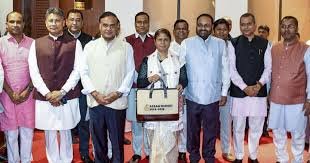
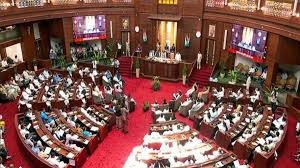
Guwahati (Economy India): The Ajanta Neog, Finance Minister of Assam, on Tuesday presented an interim budget of ₹62,294.78 crore for the financial year 2026–27 in the Assam Legislative Assembly.
The interim budget comes at a time when Assembly elections are scheduled in the state in the coming months, making it a transitional fiscal exercise until a newly elected government presents a full-fledged budget later in the year.
What Is an Interim Budget and Why It Matters
An interim budget is a stop-gap financial statement introduced when a government’s term is nearing completion. It ensures that:
- Government operations continue smoothly
- Salaries, pensions, and essential services are funded
- Ongoing welfare schemes and development projects remain uninterrupted
In her address, Finance Minister Ajanta Neog emphasized that the interim budget is designed to maintain fiscal discipline while ensuring administrative continuity during the election period.

Budget Size and Fiscal Approach
The ₹62,294.78 crore outlay reflects the state government’s focus on:
- Meeting committed expenditure
- Maintaining financial stability
- Avoiding major policy announcements during the election phase
While detailed sector-wise allocations are expected in the full budget after elections, the interim budget prioritizes essential spending and existing programmes.
Key Objectives of the Interim Budget
Although interim budgets traditionally avoid new flagship schemes, the government highlighted the following guiding principles:
- Continuity in governance
- Timely release of funds for welfare and infrastructure projects
- Fiscal prudence in a pre-election year
- Support for administrative and development expenditure
The budget ensures that routine government functioning remains unaffected until a new government takes charge.
Political and Economic Context
Assam is heading into a crucial electoral cycle, and the interim budget aligns with constitutional conventions that restrict major financial commitments before elections.
Economists note that such budgets play a critical role in stabilising state finances during political transitions, especially in states with large administrative and welfare responsibilities.
Importance for Governance and Public Services
The interim budget will enable:
- Continued payment of salaries and pensions
- Funding for health, education, and public utilities
- Ongoing infrastructure and development works
- Smooth functioning of state departments and agencies
This approach reassures citizens and investors alike that public services will not face disruption during the election period.
(Economy India)