New Delhi (Economy India): Prime Minister Narendra Modi on Tuesday said that India’s energy sector presents investment opportunities worth nearly $500 billion, underscoring the country’s growing role as a global hub for clean, affordable, and sustainable energy.
Addressing global stakeholders, the Prime Minister invited international investors to participate in India’s energy transformation, driven by rapid economic growth, rising energy demand, and a strong policy push towards renewables and energy security.
“India’s energy sector offers investment opportunities of around $500 billion,” Modi said, highlighting the government’s commitment to creating a stable, transparent, and investor-friendly ecosystem.

Focus on Clean and Future-Ready Energy
The Prime Minister emphasized that India is undergoing a structural shift in its energy landscape, with major investments flowing into:

- Renewable energy, including solar and wind
- Green hydrogen and bio-energy
- Energy storage and battery technologies
- Electric mobility and charging infrastructure
- Modernisation of power grids and transmission networks
India has set ambitious targets to achieve 500 GW of non-fossil fuel energy capacity by 2030 and reach net-zero emissions by 2070, creating long-term opportunities for global capital and technology partnerships.
India Emerging as a Global Energy Investment Destination
With consistent policy reforms, production-linked incentive (PLI) schemes, and ease-of-doing-business measures, India has emerged as one of the most attractive energy investment destinations globally. The government has also focused on reducing import dependence, improving energy efficiency, and ensuring energy access for all.
Industry experts believe that the scale of India’s energy transition, combined with strong domestic demand, makes it a once-in-a-generation opportunity for global investors.
Call to Global Investors
Prime Minister Modi reiterated that India welcomes long-term, sustainable investments that support innovation, job creation, and inclusive growth. He said partnerships in the energy sector would not only benefit investors but also contribute to global climate goals and energy security.
The statement comes amid growing international interest in India’s renewable energy market, green hydrogen mission, and infrastructure-led growth strategy.
🔋 1. Renewable Energy (Solar, Wind, Hybrid): $200–220 Billion
Estimated Investment: ₹16–18 lakh crore
Policy Anchor: 500 GW non-fossil capacity by 2030
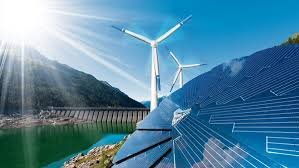
This is the single largest investment bucket in India’s energy transition.
Key segments:
- Utility-scale solar parks
- Onshore & offshore wind projects
- Solar-wind hybrid projects
- Floating solar
- Repowering of old wind assets
Why investors are bullish:
- Long-term PPAs and improving payment security
- Falling project risks and stable auction mechanisms
- Strong demand from DISCOMs and corporates
- India among the lowest-cost solar markets globally
📌 Investor takeaway: Stable yields, scale, and predictable policy make renewables the backbone of the $500 bn story.
⚡ 2. Power Transmission & Smart Grids: $80–100 Billion
Estimated Investment: ₹6.5–8.5 lakh crore
India’s renewable push cannot succeed without massive grid expansion and modernisation.
Investment areas:
- High-voltage transmission corridors
- Green energy corridors
- Smart grids and digital substations
- Cross-border transmission lines
- Grid balancing infrastructure
Why this matters:
- Renewable capacity is increasingly remote (deserts, coasts)
- Peak power demand growing at 6–7% annually
- EVs and data centres will stress grids further
📌 Investor takeaway: Regulated returns + long asset life make transmission a low-risk, annuity-style play.
🔋 3. Energy Storage & Batteries: $70–80 Billion
Estimated Investment: ₹6–6.5 lakh crore
Energy storage is emerging as India’s next big energy bottleneck—and opportunity.
Focus areas:
- Grid-scale battery storage systems (BESS)
- Pumped hydro storage projects
- Lithium-ion & sodium-ion battery manufacturing
- Recycling and raw material processing
Policy push:
- Storage mandates in renewable tenders
- PLI schemes for advanced chemistry cells
- Peak power management needs
📌 Investor takeaway: Early-stage but high-growth, high-valuation potential sector over the next decade.
🟢 4. Green Hydrogen & Clean Fuels: $70–80 Billion
Estimated Investment: ₹6–6.5 lakh crore
Mission: National Green Hydrogen Mission
India aims to become a global exporter of green hydrogen and green ammonia.
Capital deployment in:
- Electrolyser manufacturing
- Green hydrogen production hubs
- Green ammonia for fertilisers & exports
- Port-based hydrogen ecosystems
Strategic advantage:
- Low-cost renewable power
- Large industrial demand (steel, refining, fertilisers)
- Export demand from Europe & East Asia
📌 Investor takeaway: Long-gestation but strategically critical sector with strong sovereign backing.
🚗 5. Electric Mobility & Charging Infrastructure: $40–50 Billion
Estimated Investment: ₹3–4 lakh crore
India’s EV ecosystem is expanding rapidly beyond passenger cars.
Investment opportunities:
- EV manufacturing (2W, 3W, buses, trucks)
- Public and highway charging networks
- Battery swapping infrastructure
- Fleet electrification platforms
Demand drivers:
- Fuel import reduction
- Urban pollution control
- Government procurement of e-buses
📌 Investor takeaway: High volume growth, policy incentives, and platform-led scalability.
🔥 6. Gas, Bio-energy & Transitional Fuels: $30–40 Billion
Estimated Investment: ₹2.5–3.5 lakh crore
While renewables dominate, gas and bio-energy remain transition fuels.
Focus segments:
- City gas distribution (CGD)
- LNG terminals and pipelines
- Bio-CNG and ethanol blending
- Waste-to-energy projects
📌 Investor takeaway: Medium-term opportunity with steady demand and regulatory clarity.
📊 Why Global Capital Is Flowing to India
From an investor’s lens, India stands out because:
- Policy continuity across governments
- Large domestic demand growth (world’s fastest)
- Strong project pipeline visibility
- PLI and reform-led incentives
- Climate commitments aligned with capital markets
India is now seen as a long-duration energy growth market, not a short-term trade.
🧭 Risks to Watch (Investor Reality Check)
- DISCOM financial health (improving but uneven)
- Land acquisition delays
- Technology cost volatility (batteries, electrolyzers)
- Global interest rate cycles
That said, most risks are executional—not structural.
Overall Investment Snapshot
| Sector | Investment ($ bn) | Approx ₹ |
|---|---|---|
| Renewables | 200–220 | ₹16–18 lakh cr |
| Grids & Transmission | 80–100 | ₹6.5–8.5 lakh cr |
| Storage & Batteries | 70–80 | ₹6–6.5 lakh cr |
| Green Hydrogen | 70–80 | ₹6–6.5 lakh cr |
| EVs & Charging | 40–50 | ₹3–4 lakh cr |
| Gas & Bio-energy | 30–40 | ₹2.5–3.5 lakh cr |
| Total | ≈ 500 | ₹41–42 lakh cr |
Big Picture: Why This Matters
- Fastest-growing major energy market
- Strong policy continuity
- Climate goals aligned with capital markets
- Massive domestic demand + export potential
Economy India View:
India’s $500 billion energy opportunity is not a projection—it is a live pipeline, offering scale, diversification, and long-term visibility for investors.
(Economy India)