
Colombo | Economy India | When the International Finance Corporation (IFC) announced a USD 166 million high-impact financing programme for Sri Lanka’s private sector in January, it did far more than extend capital to a crisis-hit economy. It sent a carefully calibrated signal to global markets: South Asia is entering a new phase of post-crisis macro-financial realignment, where stabilisation is giving way—slowly but deliberately—to growth, private capital mobilisation, and institutional rebuilding.
For Sri Lanka, the investment represents a critical inflection point after years of economic collapse, sovereign default, and social stress. For South Asia as a region, it reflects a broader recalibration of how multilateral finance is being deployed amid tighter global liquidity, geopolitical fragmentation, and rising development risks.
From Collapse to Cautious Confidence: Sri Lanka’s Economic Backdrop
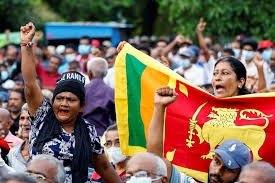
Sri Lanka’s crisis was one of the most severe economic breakdowns in the region’s post-independence history. A toxic mix of:
- Unsustainable external borrowing
- Weak fiscal discipline
- Policy missteps
- Pandemic-era shocks
- Global commodity inflation
pushed the country into sovereign default, currency freefall, and acute shortages of fuel, food, and medicine.
Since then, the country has moved into a stabilisation phase, anchored by:
- An IMF Extended Fund Facility
- Fiscal consolidation
- Currency adjustment
- Monetary tightening
Inflation has moderated, reserves have improved, and macro volatility has eased. But stabilisation alone does not generate jobs, restore incomes, or rebuild confidence. That requires private-sector revival, which is precisely where the IFC’s role becomes pivotal.

IFC’s Strategy: From Emergency Support to Growth Enablement
Unlike IMF programmes—which focus on balance-of-payments support and fiscal discipline—the IFC operates with a different mandate: crowding in private capital where markets are failing.
The USD 166 million Sri Lanka package is structured to:
- Expand credit to SMEs
- Support women-owned enterprises
- Strengthen agri-business value chains
- Improve financial intermediation
This is not bailout capital. It is development-stage risk capital, designed to re-ignite lending, investment, and entrepreneurship.
Development economists describe this shift as moving from “macro repair” to “micro rebuilding.”
Why SMEs Matter in South Asia’s Growth Model
Across South Asia—whether in India, Bangladesh, Pakistan, or Sri Lanka—SMEs form the economic backbone:
- 40–60% of employment
- Major contributors to domestic supply chains
- Critical to export diversification
Yet SMEs are also the most vulnerable during crises. In Sri Lanka, thousands of small firms were squeezed out by:
- Sky-high interest rates
- Collapsing demand
- Working-capital shortages
By targeting SMEs, the IFC is addressing the transmission gap between macro stabilisation and real-economy recovery.
This mirrors a broader regional trend. In India, Bangladesh, and Nepal, multilateral lenders are increasingly funnelling capital through:
- Credit guarantee schemes
- Risk-sharing facilities
- Non-bank financial channels
The logic is simple: growth without SMEs is neither inclusive nor sustainable.
Women Entrepreneurs: The Untapped Growth Multiplier
One of the most strategically significant aspects of the IFC programme is its emphasis on women-owned businesses.
South Asia has one of the world’s largest gender credit gaps. Despite high female participation in informal enterprise:
- Women receive a fraction of formal business credit
- Collateral norms and risk biases persist
- Financial inclusion remains uneven
By mandating gender-focused lending, the IFC is attempting to convert social inclusion into economic productivity.
Regional studies show that:
- Women-led SMEs reinvest more locally
- Employment multipliers are higher
- Loan repayment rates are stronger
In macro-financial terms, this is not charity—it is risk-adjusted growth strategy.
Agri-Business: Stabilising Rural Economies in a Volatile Climate Era
Agriculture remains politically and economically sensitive across South Asia. In Sri Lanka, it employs a large share of the rural population but remains:
- Under-capitalised
- Exposed to climate shocks
- Vulnerable to policy disruptions
The IFC’s focus on agri-business—rather than subsistence farming—is critical. By financing:
- Processing units
- Cold storage
- Export-linked value chains
the programme aims to move agriculture up the value curve, reducing vulnerability to both weather and price shocks.
This approach aligns with regional lessons from India, where agri-processing and logistics have proven more resilient than primary agriculture during periods of stress.
South Asia’s Capital Dilemma: Less Money, Higher Risk
The IFC move comes at a time when global capital flows to emerging markets are under pressure.
Three structural shifts are reshaping South Asia’s macro-finance environment:
1. Higher-for-Longer Global Interest Rates
Capital is costlier, risk appetite is lower, and refinancing is harder.
2. Geopolitical Fragmentation
Trade, investment, and technology flows are increasingly politicised.
3. Declining Aid, Selective Capital
Development finance is becoming more targeted, conditional, and performance-linked.
In this environment, multilateral institutions act as anchor investors, reducing risk perception and enabling private participation.
Why Sri Lanka Matters Beyond Its Size
Sri Lanka’s economy may be small relative to India’s, but its crisis carried systemic lessons for South Asia.
A disorderly collapse raised fears of:
- Contagion
- Sovereign risk repricing
- Currency instability
The IFC’s investment is therefore also a confidence signal: Sri Lanka is no longer viewed as a systemic liability but as a recoverable economy.
For regional investors, this matters. Confidence is contagious—just as panic is.
India’s Strategic Lens: Stability in the Neighbourhood
From New Delhi’s perspective, Sri Lanka’s recovery is not just an economic issue—it is strategic.
India has:
- Extended credit lines
- Provided emergency assistance
- Supported debt restructuring
A revived Sri Lankan private sector reduces:
- Aid dependency
- Political volatility
- External influence vulnerabilities
The IFC programme complements India’s neighbourhood-first approach by strengthening economic self-reliance rather than state dependence.
IMF, IFC, ADB: A New Division of Labour
Sri Lanka’s recovery highlights a changing multilateral division of labour:
- IMF: Stabilisation, discipline, credibility
- World Bank: Social protection, institutional reform
- IFC: Private-sector revival, risk capital
This layered approach is becoming the template for crisis-hit economies across South Asia, from Pakistan to Nepal.
Risks That Remain
Despite the optimism, significant risks persist:
- Political resistance to reforms
- High borrowing costs
- Weak domestic demand
- External shocks from global slowdown
The IFC’s success will depend on:
- Policy continuity
- Banking-sector health
- Regulatory clarity
Development finance works best when institutions, not just money, are rebuilt.
A Quiet but Pivotal Turning Point
The IFC’s USD 166 million commitment will not transform Sri Lanka overnight. But in macro-financial terms, it represents something far more important: a shift in narrative.
From:
“Can Sri Lanka survive?”
To:
“Can Sri Lanka grow again?”
For South Asia, this marks the beginning of a new chapter—one defined not by crisis firefighting, but by selective, strategic, and inclusive capital deployment in an era of global uncertainty.
In that sense, the IFC’s Sri Lanka bet is not just about one country. It is a test case for how emerging economies rebuild trust, growth, and resilience in a fractured global financial order.
(Economy India)