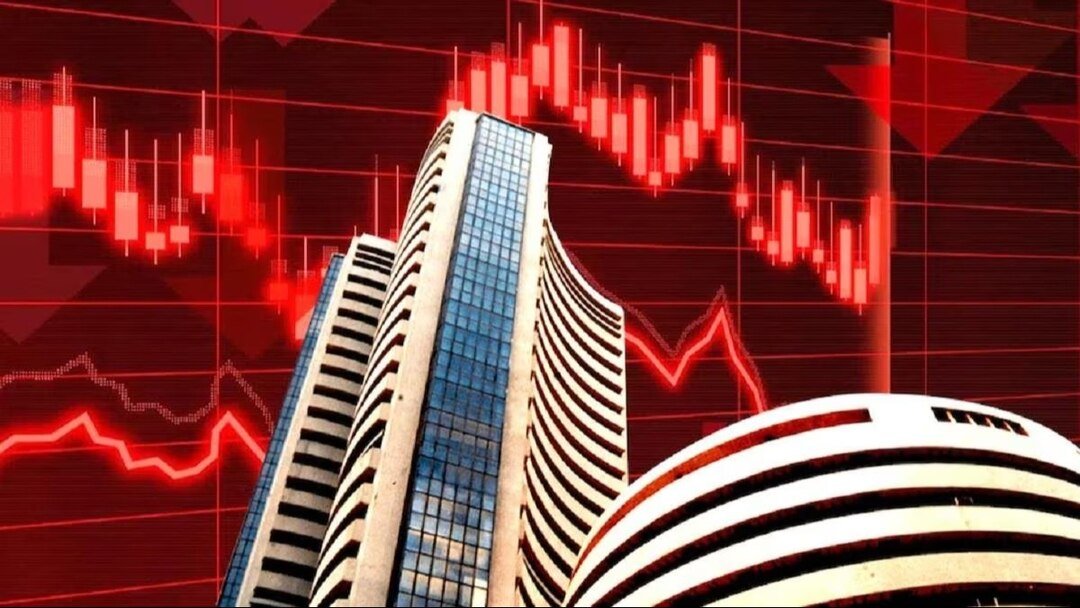

Mumbai (Economy India): Indian equity markets extended their losing streak on Friday, with benchmark indices Sensex and Nifty closing nearly 1 per cent lower, as a combination of heavy selling across sectors, a record-low rupee, sustained foreign fund outflows, and weak global cues severely dented investor sentiment.
The 30-share BSE Sensex fell 769.67 points, or 0.94 per cent, to close at 81,537.70, breaching the crucial 82,000-mark for the first time in recent sessions. During intraday trade, the index slipped as much as 835.55 points (1.01 per cent) to hit a low of 81,471.82, reflecting heightened nervousness among investors.
The broader Nifty 50 also mirrored the weakness, ending sharply lower amid selling pressure in banking, IT, metals, and FMCG stocks.

Rupee at Record Low, FII Outflows Spook Markets
Market participants attributed Friday’s sharp decline largely to the Indian rupee hitting a fresh all-time low against the US dollar, which raised concerns over imported inflation, corporate margins, and capital flows.

The persistent foreign institutional investor (FII) selling trend further weighed on sentiment. According to market data, overseas investors have remained net sellers in recent sessions, shifting funds towards safer global assets amid rising geopolitical risks and uncertainty over global monetary policy.
“Foreign capital outflows, combined with currency weakness and the absence of strong domestic triggers, have made investors cautious,” said a senior market strategist.
Global Risk-Off Mood Adds Pressure
Global markets also provided little support. Investors worldwide have been moving towards safe-haven assets, driven by:
- Strengthening of the US dollar
- Uncertainty over the future path of US interest rates
- Ongoing geopolitical tensions in West Asia and Eastern Europe
Asian markets traded mixed to weak, while overnight cues from Wall Street remained cautious, adding to pressure on Indian equities.
Sector-Wise Performance: Banks, IT Lead Declines
The sell-off on Dalal Street was broad-based, with most sectoral indices ending in the red.
- Banking and financial stocks declined amid concerns over global liquidity tightening
- IT stocks slipped as a strong dollar and slowdown worries in key overseas markets weighed on outlook
- Metal stocks fell on fears of weaker global demand
- FMCG and consumption stocks also saw profit booking after recent gains
Mid-cap and small-cap stocks underperformed the benchmarks, reflecting a risk-averse stance among retail and institutional investors.
Lack of Domestic Triggers Keeps Sentiment Fragile
Traders noted that the market is currently lacking strong domestic catalysts, with investors awaiting:
- Clear signals from the upcoming Union Budget
- Further cues on inflation and interest rate trajectory
- Corporate earnings guidance for the remainder of FY26
Until clarity emerges on these fronts, volatility is expected to remain elevated.
Technical View: Key Levels to Watch
Market experts believe the 82,000 level on the Sensex was a key psychological support, and its breach could trigger further short-term weakness.
“Markets are in a corrective phase. Sustained trading below key support levels may invite additional selling, while any recovery will depend on currency stability and global cues,” technical analysts said.
Investor Outlook: Caution Advised in Near Term
Analysts are advising investors to remain cautious in the near term, focus on quality stocks, and avoid aggressive positions amid heightened volatility. Long-term investors, however, may look at selective opportunities if markets correct further.
Friday’s sharp decline underscores the fragile state of market sentiment, driven by currency weakness, foreign fund outflows, and global uncertainty. With benchmarks slipping below key levels and volatility on the rise, investors are likely to stay on the sidelines until clearer macroeconomic and policy signals emerge.
As markets navigate this challenging phase, all eyes will remain on global developments, the rupee’s movement, and domestic policy cues to determine the next directional trend.
(Economy India)