
Politics & Urban Governance
Mumbai | Economy India | Maharashtra Chief Minister Devendra Fadnavis has emerged as the central architect of the Bharatiya Janata Party’s (BJP) sweeping victory in the recent civic body elections, firmly consolidating the party’s dominance across urban Maharashtra. The results are being widely interpreted as a strong endorsement of Fadnavis’s leadership, organisational skills, and strategic autonomy, achieved with minimal involvement of the central BJP leadership.
The BJP-led Mahayuti alliance has secured control of 25 out of 29 municipal corporations where elections were held on January 15, marking one of the most decisive urban electoral mandates in the state’s political history. Notably, the BJP on its own is poised to have mayors in nearly 17 municipal corporations, underscoring its expanding urban base and organisational depth.
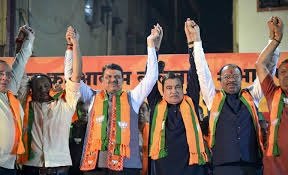
Landslide Mandate in Key Urban Centres
The civic poll results signal a decisive shift in Maharashtra’s urban political landscape. The BJP’s strong showing spans major metropolitan regions as well as emerging urban centres, including:

- Mumbai, India’s financial capital and the most politically significant municipal corporation
- Key industrial and commercial hubs across western and northern Maharashtra
- Rapidly growing tier-II and tier-III cities with rising middle-class populations
Winning a majority of municipal corporations is critical not only for political visibility but also for control over urban infrastructure spending, local governance, and civic administration, areas that directly affect everyday life in cities.
Fadnavis’s Strategic Playbook
Political analysts attribute the BJP’s success largely to Devendra Fadnavis’s hands-on strategy, which combined organisational discipline with a strong focus on local issues.
Key elements of his approach included:
- Decentralised candidate selection, giving weight to local leadership and winnability
- Emphasis on urban governance, infrastructure, and civic services rather than purely ideological campaigning
- Careful coalition management within the Mahayuti alliance, ensuring minimal vote-splitting
- Targeted outreach to middle-class voters, traders, professionals, and first-time urban voters
Observers note that unlike earlier elections, the campaign relied less on national leadership and more on state-level credibility and local performance, with Fadnavis emerging as the face of the BJP’s urban governance narrative.
Major Electoral Milestone Since Fadnavis’s Return as CM
This civic poll sweep marks Devendra Fadnavis’s biggest electoral success since he returned as Chief Minister in late 2024. At the time of his return, questions were being raised about coalition stability and the BJP’s ability to regain lost ground in urban areas.
The results now appear to have decisively answered those doubts.
“The verdict reflects voter confidence in Fadnavis’s governance model and his ability to deliver stability and development,” a senior BJP leader said, adding that the outcome has significantly strengthened his position within both the state and national party structure.
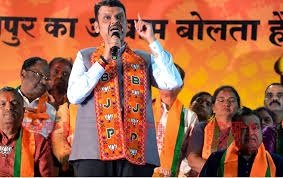
Urban Voters Back Governance and Stability
The BJP’s success also reflects broader trends shaping urban voting behaviour in Maharashtra:
- Growing preference for stable local governance over fragmented municipal politics
- Demand for better delivery of basic civic services such as roads, water supply, sanitation, and public transport
- Support for infrastructure-led growth, including metro projects, urban redevelopment, and smart city initiatives
Fadnavis’s emphasis on administrative efficiency and long-term urban planning appears to have resonated with city voters, particularly in Mumbai and other large municipal corporations.
Mumbai: The Crown Jewel
The BJP-led alliance’s victory in Mumbai carries special political and symbolic significance. Control over the Brihanmumbai Municipal Corporation (BMC) provides access to one of the largest civic budgets in Asia, making it a key power centre in Maharashtra politics.
With the BJP set to play a decisive role in the city’s governance, the party is expected to push:
- Accelerated infrastructure development
- Faster execution of redevelopment projects
- Improved transparency in civic administration
The Mumbai outcome is also seen as a major setback for rival parties that have traditionally relied on the city as their political stronghold.
Implications for Maharashtra and National Politics
The civic poll results have far-reaching implications:
- Strengthened authority for Fadnavis within the state government
- Enhanced bargaining power for the BJP within the Mahayuti alliance
- A stronger organisational base ahead of future assembly and parliamentary elections
At the national level, the results reinforce the BJP’s narrative that strong state leadership can deliver electoral victories independently, even without heavy reliance on central campaign machinery.
Challenges Ahead
Despite the sweeping victory, governance expectations are now significantly higher. The BJP will be under pressure to:
- Deliver visible improvements in urban infrastructure
- Address issues such as housing affordability, traffic congestion, and environmental stress
- Ensure corruption-free and transparent municipal administration
Political analysts caution that sustained performance at the municipal level will be critical to retaining voter confidence in future elections.
Devendra Fadnavis’s role in steering the BJP to a landslide civic poll victory marks a defining moment in Maharashtra politics. By consolidating control over urban local bodies and demonstrating electoral leadership with limited central intervention, Fadnavis has not only strengthened the BJP’s grip on urban Maharashtra but also firmly re-established himself as one of the party’s most effective state-level strategists.
As the BJP prepares to translate its municipal dominance into tangible governance outcomes, the civic poll verdict stands as a powerful signal of urban Maharashtra’s political realignment under Fadnavis’s leadership.
(Economy India)