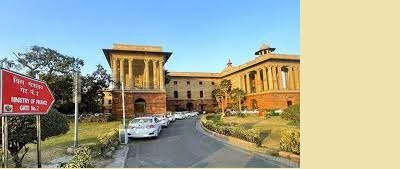

Three-year public–private partnership roadmap aims to accelerate infrastructure creation, crowd in private capital, and boost economic growth
New Delhi (Economy India): In a major push to accelerate India’s infrastructure development and attract large-scale private investment, the Finance Ministry has unveiled a three-year public–private partnership (PPP) pipeline comprising 852 projects with an estimated investment outlay of over ₹17 lakh crore.
The pipeline, prepared by the Department of Economic Affairs (DEA) under the Finance Ministry, will be implemented from FY 2025-26 to FY 2027-28, giving investors long-term visibility into upcoming infrastructure opportunities across both central ministries and state governments.
The initiative operationalises a key announcement made in the Union Budget 2025-26, reinforcing the government’s strategy of leveraging private capital to bridge India’s infrastructure financing gap while ensuring efficient and timely project execution.
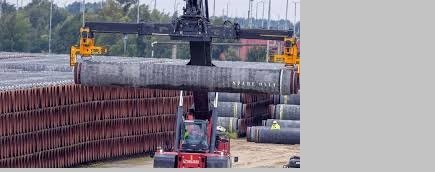
PPP as a Core Pillar of Infrastructure Strategy
With India’s infrastructure requirements expanding rapidly, the government has increasingly positioned the PPP model as a central pillar of its development strategy. While public spending remains strong, fiscal constraints have made private sector participation essential for sustaining high levels of capital formation.

Under the PPP framework:
- The government provides policy support, regulatory clearances, and land where required
- Private players bring in capital, advanced technology, and project management expertise
- Project risks are shared between public and private partners based on defined contractual frameworks
According to senior officials in the Finance Ministry, the expanded PPP pipeline is aimed at improving project efficiency, reducing fiscal stress, and accelerating asset creation.
Sector-Wise Coverage of the PPP Pipeline
The 852 projects identified in the pipeline span a wide range of critical infrastructure sectors, reflecting the government’s integrated development approach.
Key sectors include:
- Roads and national highways
- Railways, metro rail, and multimodal transport
- Airports and urban mobility
- Ports, shipping, and logistics parks
- Power generation, transmission, and renewable energy
- Water supply, sanitation, and waste management
- Healthcare and education infrastructure
Officials noted that project selection aligns closely with the objectives of the National Infrastructure Pipeline (NIP) and the PM Gati Shakti National Master Plan, ensuring coordinated planning and faster execution.

Strong Role for States in Project Execution
A notable feature of the three-year PPP pipeline is the enhanced participation of state governments. Several projects are being executed under state jurisdictions, particularly in urban infrastructure, transport, water management, and social sectors.
The DEA has worked closely with states to:
- Identify bankable PPP projects
- Conduct feasibility and risk assessment studies
- Improve project structuring and financial modelling
- Strengthen institutional capacity for contract management
This collaborative approach is expected to improve investor confidence and reduce execution-related delays that have affected PPP projects in the past.
Investment Opportunities for Domestic and Global Capital
The ₹17 lakh crore pipeline opens up significant long-term investment opportunities for:
- Domestic infrastructure developers
- Pension funds and insurance companies
- Sovereign wealth funds
- Global infrastructure and private equity funds
The government has also highlighted the role of innovative financing structures such as Infrastructure Investment Trusts (InvITs) to monetise completed assets and recycle capital into new projects.
Experts believe the scale and clarity of the pipeline will help India remain one of the most attractive infrastructure investment destinations globally.
Addressing Past Challenges in PPP Projects
While PPP models have delivered several landmark projects in India, earlier phases were affected by challenges such as land acquisition delays, contractual disputes, and traffic or revenue miscalculations.
To address these issues, the government has introduced:
- Standardised Model Concession Agreements (MCAs)
- Balanced risk-sharing mechanisms
- Viability Gap Funding (VGF) support
- Strengthened dispute resolution and arbitration frameworks
These reforms are expected to improve project viability and enhance the ease of doing business for private developers.
Economic Impact and Job Creation
Economists estimate that the rollout of the PPP pipeline will have a multiplier effect on economic growth, supporting India’s medium-term GDP expansion.
Key expected outcomes include:
- Creation of millions of direct and indirect jobs
- Higher demand for steel, cement, construction equipment, and logistics services
- Improved regional connectivity and reduced logistics costs
- Enhanced productivity and competitiveness across sectors
The initiative is also aligned with India’s long-term ambition of becoming a $5 trillion economy.
Outlook: Private Capital Driving Public Infrastructure
Analysts believe that sustained infrastructure investment through PPPs will be critical as India transitions into a higher-growth, higher-income economy.
The three-year pipeline provides:
- Policy certainty and execution visibility
- A steady flow of bankable projects
- Strong coordination between the Centre and states
If implemented effectively, the PPP roadmap could significantly strengthen India’s infrastructure backbone and reinforce investor confidence in the country’s long-term growth story.
Economy India Take
The unveiling of a ₹17 lakh crore PPP pipeline marks one of the most ambitious efforts by the Finance Ministry to institutionalise private sector participation in public infrastructure. The success of this initiative will depend not just on funding availability, but on timely execution, transparent contracts, and robust governance—factors that will ultimately determine whether India can sustain its infrastructure-led growth momentum.
(Economy India)