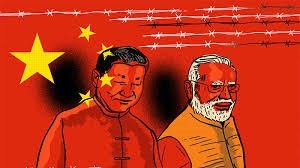

Rising imports, limited export diversification and deep supply-chain dependence push India–China trade imbalance to alarming levels, GTRI report cautions
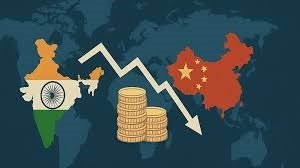
New Delhi (Economy India): India’s trade deficit with China is projected to widen further and may reach a record $106 billion in 2025, according to a detailed assessment by the Global Trade Research Initiative (GTRI). The report highlights a persistent structural imbalance in bilateral trade, driven by surging imports from China and relatively stagnant Indian exports, despite multiple policy interventions aimed at reducing dependence on Chinese goods.
The findings arrive at a critical juncture, as India recalibrates its trade strategy amid rising geopolitical uncertainties, shifting global supply chains, and mounting pressure from protectionist policies in developed markets.
A Growing Imbalance: The Numbers That Matter
GTRI’s data reveals a clear divergence between India’s imports from China and its exports to the neighbouring country.
India’s Exports to China:
- 2021: $23 billion
- 2022: $15.2 billion
- 2023: $14.5 billion
- 2024: $15.1 billion
- 2025 (Projected): $17.5 billion
While exports are expected to show a modest recovery in 2025, they remain significantly below the levels seen in 2021.
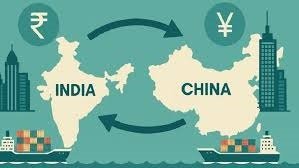
In contrast, imports from China have continued to expand steadily, driven by India’s dependence on Chinese intermediate goods, capital equipment, and consumer electronics. This widening gap is expected to push the trade deficit to $106 billion, one of the largest bilateral trade imbalances India has ever recorded.
Why India’s Imports from China Keep Rising
Despite policy efforts such as Make in India, Atmanirbhar Bharat, and Production-Linked Incentive (PLI) schemes, India’s reliance on Chinese imports remains substantial.
Key Import Categories:
- Electronics and electrical equipment
- Telecom and networking hardware
- Active pharmaceutical ingredients (APIs)
- Chemicals and industrial inputs
- Machinery and engineering goods
- Solar panels and renewable energy components
These imports are integral to India’s manufacturing ecosystem. In many cases, domestic alternatives are either unavailable at scale or remain costlier than Chinese supplies, making substitution difficult in the short to medium term.
Export Constraints: Why India Struggles in the Chinese Market
India’s export basket to China remains narrow and heavily commodity-driven. Iron ore, cotton, and select chemicals dominate shipments, while value-added products and services face limited market access.
Structural Challenges:
- Limited diversification of export products
- Non-tariff barriers in the Chinese market
- Stringent regulatory norms
- Weak brand presence of Indian firms in China
- Low integration in Chinese value chains
GTRI noted that even when demand exists, Indian exporters struggle to scale up due to logistical bottlenecks and pricing pressures.
Trade Deficit and Strategic Vulnerability
A trade deficit of this magnitude raises concerns beyond economics.
Pressure on India’s External Accounts
A widening trade gap contributes to current account pressures and increases exposure to global currency volatility, especially during periods of capital outflows.
Supply Chain Risks
Heavy reliance on a single country for critical inputs poses strategic risks, particularly during geopolitical tensions or global disruptions—as witnessed during the COVID-19 pandemic.
Technology Dependence
China’s dominance in electronics, renewable energy equipment, and rare industrial inputs limits India’s strategic autonomy in high-growth sectors.
Global Context: Why China Still Matters
China remains India’s largest source of imports and one of its most critical trading partners. Despite political tensions and border disputes, economic engagement continues largely uninterrupted due to market realities.
Moreover, global supply chain reorientation has been slower than anticipated. While multinational companies have diversified some operations to India, Vietnam, and other ASEAN economies, China continues to dominate manufacturing at scale.
Policy Measures Taken So Far
India has undertaken several initiatives to address trade imbalance concerns:
Production-Linked Incentive (PLI) Schemes
Targeting electronics, semiconductors, pharmaceuticals, solar manufacturing, and advanced chemistry cells.
Import Monitoring and Quality Controls
Enhanced scrutiny on imports, including quality standards and anti-dumping measures.
Trade Diversification
Strengthening trade ties with the Middle East, Africa, Latin America, and Southeast Asia through bilateral and regional agreements.
Infrastructure Push
Investments in ports, logistics, and digital infrastructure to improve export competitiveness.
Despite these steps, GTRI cautions that results will take time to reflect in trade data.
What More Needs to Be Done: Expert Views
According to GTRI and trade economists, India must adopt a long-term, sector-specific approach.
1. Build Domestic Manufacturing Depth
India needs to move beyond assembly and develop upstream manufacturing capabilities, particularly in electronics, chemicals, and precision engineering.
2. Expand Export Basket
Higher-value exports such as pharmaceuticals, medical devices, engineering goods, and IT-enabled services should be prioritized.
3. Improve Market Access
Diplomatic and trade negotiations should focus on reducing non-tariff barriers for Indian products in China.
4. Encourage Joint Ventures
Strategic joint ventures can help Indian firms integrate into global value chains while reducing unilateral dependence.
Geopolitical Implications
The widening trade deficit also has geopolitical implications, especially as India strengthens partnerships with the US, EU, Japan, and Quad nations.
While these alliances aim to reduce strategic vulnerabilities, China’s economic scale and pricing power continue to influence trade flows.
Experts argue that economic decoupling from China is neither realistic nor desirable in the near term. Instead, a calibrated approach focused on risk mitigation rather than isolation is required.
Outlook for 2025 and Beyond
GTRI projects that unless structural reforms accelerate, India’s trade deficit with China will remain elevated beyond 2025.
Even with export growth to $17.5 billion, imports are likely to outpace gains, keeping the imbalance intact.
However, analysts remain cautiously optimistic that sustained policy support, rising domestic manufacturing capacity, and global supply chain diversification could gradually alter the trajectory over the next decade.
A Long-Term Challenge, Not a Short-Term Shock
The projected $106 billion trade deficit is not merely a statistical concern—it reflects deep-rooted structural issues in India’s trade engagement with China.
While India has made progress in strengthening its manufacturing base and export capabilities, the scale of the challenge demands sustained policy focus, private sector participation, and global integration.
As India positions itself as a key player in the global economy, managing its trade relationship with China will remain one of its most complex and consequential economic challenges.
Economy India will continue to monitor developments in trade policy, bilateral relations, and global supply chains shaping India’s economic future.
(Economy India)