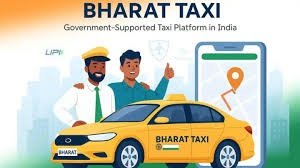

No Surge Pricing, Higher Driver Earnings, and Cooperative Ownership Model Mark a Major Shift in India’s Ride-Hailing Market
New Delhi (Economy India): India’s ride-hailing landscape is set for a major disruption with the launch of the Bharat Taxi app on January 1, 2026. Backed by the government, the new platform aims to offer affordable, transparent, and reliable mobility services, while significantly improving earnings for drivers.
Positioned as a strong alternative to private aggregators such as Ola and Uber, the Bharat Taxi app promises stable fares without surge pricing, over 80% revenue share for drivers, and a cooperative ownership structure, making it India’s first national, driver-owned ride-hailing platform.

What Is Bharat Taxi?
Bharat Taxi is a government-supported ride-hailing application developed under the guidance of the Ministry of Cooperation in collaboration with the National e-Governance Division (NeGD).
The platform will offer multiple transport options, including:

- Auto-rickshaws
- Cars
- Bike taxis
Passengers can choose services based on affordability and convenience, similar to existing ride-hailing apps.
No Surge Pricing During Peak Hours
One of the biggest complaints against private ride-hailing platforms has been surge pricing, where fares jump sharply during peak hours, bad weather, or high demand periods.
Bharat Taxi aims to address this issue.
Unlike Ola and Uber, where fares can rise two to three times during peak demand, Bharat Taxi will make efforts to keep fares stable, ensuring passengers are not burdened with sudden price hikes.
As a government-supported initiative, the platform is expected to bring greater price discipline and transparency into the sector.
Drivers to Receive Over 80% of the Fare
A key differentiator of Bharat Taxi is its driver-friendly revenue model.
- Drivers will receive more than 80% of the total fare
- Commission deductions will be significantly lower than private platforms
- Net earnings for drivers are expected to increase substantially
Currently, many drivers on private apps complain of high commission cuts, which reduce their take-home income. Bharat Taxi’s model is designed to address this imbalance.
The response from drivers has already been strong—around 56,000 drivers in Delhi have registered even before the official launch.
Drivers as Co-Owners: A Cooperative Model
Bharat Taxi is India’s first national cooperative ride-hailing platform, built on the principles of shared ownership.
- Drivers will act as co-owners of the platform
- Developed through an MoU with Sahkar Taxi Cooperative Limited
- Aligns with the government’s broader push for the cooperative economy
This model ensures that drivers are not just service providers, but stakeholders with a long-term interest in the platform’s success.
Safety, Technology, and User Features
The Bharat Taxi app will include modern features comparable to private platforms:
- Real-time vehicle tracking
- Onboarding of only verified drivers
- 24×7 customer support
- Multi-language support, including Indian languages
The emphasis is on safety, reliability, and accessibility, particularly for users who may be uncomfortable with English-only interfaces.
How Bharat Taxi Differs from Ola and Uber
1. No Surge Pricing
- Ola/Uber: Fares rise sharply during peak hours, rain, or festivals
- Bharat Taxi: Effort to keep fares stable and predictable
2. Higher Driver Earnings
- Ola/Uber: Higher commission cuts reduce driver income
- Bharat Taxi: Drivers receive over 80% of the fare
3. Government Support and Regulation
- Ola/Uber: Fully private companies
- Bharat Taxi: Government-backed initiative with higher transparency and accountability
4. Cooperative Ownership
- Ola/Uber: Drivers are service partners
- Bharat Taxi: Drivers are co-owners
Impact on the Ride-Hailing Market
The entry of Bharat Taxi could significantly alter the competitive dynamics of India’s cab aggregation market:
- Increased price competition
- Pressure on private players to reduce commissions
- Better working conditions for drivers
- More affordable mobility options for passengers
Experts believe government-backed platforms could curb pricing arbitrariness and improve trust among users.
Initial Launch and Expansion Plans
- Phase 1: Launch in Delhi on January 1, 2026
- Phase 2: Gradual rollout to other cities
With strong initial driver onboarding and official support, Bharat Taxi is expected to scale rapidly.
Why Bharat Taxi Matters
Bharat Taxi is more than just another cab app. It represents:
- A shift towards people-centric digital platforms
- Integration of technology with cooperative principles
- A move to balance consumer affordability and driver welfare
- Government intervention to improve fairness in platform economies
The launch of Bharat Taxi on January 1 marks a significant milestone in India’s digital mobility journey. With no surge pricing, higher driver earnings, and a cooperative ownership structure, the app has the potential to reshape how ride-hailing works in the country.
If successfully implemented and scaled, Bharat Taxi could become a credible, trusted alternative to existing private platforms—benefiting both passengers and drivers while bringing much-needed balance to the ride-hailing ecosystem.
(Economy India)